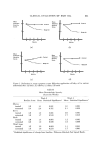
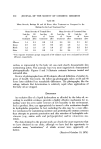
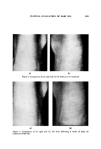
J. Soc. Cosmet. Chem., 26, 227-234 (May 1975) Clinical Evaluation of Baby Oil as a Dermal Moisturizer EUGENE R. JOLLY, M.D., Ph.D. and CHARLES A. SLOUGHFY* Synopsis-A population of 106 adult females who exhibited toughened, cracked, and inflamed skins of the elbows, knees, shins, and heels were selected for the evaluation of the SKIN MOISTURIZING ACTIONS of BABY OIL. The baby oil was applied at least twice daily during a 4-week study period to the specified sites on one side of the body. The contralateral sites served as untreated controls. Rating of the skin sites at the outset of the study, during a 2-week interim examination, and at the end of 4 weeks de- fined a marked and progressive improvement of sites treated with the baby oil. Converse- ly, untreated sites tended to worsen during the study period. A statistical analysis of the data revealed that the moisturizing actions were l•ghly significant at both the 2- and 4-week examination times. All ratings were made without foreknowledge of which side of the body had been treated. Photographs obtained in 10 subiects clearly illustrated the differences between skin of treated versus nontreated sites. Following discontinuation of the baby oil application, skins of the treated sites tended to become drier within the first 48 hours. These data suggest that the skin moisturizing actions of the baby oiI are not protracted. INTRODUCTION According to Blank (1), primary therapy for prophylaxis or correction of dry, scaly, eroded, and enflamed skin should be directed toward maintenance of optimum hydration of stratum cornea. Studies have shown (2, 3) that natural skin lipids are not very effective in preventing water loss under con- d't'_'ons of low environmental humidity. Nor can passage of water through the stratum lucidurn and stratum granulosum, the preservers of body water and electrolytes, compensate for enhanced evaporation. Jellinek (4) points out that removal of surface lipids through frequent use of detergents or exposure to organic solvents also facilitates skin drying. He stresses that moisture in the stratum corncure is bound by hydrophilic components including amino acids, penroses, and phospholipids. If the skin is *Biometric Testing, Inc., Englewood Cliffs, N.J. 227

29.8 JOURNAL OF THE SOCIETY OF COSMETIC CHEMISTS stripped of lipids, then these hydrophilie modules are readily washed out. In addition, when the fat layer is removed, the surface of the stratum comeurn becomes toughened, exposing greater areas of skin, and speeding the evapora- tion process. Powers and Fox (5) report that emollient products, formulated to maintain skin integrity under conditions of excessive water loss, vary markedly in effec- tiveness. Utilizing silica gel dessicators, these investigators studied a series of materials for effectiveness in retarding skin dehydration. Many of the formu- lations, labeled as skin softeners, actually increased water loss, one as much as 56%. Petrolatum United States Pharmacopoeia (USP) was the most effective barrier material tested for maintenance of derreal hydration. Anhydrous lanolin, mineral oil, and cold eream also proved to be effective barriers. Spruitt (6) also quantitated water loss from the skin following ap- plication of a variety of materials. Flow of water was decreased from 500- to 1000-fold by aliphatic products (mineral-oil based). Unsaturated vegetable oils provided only slight protection, whereas saturated fats were intermediate in activity. Emulsions tended to increase evaporation. Eisner's (7) results support those of Fox and Powers and of Spruitt. Ointments or lotions contain- ing hmnectants and surfaetants again proved ineffective barriers in this ease, with regard to the penetration of an experimental film model by a series of noxious materials including urine, feeal suspensions, acids, and bases. Con- versely, baby oil and petrolatum prevented passage of the noxiants. Baby oil with a mineral oil base remains perhaps the most widely employed skin emollient or softener. In spite of its hydrophobie properties, assuming that the principles of therapy expressed by Blank and other investigators are valid, baby oil can also be properly termed a skin moisturizer. Published data suggest that baby oil as a liquid hydrocarbon, that is capable of providing an effective barrier against water loss, would provide superior moisturizing ac- tions, and that its utility in protecting the vulnerable skin of infants would be equally apparent after application to adults who exhibit sequelae to the variety of skin trauma induced by mechanical and environmental assaults. The present study was designed to clinically define the moisturizing ac- tions of a commercially-available baby oil • when applied to the toughened, cracked, and inflamed skins of the elbows, knees, heels, and shins of adults. EXPERIMENTAL METHODS The study was conducted using a single-blind design with the subjects serving as their own controls. The study group was composed of 111 females with an age range of 13 to 72 years and an average age of approximately 31 years. Treatment sides and contralateral control areas (elbows, knees, heels, *•Supplied by Baby Products Company, Johnson & Johnson, New Brunswick, N.J.
Purchased for the exclusive use of nofirst nolast (unknown)
From: SCC Media Library & Resource Center (library.scconline.org)