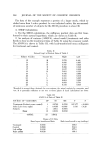
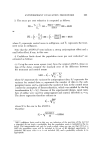
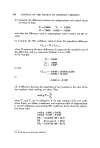
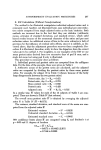
9.74 JOURNAL OF THE SOCIETY OF COSMETIC CHEMISTS The RM gives estimates of per cent reduction which have been modified by the a priori mean ratio obtained at the time of the pretest measurements. If this mean ratio were constant, it would not alter the per cent reduction obtained relative to that of the SSEM. To the extent that this is not true, the per cent reduction will be different than that given by the SSEM. Since it has been shown that the ratios can be quite variable, it follows that the per cent reduction estimates obtained may be substantially altered. This difference in the estimates is obviously a function of the degree of variability of the pretest ratios. Under these circumstances, the precision of the estimate becomes ir- relevant even though it is a function of the number of pretest determinations as well as the factors operating in the SSEM. A questionable estimate is not improved by reducing its variability. It is possible, however, to utilize pretest data in a statistically valid manner to adjust posttest results by the use of an analysis of covariance, and this procedure might be shown to give more accurate, and precise estimates of p 'r cent reduction than those given by the SSEM, if the pretest data are suffi- ciently well-correlated with the posttest ratio. The mathematics of such an analysis, however, differ from those of the ratio adjustment procedure, and it is impossible to predict results without experimentation. When time permits, we plan to investigate this matter. Meanwhile we recommend the SSEM over the RM as the scientifically valid method, as well as the one of choice on the bases of simplicity and low costr ACKNOWLEDGMENTS We wish to thank Dr. John Mandel for statistical advice xvhich has been helpful in clarifying our thinking regarding a number of points. In addition, Mr. Giles Crane has contributed statistical assistance, and Miss Linda Timberlake performed a large nmnber cf statistical analyses in preparing the experiments. Finally, we would like to express our gratitude to the Editor and reviewers of this Journal for their careful, complete, and very comtructive comments. (Received November 12, 1974) REFERENCES (1) W. G. Fredell and R. R. Read, Antiperspirant-axillary method of determining effec- tiveness, Proc. Sci. Sect. Toilet Goods Ass., 23-7 (1951). (2) W. G. Fredell and J. Longfellow, Report on evaluating antiperspirant and deodorant products, ]. Soc. Cosmet. Chem., 9, 108-11 (1958). (3) E. W. Daley, Antispliant testing: A comparison of two methods, Proc. Sci. Sect. Toilet Goods Ass., 1-6 (1958). (4) P. A. Majors and John E. Wild, The evaluation of antiperspirant e•cacy-infi'tence of certain variables, ]. Soc. Cosmet. Chem., 25, 139 -2 (1974). (5) W. M. Woocling, The interpretation of gravimetric axillar antlperspirant d._•tx, P:oc. Joint Con[. Cosmet. Sci, 91-105 (1968). ((") N. R. Draper and H. Smith, Applied Begres•ion Analysis, John Wiley & Sons, Inc., New York, 1966, chap. 3. (7) F. J. Anscombe and J. W. Tukey, The examination and analysis of residuals, Tech- nomet,•ics, 5, 141--60 (May 1963).

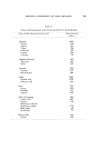
ANTIPERSPIRANT EVALUATION PROCEDURES 275 (8) M. S. Bartlett, The use of transformations, Biometrics, 3, 39-52 (March 1947). (9) C. Eisenhart, The assumptions underlying the analysis of variance, Biometrics, 3, 1-4 (March 1947). (10) L. S. Nelson, Analysis of Residuals, Nat. Convention Trans., Amer. Soc. Quality Con- trol, 111-8 (1959). (11) W. M. Wooding, The computation and use of residuals in the analysis of experimental data, I. Qual. Technol., 1, 175-88 (July 1969). (12) G. W. Snedecor and W. G. Cochran, Statistical Methods, 6th ed., Iowa State Uni- versity Press, Ames, Iowa, 1967, p. 8-9.
Purchased for the exclusive use of nofirst nolast (unknown)
From: SCC Media Library & Resource Center (library.scconline.org)