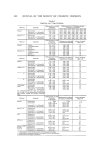
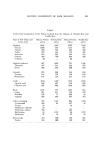
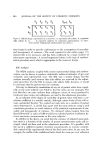
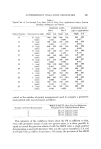
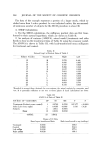
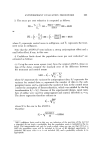
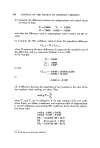
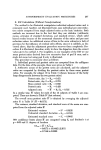
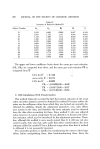
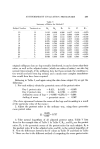
250 JOURNAL OF THE SOCIETY OF COSMETIC CHEMISTS tion of its carboxylic side chains by treatment in methanol/HC1. This methy- lated melanin was now water insoluble under acidic and neutral conditions but dissolved readily at pH 9 and above as the groups of the hydroxyindole residues began to ionize. The solubility characteristic of the solubilized melanin thus appeared to be controlled by the ionization of the carboxylic side chains present in this melano-protein moiety. Aqueous solutions of the latter were found to form copious precipitates upon acidification below pH 4. Although both the mela- nin and the protein were present in the precipitate, only the protein was found in the supernatant. The melanin-free protein present in the supernatant ac- counted for 23% of the total protein associated originally with the pigment. Complete separation of the protein component was attained by acid hydroly- sis of the combined fractions, i.e., the precipitate and supernate in 6N HC1 for 16 hours at 105øC. Table I lists the amino-acid content of the protein com- ponent of the melanins obtained from human hair as well as from dog hair. For comparison, the amino-acid composition of the corresponding hair keratin is also given. It is clearly evident that the chemical composition of the melano-protein differs greatly from that of the keratin. Particularly striking is the high con- tent of basic amino-acids present in the former. Although the extent of amida- tion of the glutamic acid is unknown, it is tempting to suggest that the protein, in its native state, is positively charged and thus offers an ideal site for the firm embedding of negatively charged melanin precursors and their polymers. This way, the cohesion of alternate protein-melanin layers is greatly enhanced, and thus the electrostatic interaction may be the instrumenal factor in the initial stages of formation of high-density pigment granules. The melano-protein contains two acids which have not been found as the components of keratins. These are taurine and fi-alanine. Although these com- pounds might be by-products of the solubilization process, the possibility that they are associated with the biosynthesis of the melanin should not be over- looked. The protein content of the dog hair melanin, calculated from the amino- acid data, accounts to 7.8%, based on the weight of the solubilized pigment. A similar value of 9.4% was obtained for the melano-protein content of mela- nin which was isolated from Oriental hair. These appear to be reasonable values. The solubilizing treatment, although effective in bringing about physi- cal destruction of the pigment granules, is not likely to cause an extensive oxidative degradation of the encased protein. The chemical attack in this case appears to be confined to the residues of sulfur-containing amino-acids. Evi- dence for the latter is supported by chemical analysis of extensively bleached hair in this case the reaction between keratin and hydrogen peroxide is main- ly confined to the cystinc cross-links giving rise to the formation of cysteic acid residues. Thus the cysteic acid found in large quantities in the melano-

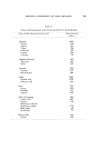
PROTEIN COMPONENT OF HAIR MELANIN 251 Table I Amino-Acid Composition of the Protein Isolated from the Melanin of Oriental Hair and Poodle Hair Type of Side Chain and Melano-Protein Oriental Hair Melano-Protein Poodle Hair Areinc Acid •M / g vM / g t•,M / g t•M / g Aliphatic 2656 1963 2755 1962 Glycine 1005 455 1143 572 Alanine 459 365 504 392 Valine 478 448 372 386 Iso]eucine 210 207 162 184 Leucine 466 488 500 428 •-A]anine 38 ... 74 . . . Aliphatic hydroxyl 967 1425 747 1396 Threonine 417 533 342 552 Serine 550 892 405 844 Aromatic 276 288 346 299 Tyrosine 101 159 129 166 Phenylanine 175 129 217 133 Acidic 1619 1407 1579 1256 Aspartic acid 682 427 559 428 Glutamic acid 937 980 1020 828 Basic 1037 771 1507 518 Lysine 311 211 700 152 Histidine 156 71 230 48 Arginine 570 489 577 318 Sulfur containing 787 1391 521 1469 Cysteic acid 463 41 337 42 Taurine 36 ... 14 ... Methionine sulfoxide 22 ...... Methionine sulfone 184 ... i• ... Half-cystine 45 1312 42 1370 Methionine 37 38 27 56 Heterocyclic 453 600 358 601 Proline 453 600 358 601
Purchased for the exclusive use of nofirst nolast (unknown)
From: SCC Media Library & Resource Center (library.scconline.org)