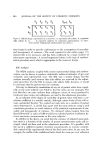
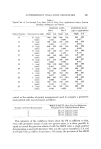
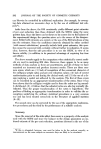
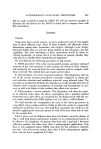
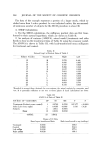
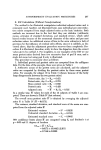
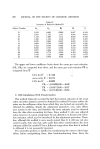
258 JOURNAL OF THE SOCIETY OF COSMETIC CHEMISTS dardized in detail, but depend upon the physical form of the antiperspirant material used. When both "ambient" and "hot-room" tests are to be run, the ambient test is done on the fourth day, beginning i hour after the fourth ap- plication of the product. A preweighed "ambient" pad of non-woven fabric is placed in each axilla of each subject using a harness device or tape to hold it in position. The subjects go about their normal business for 3 hours, then re- turn to the clinic, where the pad is removed, reweighed, and the weight in- increase recorded. The subjects return to the clinic on the fifth day, receive a fifth application of the product and i hour later enter a hot room maintained at 105øF and 50% RH. They are seated in a random spatial order around the hot room, with a nonwoven fabric pad inserted in each axilla. They are asked to sit quietly with their hands in their laps and both feet on the floor through- out the hot-room period. After 40 min., the pads are removed and discarded (pad A). A second pad, this time preweighed, is then inserted (pad B), left in place for 20 min., then removed, reweighed, and the weight gain recorded. Finally, a third pad (pad C) is inserted and handled in the same manner as pad B. This completes the test, and the subjects are dismissed. A number of details are not included in the above account, such as exact timing, randomization of the order of treating axillae, etc. In the RM method, the procedures are similar, but one, two, or more days of pretest control data are obtained before treatments with antiperspirant begin. Confining the discussion to hot-room tests only for simplicity, these pretest runs are made both with pad B and pad C. It should be remembered that there are many variations of the RM test. Some conduct a test very similar to the SSEM just described. Others treat all subiects on one side, wait 2 weeks, then treat all on the other side. These variations, however, are variations in the experimental design and are unrelated to the central question to which we address ourselves. Therefore, to demonstrate differences between the two models on an equal basis, we will assume that both protocols are identical except, in the case of the RM, for the provision for the use of pretest ratios. Statistical Considerations General The correct computational procedures for either model are dictated within rather narrow limits by the nature of the experimental design (including type of randomization) and the procedure of the protocol. Unless these particular computations are done, incorrect values of per cent reduction and/or confi- dence limits will be obtained. The computational procedures are therefore as important as the clinical ones and must follow valid statistical principles, take careful account of all underlying assumptions, and be compatible with the nature of the randomizations used in the experiments. These requirements

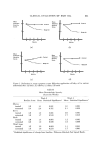
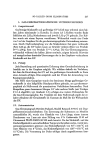
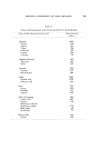
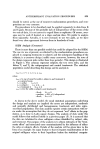
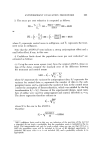
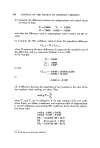
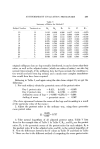
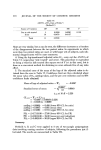
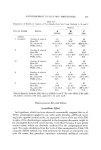
ANTIPERSPIRANT EVALUATION PROCEDURES 259 should be noted, as the use of incorrect randomization procedures, and com- putations are very common. The procedures to be described must be applied separately to data from B and C pads. Because of the probable lack of independence of the errors of the two sets of data, it is not correct to regard them as replicates. Of course, aver- ages may be used, if desired, or a slope analysis done. We prefer to analyze them separately. Actually, it is not necessary to use two pads, as we have found very close agreement between them in hundreds of tests. SSEM Analysis (Crossover) There is more than one possible model that could be adopted for the SSEM. The one we use at present, as reflected by the randomization procedures em- ployed in assigning treatments to subjects and the subsequent handling of the subjects, is a crossover design (unlike many crossovers, however, the rows of the design represent sides rather than time periods). This design is illustrated in Figure 1. The columns represent subjects, the two rows sides, and the letters T• and T2 the antiperspirant and control treatments. The statistical population model describing this design and its analysis is where y• • In mg o• swea• •or axilla i, sub•ec• ], and •rea•en• k • • genera] mean a• = axilla i i = 1, 2 a• = subject j j = 1, 2 .... n • = trea•ent k k = 1, 2 •l• = error for axilla i, subject j, and treatment k a fixed Za• = 0 a random •N(O, a•), independent • fixed • • 0 As shown in the above model, the usual statistical assumptions underlying the design and analysis are implied: the errors are independent, randomly and normally distributed and homogeneous treatments and sides repre- sent fixed populations. The data analysis equates certain interactions with er- ror under the assumption that they do not represent "real" effects in the pop- ulation, as is done in Latin square designs. The analysis of data under this model follows that outlined briefly in a previous paper (5). It is assumed that the data are tabulated to show milligram values identified by subject, side, and treatment. The purpose of the analysis is to obtain estimates of the "treat- ments effect" and associated error uncontaminated by the influence of either the sides or subjects effects. Details of the analysis will be given later in the form of an example. Its major feature is that it requires transformation of the original milligram values to their logarithms before the statistical computa-
Purchased for the exclusive use of nofirst nolast (unknown)
From: SCC Media Library & Resource Center (library.scconline.org)