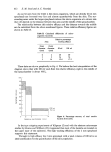
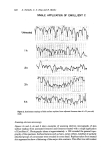
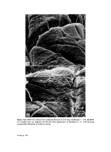
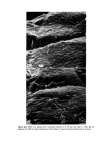
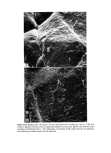
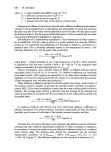
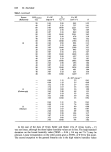
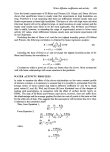
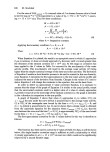
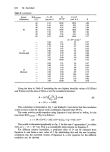
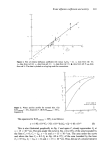
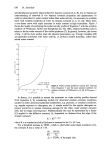
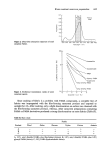
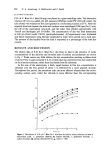
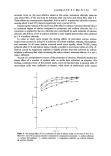
Leaching of F. D. & C. Blue No 1 dye 653 bromide. Even so, the most effective eluent in this series, potassium chloride, removes only about 40•o of the dye from its substrate after one hour and about 80•o after 8 h. These effects are concentration dependent, 0.01 m and 0-1 m potassium chloride solutions causing about 2 and 25•o elution respectively over a period of 8 h. Increasing the valency of the cation has little effect on elution. Calcium chloride shows an increased degree of elution compared to potassium and sodium chloride, but if a correction is applied for the two chloride ions contributed by each molecule of calcium chloride, the elution of 0.5 m calcium chloride is only slightly greater than that achieved by 1.0 M sodium chloride. In order to study more closely the eluting effects of polyvalent anions, elution studies were carried out using 0.5 m solutions of sodium sulphate, selenate, thiosulphate, and succinate. In all cases, elution occurred much more rapidly, about 70-80}/o being achieved after 0-5 h and elmion being virtually complete in most cases within 4 h (Fig. 2). Elution caused by magnesium sulphate is slightly quicker than that achieved by sodium sulphate confirming that while increasing the cation valency increases elution, it is not a major influence. As part of a comprehensive survey of the properties of alumina, Mutch (4) studied the eluant effect of a number of sodium salts on acidic dyes adsorbed on alumina. His findings contradict those of the present study, since he reported that in general salts of monovalent acids were ineffective as eluents, while those of multivalent acids caused ioo 8o • 60 ,8 -- 4O 2O I I I I I 2 3 4 Time (h) Figure 2. The eluting effect of 0-5 M solutions of salts of dibasic acids on the lake of F.D. & C. Blue No 1 dye (1.0 M sodium chloride is included for comparative purposes). El, sodium selenate A, sodium thiosulphate x, sodium suecinate O, magnesium sulphate •., sodium sulphate O, sodium chloride.

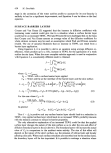
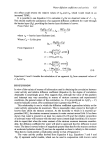
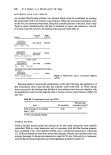
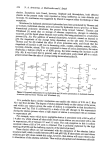
654 N. ,4. `4rmstrong, `4. Bialkowska and J. Smith elution. Exceptions were found, however. Sulphate and thiosulphate, both effective eluents in the present study were reported as being ineffective, as were chloride and bromide. No mechanism was suggested by Mutch to support either his findings or their exceptions. Structures for hydrated aluminium hydroxides have been postulated by Thomas and co-workers. Individual alumina units are joined by hydroxide ions to give two- or three- dimensional polymeric structures, the process being termed 'olation'. Thomas and Whitehead (5) noted that on storage of alumina suspensions, changes in solubility occurred, and the liquid phase became more acidic, this being attributed to a hydrolytic process (Fig. 3a). The addition of neutral electrolytes, however, caused an increase in pH, the magnitude of the change being dependent on the salt used. For example, Thomas and Tai (6) studied the effect of seven potassium salts, and found that the magnitude of increase in pH was in decreasing order, oxalate, sulphate, acetate, iodide, bromide, chloride, nitrate. This was explained in terms of anion penetration, the anion displacing a hydroxo (H,O) or ol (OH) group, the latter causing the increase in pH (Fig. 3b). It was found that in general, salts of multivalent acids raised pH to a much greater extent than the salts of corresponding monovalent acids (7). L .,..H n-I • OH- L / 0 n • • ./ X L •H20[ '-H+ [ •H• +H+ l'/H20---'] + X• L n-1 +HaO +OH- Figure 3. Proposed mechanisms for (a) hydrolysis and (b) ardon p•nctrafion •n hydrated alumina structures [dcd¾cd from Thomas and W•tchcad (5)]. It is probable that a similar mechanism can explain the elution of F.D. & C. Blue No 1 dye from its lake. The degree of elution depends firstly on the valency of the anion, and within any valency group, the order of elution is comparable to that described by Thomas and Tai. This is confirmed by a study of the pH changes in the supernatant during the elution process where a high degree of elution is associated with an increase in supernatant pH. For example, water which shows negligible elution is associated with a fall in pH of 1.4 after 4 h, whilst almost all electrolytes which cause elution are associated with a rise in supernatant pH of between 0.5 and 1.5 units. The only exception to this is sodium succinate where a fall of 0.9 units is obtained. This is probably explained by the high starting pH 68.90) and the buffering capacity of the electrolyte itself. These elution effects are not associated with the disruption of the alumina lattice structure itself, which is stable between pH 3 and pH 9 (8). If electrolytes are used whose solutions give pH values outside this range, however, then elution will occur which is due to dissolution of the alumina substrate. Thus sodium phosphate and aluminium chloride
Purchased for the exclusive use of nofirst nolast (unknown)
From: SCC Media Library & Resource Center (library.scconline.org)