j. Soc. Cosmet. Chem., 30, 127-135 (May/June 1979) Methodology development for the determination of nitrite and nitrosamines in cosmetic raw materials and finished products IRA E. ROSENBERG, JOHN GROSS, TONY SPEARS and URSULA CATERBONE Clairol Incorporated, 2 Blachley Road, Stamford, CT 06902. Received December 6, 1978. Presented at Annual Scientific Meeting, Society of Cosmetic Chemists, November 30-December 1, 1978, New York, New York. Synopsis Two alternates to 1-naphthylamine as coupling agents for NITRITE ANALYSIS, m-aminophenol and m-dimethylaminophenol, have been found to give excellent results in the low ppb region. The method involves diazotization of sulfanilic acid by nitrite followed by coupling with the phenols to form a colored azo dye which is read spectrophotometrically. The analysis has been extended to nitrite in glycerine and other COSMETIC RAW MATERIALS. METHODOLOGY is also presented for the determination of N-nitrosodiethanolamine in COMMERCIALLY AVAILABLE alkanolamides at the ppm level, using direct sampling and detection by high pressure liquid chromatography. INTRODUCTION The area of nitrosamines is not new to the scientific community. Since the early 1970's, there has been active discussion of the formation of nitrosamines in meat products cured with nitrite. Research in this area, by the meat industry as well as academic and industrial laboratories, has produced a number of methods for the determination of nitrite and volatile nitrosamines at the part-per-billion level (1,2,3). Nitrite has been analyzed by colorimetric and spectrofluorometric methods (4,5), while volatile nitrosa- mines lend themselves to analysis by gas chromatography coupled to a nitrogen specific detector or a thermal energy analyzer. In 1976, it was reported that N-nitrosodiethanolamine (NDE1A) had been detected in significant levels in industrially used cutting fluids formulated with triethanolamine and nitrite, under basic condition (6). This nitrosamine is nonvolatile and was isolated by extraction procedures followed by analysis using high pressure liquid chromatogra- phy interfaced with a thermal energy analyzer, a detector highly specific for nitrosa- mines. Confirmation of structure was done using mass spectroscopy. Hoffmann and coworkers have isolated NDE1A from tobacco and analyzed it by derivatization followed by G.C.-flame ionization detection (7). 127

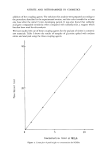
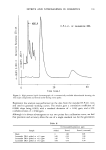
128 JOURNAL OF THE SOCIETY OF COSMETIC CHEMISTS Cosmetic products are often formulated with triethanolamine. Various levels of this nitrosamine were found in cosmetics, shampoos and lotions six months after discovery of NDEIA in cutting fluids (8). Since the report of these findings, there has been intensive activity in both industrial and governmental laboratories directed towards the development of rapid, simple and sensitive methods for determining low levels of nitrosamines and nitrite in cosmetic raw materials and finished products. This paper deals with two new reagents which can be used for the determination of nitrite at the ppb level, and the use of H.P.L.C. as a direct screening method for NDEIA in cosmetic raw materials and finished products at the ppm level. The H.P.L.C. methodology can also be used as an initial separation step, followed by derivatization and analysis by various established methods (i.e., G.C.-M.S., G.C.-E.C., G.C.-nitrogen specific detector). EXPERIMENTAL APPARATUS AND REAGENTS All gas chromatography was performed using a Perkin-Elmer Gas Chromatograph Model 3920B, equipped with flame ionization and nitrogen specific detectors. Confirmation of structure was performed using a Finnigan 4000 G.C.-M.S.-data system. A Beckman Model 25 spectrophotometer was used for nitrite analysis, along with Markson disposable cuvettes (1 cmx 1 cmx 4.5 cm). Standard nitrosamines were obtained from Columbia Organic Chemical Co. (Colum- bia, South Carolina). Sodium nitrite used was certified A.C.S. grade. N-/-naphthyleth- ylenediamine dihydrochloride was obtained from the Eastman Kodak, Co. m- Dimethylaminophenol, obtained from Pfaltz and Bauer (Stamford, Conn.), was re- crystalized prior to use from a water and charcoal solution to remove colored impurities. METHOD OF ANALYSIS Solutions used for nitrite analysis were prepared as follows: sulfanilic acid (0.5 g) was dissolved in 100 ml of 30:70 V/V glacial acetic acid:water to form solution A solution B was prepared by dissolving m-aminophenol (0. l g) in 100 ml of 30:70 V/V glacial acetic acid:water solution B' was prepared by dissolving m-dimethylaminophenol (0.1 g) in 100 ml of 30.70 V/V glacial acetic acid:water and solution B" was prepared by dissolving N-l-naphthylethylenediamine dihydrochloride (0.2 g) in 150 ml of 15% glacial acetic acid. Standard aqueous stock solutions of sodium nitrite were prepared fresh on a weekly basis. Nitrite determinations were performed by placing 1 ml of solution A and 1 ml of sample to be analyzed in a 1-cm cuvette followed by 1 ml of either solutions B, B', or B". • The solution was mixed and the color was allowed to develop for 15 min. Maximum absorbance was read at 449 nm for Coupler B, 474 nm for Coupler B' and 549 nm for Coupler B". The blank consisted of 1 ml of solution A, 1 ml of distilled •For this coupler, a 0.33% sulfanilic acid in 15% glacial acetic acid W/V solution was used for the determination.
Purchased for the exclusive use of nofirst nolast (unknown)
From: SCC Media Library & Resource Center (library.scconline.org)