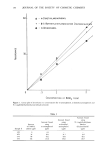
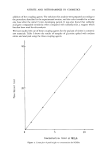
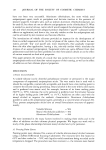
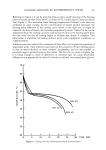
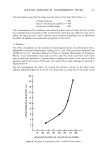
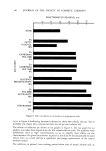
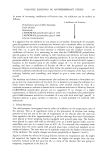
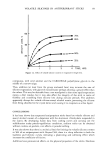
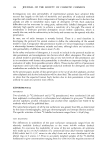
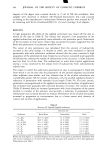
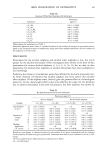
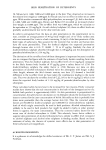
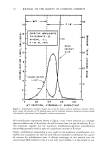
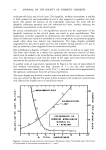
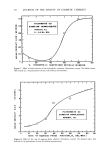
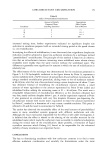
150 JOURNAL OF THE SOCIETY OF COSMETIC CHEMISTS 360 - 350 34O 330 320 310 300 29O 280 170 I I I I I I I I I 10 20 30 40 50 60 70 80 90 CONCENTRATION OF VOLATILE SILICONE, % Figure 10. Coefficient of friction vs. concentration of volatile silicone. friction just beyond 50% volatile silicone corresponding to the inflection in the hardness curve (Figure 8) this is a second reason why commercial sticks are limited to 50%. While increasing the silicone content should increase lubricity and slip, in excess it also softens and deforms the wax matrix, causing increased drag and a higher coefficient of friction. The lubricity data for sticks containing the additives are plotted as bar graphs in Figure 11. Here it is evident that concentration plays a more significant role than it did in hardness measurements. Most of the additives increased the coefficient of friction over that of the stick without them (the bar labelled "none" in Figure I0), but the effect generally decreased with increasing concentration. Prominent exceptions were glycerol monostearate, which gave a higher coefficient at the higher concentration, and polyethylene glycol 6000 distearate, which had the lowest coefficients of all at any concentration. Interestingly, a difference was found between CARBOWAX 1000 and 1540, whereas none was found in the hardness tests. It is apparent that lubricity is altected both by the type of additive and its concentration. Those additives that co-fused with the stearyl alcohol in the cooling curves (cetyl alcohol, CARBOWAX PEG I000 and 1540, stearamide, glycerol monostearate at 10%) appeared to give higher coefficients of friction than those that fused in steps (PEG 6000 distearate and glycerol monostearate at 5%). The former, in general, also gave better aesthetics in terms of less friability and more uniformity in appearance.

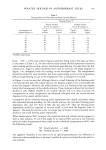
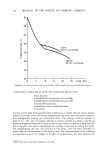
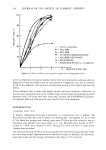
VOLATILE SILICONES IN ANTIPERSPIRANT STICKS 151 In terms of increasing coefiScients of friction then, follows: Polyethylene glycol 6000 distearate Cetyl alcohol Stearamide CARBOWAX polyethylene glycol 1540 CARBOWAX polyethylene glycol 1000 Glycerol monostearate the additives can be ranked as CoefiScient of Friction It is apparent that the additives do not always act in tandem. Stearamide, for example, gave the greatest increase in softness but showed only a moderate effect on lubricity. Cetyl alcohol, on the other hand, did show a correlation in that it appears at the top of both lists, i.e., it gave the least increase in softness and the smallest increase in coefiScient of friction. It is interesting to note that the CARBOWAX polyethylene glycols appear in the middle ranking in both hardness and lubricity we have found that sticks made with them have very pleasing aesthetics. It can be postulated that a potential additive for suspensoid sticks ought to co-fuse with stearyl alcohol, impart a hardness in the finished stick in the middle ranges of 7 to 10 mm penetrometer reading, and have a coefficient of friction of 300 to 340. As pointed out above, however, lubricity and hardness do not fully define the aesthetics of a suspensoid stick. All of the additives contributed to an improvement in the integrity of the basic stick by reducing friability and crumbling, and helped to give a more even and pleasing payoff. The hardness and lubricity measurements also indicate the direction a formulator can go to alter the characteristics of his stick. If it is desired to increase the softness to a small extent without decreasing the lubricity, cetyl alcohol should be tried. If a moderate increase in softness is desired with a moderate reduction in lubricity, then the CARBOWAX polyethylene glycols can be suggested. If no change, or a slight improvement, in lubricity is desired without concern as to hardness, then polyethylene glycol 6000 distearate would be a candidate. If a very soft stick with high •'payoff" is required without a great sacrifice in lubricity, it could probably be achieved with stearamide. C. Silicone Retention The third property investigated was the effect of additives on the evaporation rate of the silicone. This is of significance both in the prevention of silicone loss during periods of non-use and in the rate of evaporation of the silicone after the stick has been applied to the skin. Approximately 0.5 g of thin shavings from each formulation were placed in 50-ml weighing bottles equipped with ground glass tops. The bottles were placed in a petri dish with an elevated cover, as a shield against drafts, and the assemblies were put in a vented oven at 40øC. At 1-hr intervals, the containers were removed from the oven, sealed with ground glass tops, cooled and weighed on an analytical balance. The tests were run in triplicate using only the higher concentrations of the additives. The weight changes are shown graphically in Figures 12 and 13. Figure 12 shows the effects of varying silicone content on evaporation rate. As might be expected, the higher the silicone content, the higher the weight loss the rate, however, seemed to be the same for all, i.e., most of the silicone that was going to evaporate, evaporated in the first 2 hr.
Purchased for the exclusive use of nofirst nolast (unknown)
From: SCC Media Library & Resource Center (library.scconline.org)