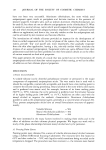
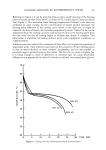
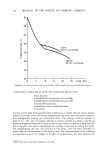
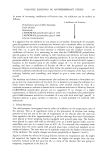
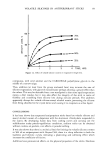
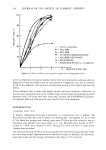
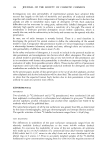
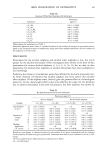
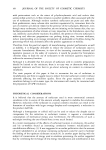
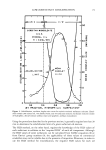
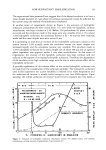
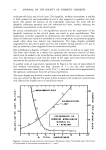
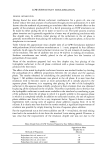
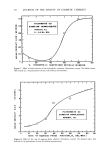
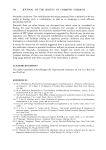
142 JOURNAL OF THE SOCIETY OF COSMETIC CHEMISTS 65 60 55 50 45 5 pbw CETYL ALCOHOL 40 35 10 pbw CETYL ALCOHOL 3O I I i I l 0 5 10 15 20 25 TIME, MIN. Figure 3. Cooling curves for cetyl alcohol (MP = 50øC) volatile silicone-stearyl alcohol mixtures. a mono ester, a diester and an amide. The compounds selected were: Cetyl Alcohol CARBOWAX Polyethylene Glycol 1000 CARBOWAX Polyethylene Glycol 1540 • Glycerol Monostearate Polyethylene Glycol 6000 Distearate Stearamide Cooling curves were developed for these additives in a volatile silicone-stearyl alcohol system. From the curves, the fusion temperatures and times were determined and the data subsequently used to cast formulated sticks. The cooling curves are plotted in Figures 3-7. The ratio of volatile silicone to stearyl alcohol in present commercial products is approximately 65/35 and, as will be seen, there is a technical basis for this. The same ratio was used in developing our cooling curves and in casting the sticks. The antiperspirant salt was not included at this point, since we were interested in fusion data on the formation of the lattice itself. The concentrations of the additives are expressed as parts by weight if 20 pbw of antiperspirant salt were present, the •Higher molecular weights were insoluble in the melt.

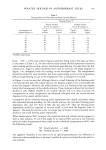
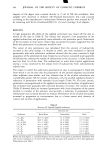
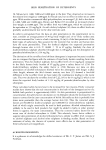
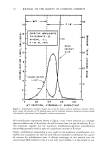
VOLATILE SILICONES IN ANTIPERSPIRANT STICKS 143 formulation would correspond to that on page 138 and the compositions would also be expressed in percentages. The additives were incorporated at 5 and 10 pbw, except for the CARBOWAX polyethylene glycols which were limited to 4 pbw because of their limited solubility in the melt. Polyethylene glycol 6000 distearate was insoluble in the melt, but was included in the study to see what the effect of a discontinuous system would be. Referring to Figures 3 through 7, it can be seen that, except for cetyl alcohol and glycerol monostearate, the additives do not significantly lower the freezing point of the volatile silicone-stearyl alcohol system. They do, however, produce different fusion times and different cooling curve configurations. Cetyl alcohol lowers the freezing point to 47 to 49øC, depending on the concentration, and produces a smooth curve with no "steps." The CARBOWAX polyethylene glycols 1000 and 1540 (Figure 5) behave similarly and both fall on the same curve. These additives are apparently co-fusing with the stearyl alcohol, possibly as a solid solution. Other additives, such as glycerol monostearate and polyethylene glycol distearate, show a step pattern in the curve which indicates they are fusing as a separate phase. The curves for glycerol monostearate are unusual in that the 5-pbw curve shows the step pattern, indicating that it is fusing as a separate phase, and the 10-pbw curve is smooth. Normally the reverse would be expected with increasing concentration. As described below, glycerol 65 60 o 55 • 50 •_ •5 40 35 30 I I I I I 0 5 10 15 20 25 TIME, MIN. Figure 4. Cooling curves for polyethylene glycols 1000 (MP = 37-40C) and 1540 (MP = 43-46C) --volatile silicone--stearyl alcohol.
Purchased for the exclusive use of nofirst nolast (unknown)
From: SCC Media Library & Resource Center (library.scconline.org)