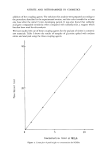
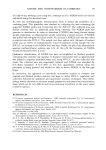
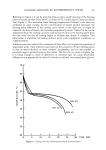
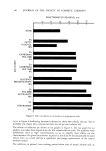
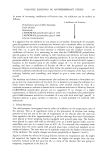
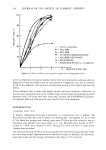
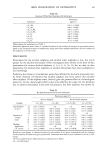
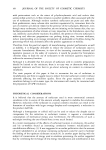
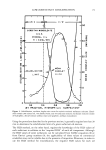
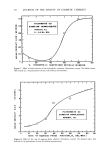
152 JOURNAL OF THE SOCIETY OF COSMETIC CHEMISTS p.x 103 0 0 0 0 0 0 NONE 5% CETYL ALCOHOL 10% 2% CARBOWAX PEG 1000 4% -- 2% CARBOWAX m PEG 1540 r.n 4% 2% G LYCE RO L MONOSTEARATE 10% 5% P E G 6000 DISTEARATE 10% 5% STEARAMIDE 10% Figure 11. Effect of additives on coefficient of friction of antiperspirant sticks. The effect of additives on the evaporation rate of sticks containing the standard 50% volatile silicone are shown in Figure 13. It can be seen that the additives have a pronounced effect on the evaporation rate, with all of them increasing the rate above that of the standard stick. The pattern was similar, however, in that most of the evaporation occurred in the first 2 hr. Glycerol monostearate gave the highest evaporation rate and appeared to produce a slight gain in weight at the 3-hr interval, but this latter phenomenon may simply be due to anomalous data. The other additives gave evaporation curves that were almost

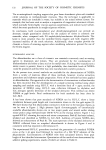
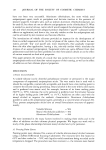
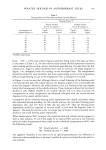
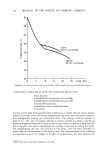
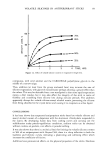
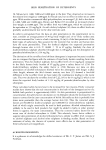
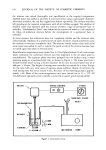
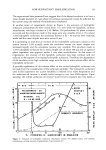
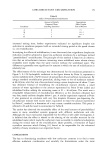
VOLATILE SILICONES IN ANTIPERSPIRANT STICKS 153 6øi/ ½ _ g •_ 75% • 65% 40 ! ! _ _------ 50% I-!/.,--' I .... 0 1 2 3 4 TIME, HRS. Figure 12. Effect of volatile silicone content on evaporative weight loss. contiguous, with cetyl alcohol and the CARBOWAX polyethylene glycols in the middle of a narrow range. Thus, additives (at least from the group evaluated here) may increase the rate of silicone evaporation, with glycerol monostearate perhaps showing a greater effect than the others. This may be desirable from a use standpoint in that more rapid evaporation means a drier residue, but it may also affect the integrity of the stick in terms of friability and crumbling from silicone loss during non-use periods. The additives apparently disrupt the volatile silicone-stearyl alcohol matrix, preventing the silicone from being absorbed in the crystal lattice and causing it to evaporate as a free liquid. CONCLUSIONS It has been shown that suspensoid antiperspirant sticks based on volatile silicone and stearyl alcohol consist of a dispersion with the aluminum chlorhydrate suspended in the matrix. By developing fusion data from cooling curves and carrying out the solidification under pseudo-equilibrium conditions, uniform sticks can be obtained without cavities, air pockets, core effects or powder settling. It was also shown that there is a technical basis for limiting the volatile silicone content to 50% of an antiperspirant stick. Beyond 50%, there is a sharp inflection in both the hardness and lubricity curves, indicating a plasticizing and softening effect which increases the coe•cient of friction. Additives have pronounced effects on the physical properties of the sticks. Hardness
Purchased for the exclusive use of nofirst nolast (unknown)
From: SCC Media Library & Resource Center (library.scconline.org)