LOW-SURFACTANT EMULSIFICATION 169 possible to make O/W emulsions having an average droplet size smaller than the same emulsion processed by using conventional process (5, 6). Further investigation of the solubilization technique revealed that it is a powerful tool which can be used to lower the surfactant concentration in many emulsions without having to use a homogenizer or other high-shear equipment. Before discussing the solubilization technique, it is of interest to determine how much surfactant is theoretically needed to stabilize a typical cosmetic emulsion. The author had measured, by photomicrographs, the droplet sizes of ten popular brands of O/W moisturizer sold in the United States and found that the mean droplet diameter ranged from 2 to 9/am with an overall average of about 4/am (7). To estimate the surfactant requirement, it is assumed that a freshly prepared O/W emulsion containing 20% mineral oil with density of 0.84 has a uniform droplet diameter of 2/am, and that the area occupied by an adsorbed surfactant molecule is 50 square •kngstroms. A calculation for 100 g of this emulsion shows that the amount of surfactant required for a monomolecular layer adsorption at the oil-water interface is 2.36 X 10 -4 mol. Although this amount represents a theoretical minimum which assumes a monomo- lecular adsorption and no miceliar formation, it is quite clear that the amount is far smaller than the amount normally used in commercial emulsions. In cosmetic emulsions, the amount of surfactant used generally ranges from about 2 to 10%. An even higher surfactant concentration is used in some applications, such as in microemulsion gels. One way to reduce the total surfactant concentration in an emulsion without sacrificing the emulsion quality is to replace the surfactant system with a more effective one. Although Griffin's HLB concept is helpful in reducing the number of trials needed to find a more efficient surfactant system, its practical usefulness for emulsification is very much limited. For example, when applicable, HLB does tell one approximately what combination of the two surfactants is most efficient it, neverthe- less, offers no information regarding the relative efficiency of two classes or types of surfactants (8). During the course of studying the effect of surfactant location, the author had found that the amount of water which could be solubilized in the oil phase containing the surfactant mixture could be used as a reliable guide in finding the point of optimum emulsification. It is suggested that this method can be applied advantageously to find a more efficient surfactant mixture in order to reduce the total surfactant concentra- tion. Another way of reducing the surfactant is by optimization of the process conditions. It was found that by an application of solubilization techniques, it is possible to greatly facilitate emulsification without having to use any energy-consuming high-shear equipment. EXPERIMENTAL The amount of aqueous solubilization in an oil-surfactant mixture was determined by first weighing 10 g of the mixture in a square glass vial having a 68-ml capacity. After

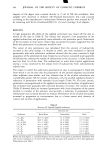
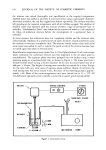
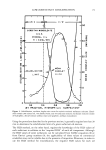
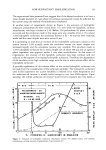
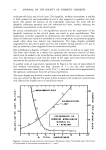
170 JOURNAL OF THE SOCIETY OF COSMETIC CHEMISTS the mixture was mixed thoroughly and equilibrated at the required temperature, distilled water was added at precisely 0.1-ml increments using a micropipet dispenser. After each addition, the vial was capped and shaken vigorously. The mixture was then left standing at the required temperature until all air bubbles escaped. The addition of distilled water was repeated until the mixture showed a sign of permanent haze or turbidity. "Solubilization Limit" was defined as the amount of water in 1 ml consumed by 100-g oil-surfactant mixture before the development of a permanent haze or turbidity. In some systems, the surfactants were not completely soluble and the mixtures were turbid initially. Addition of a small amount of water, however, would sometimes cause the mixture to become completely clear. The mixture would remain clear until some more water was added. In such a system, the point at which the mixture became hazy or turbid again was taken as the end point. Emulsification experiments were carried out in 150-ml glass beakers. In all cases except where indicated, the surfactant mixture was first dispersed in the oil phase prior to emulsification. The aqueous phase was then pumped into the beaker using a small metering pump at a predetermined rate, as shown in Figure 1. The mixer used was a 4-blade turbine mixer having a 30-mm diameter. In all runs, the mixer speed was set at 400 rpm _+ 10 rpm. The length of mixing was controlled accurately by a timer. Except for the runs with very slow rates of aqueous phase addition (below 20 ml/min), the total mixing time was set at exactly 5 min. Accuracy of the metering pump is approxi- mately +4%. Most of the room-temperature runs were carried out at 23 + iøC. All emulsification operations were carefully conducted to assure good reproducibility. THERM 2MM BEAKER _•10 MM TURBINE •-'•' 5 5 MM ""• SPEED CONTROL TIMER AQUEOUS PHASE INLET [ METERING PUMP Figure 1. Experimental setup.
Purchased for the exclusive use of nofirst nolast (unknown)
From: SCC Media Library & Resource Center (library.scconline.org)