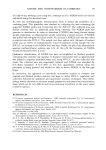
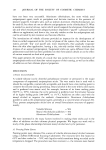
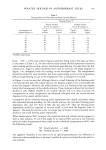
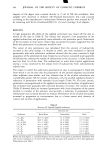
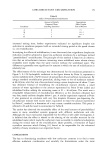
158 JOURNAL OF THE SOCIETY OF COSMETIC CHEMISTS Investigations into skin permeability of experimental animals have achieved little success due largely to the lack of sensitivity and specificity of analytical methods together with interference from components of biological samples and to the fact that animals are able to metabolise many types of detergents (17-20). Such analytical difficulties can be overcome by using pure, radioactively labelled detergents with a relatively high specific activity to achieve a sensitivity of a few ppb. The extent of metabolism is irrelevant provided absorption occurs before catabolism, which is usually the case, and the radioactivity in the body and excreta can be equated with skin penetration. In man, use of radio isotopes is severely limited. There is a need therefore in developing the protocol for animal studies to define the relationship of the animal model to man. Comparative skin penetration studies (21-24) are beginning to establish a relationship between laboratory animals and man, although there are variations in skin permeability of different sites in man (25-28). In the safety evaluation of detergents, it is crucial to include in the protocol studies on skin penetration and investigations into factors which affect absorption. The value of an animal model in providing accurate data at very low levels of skin penetration and in its correlation with human skin permeability is therefore an important bridge in the evaluation of safety from possible systemic effects. These studies will be of paramount importance until such time as appropriate analytical methods for detergents and their metabolites are available for human studies. In the present paper, studies of skin penetration in the rat of alcohol sulphates, alcohol ether sulphates and alcohol ethoxylates will be described. The animal data will be used to show that the expected human body burden due to skin penetration is low and unlikely to cause any systemic toxic effects. EXPERIMENTAL MATERIALS Two alcohols, [1-t4C] dodecanol and [1-t4C] pentadecanol, were synthesised (29) and then sulphated or ethoxylated, or ethoxylated and sulphated to give pure t4C-labelled alcohol sulphates, alcohol ethoxylates and alcohol ether sulphates (see Table I) by methods which will be published later. The radiochemical purity of all the test surfactants was greater than 98%, as determined by thin layer chromatography, radio gas chromatography and isotope dilution analysis. The specific activities of these '4C-labelled surfactants ranged from 5-18/aCi/mg. TEST SOLUTIONS The differences in solubilities of the pure surfactant compounds ranged from the •,=1.•- ..,=1.. .•c,l.,¬l,= Ac•A,=,--,,1 tri,=•'hc•¾yl•t,= tc• the water solu¬le sodium dodecvl sulphate. To overcome the insolubility of some of the test surfactants, all solutions were made up in a 1% (w/v) solution of a commercial linear alkyl benzene sulphonate (LAS) which had 11-13 C atoms in the alkyl chain and an even distribution of the phenyl ring on C atoms 2-7. Thus to accurately weighed samples of the •4C-labelled surfactants to give concentrations ranging from 0.2-2.0% (w/v) the requisite amount of

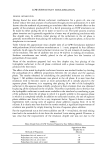
SKIN PENETRATION OF DETERGENTS 159 Table I Surfactants For Skin Penetration Studies Surfactant Abbreviation Specific Activity (/zCi/mg) Sodium [i?C] Sodium [i?C] Sodium [I?C] Sodium [1-14C] [17C] dodecyl sulphate a n C•2 SO 4 11.1 pentadecyl sulphate a n C•5 SO 4 17.9 dodecyl triethoxy sulphate a n C•2 E 3 SO 4 9.8 pentadecyl triethoxy sulphate n C•5 E 3 SO 4 5.2 dodecyl triethoxylate n C• E 3 11.2 dodecyl hexa ethoxylate n C•2 E 6 14.0 dodecyl decaethoxylate n C•2 E•0 12.4 pentadecyl triethoxylate n C•5 E s 6.6 In all experiments, except awhere only 150/xl treatments were with 200/xl of 1% (w/v) surfactant in of 1% (w/v) surfactant were applied. 1% (w/v) LAS, i.e., 2000/zg/10 cm 2, 1% (w/v) LAS was added. In some cases carrier surfactant was added to make up 1 and 2% (w/v) test solutions. The 1% (w/v) LAS solution adequately solubilised all test compounds at these concentrations. All solutions were kept at 37 ø during the treatment of animals. Aliquots of 150 or 200 /.tl were dispensed from a microlitre syringe on to the treatment area of skin (10 cm2). ANIMALS AND TREATMENT Female Colworth Wistar rats weighing 120-130 g were used. The treatment of the animals with single or multiple application of the test solutions were as described by Howes (6). Multiple applications were made at 2-hr intervals, during which time the rats were fitted with cardboard restraining collars. Expired CO2, urine and faeces were collected separately each 24 hr for 2 days (d), at which time the animals were killed. The treated areas of skin were excised and the carcass retained for measurement of radioactivity. Other groups of rats were given each surfactant by intubation or by intraperitoneal or subcutaneous injection. The route and rate of excretion during 2 d and the carcass residue were determined. The excretion data were used to correct the observed excretion after topical application for the calculation of skin penetration. ANALYSIS OF •4C All samples were assayed for •4C in Packard 2425 or 2450 Tri-Carb liquid scintillation spectrometers (Packard Instruments Ltd., La Grange, Illinois). All samples were counted in liquid scintillator NE 260 (Nuclear Enterprises Ltd., Sighthill, Edinburgh) and each sample was standardised using an automatic external standard which was calibrated with •4C-n-hexadecane (Radiochemical Centre, Amersham, England). Faecal •4C levels were determined by combustion in an Intertechnique IN 4107 Oxymat sample oxidiser (Intertechnique Ltd., La Plaisir, France). Levels of •4C in the carcasses of rats were determined by "dissolving" the carcass in 250 ml of 4N NaOH overnight at 60 ø. The '•solution" in NaOH was neutralised with HC1 in ethanol and 2.0 ml
Purchased for the exclusive use of nofirst nolast (unknown)
From: SCC Media Library & Resource Center (library.scconline.org)