EFFECTIVENESS OF SUNSCREENS 177 of the consumer, we would recommend that the proposed FDA regulations regarding solar simulators more narrowly specify the wavelengths of UV light to be included. Further, in the interest of insuring the greatest protection from sunburn and skin damage, we would recommend that the spectral conditions simulated in sunscreen product effectiveness testing should approximate the solar spectral conditions yielding the shortest wavelengths of UV light which might commonly be encountered by individuals requiring sunscreen protection. Our results also suggest that similar problems of results differing due to different spectra of natural sunlight at different testing localities, times of day, or times of year may be encountered during outdoor testing of sunscreen efficacy. The rules for outdoor testing of sunscreens may also need reexamination. REFERENCES 1. Sunscreen Drug Products for Over-The-Counter Human Use, Federal Register, 43, 38206-38269 (1978). 2. D. S. Berger, Specification and design of solar ultraviolet simulators, J. Invest. Dermatol., 53,192-199 (1969). 3. D. S. Berger, F. Urbach and R. E. Davies, The action spectrum of erythema induced by ultraviolet radiation, in Proc. 13th Conf Int. Dermatologiae, Munchen, 1967, Springer-Verlag: Berlin, 1968 pp 1112-1117. 4. D.J. Cripps and C. A. Ramsay, Ultraviolet action spectrum with a prism-grating monochromator, Br. J. Derre., 82, 584-592 (1970). 5. M. A. Everett, R. L. Olson and R. M. Sayre, Ultraviolet erythema, Arch. Dermatol., 92, 713-719 (1965). 6. R. G. Freeman, D. W. Owens, J. M. Knox and H. T. Hudson, Relative energy requirements for erythemal response of skin to monochromatic wavelengths of ultraviolet present in the solar spectrum,J. Invest. Dermatol., 47, 586-592 (1966). 7. J. Scotto, T. R. Fears and G. B. Gori, Measurements of Ultraviolet Radiation in the United States and Comparisons with Skin Cancer Data, U.S. Department of Health, Education and Welfare, DHEW No. (NIH) 76-1029 (1975). 8. L. Koller, The physics of the atmosphere, in The Biologic Effects of Ultraviolet Radiation, F. Urbach, Ed., Pergamon Press: N.Y., 1969 pp 329-333. 9. A. E. S. Green, T. Mo. and J. H. Miller, A study of solar erythema radiation doses, Photochem. Photobiol., 20, 473-482 (1974). 10. K. H. Kaidby and A.M. Kligman, Laboratory methods for appraising the efficacy of sunscreens,J. $oc. Cosmet, Chem., 29, 525-536 (1978).

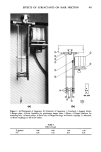
J. Soc. Cosmet. Chem., 31,179-200 (July/August 1980) Effects of surfactant solutions on hair fiber friction G. V. SCOTT and C. R. ROBBINS, Colgate-Palmolive Research Center, 909 River Road, Piscataway, N.J. 08854. Received January I I, 1980. Presented at Annual Scientific Meeting, Society of Cosmetic Chemists, December 1979, New York, New York. Synopsis A capstan method using the Instron Tensile Tester © is described for measuring friction of hair fibers on various reference surfaces. Other test variables examined include fiber tension, rubbing speed, fiber diameter and hair condition. The method was developed to evaluate effects of SURFACTANTS on HAIR FIBERS as part of a longer range objective to predict hair fiber assembly behavior from single fiber properties. Accordingly, frictional results are supplemented with qualitative combing tests on tresses. Cationic surfactants differ for frictional effects on hair rubbed against hard rubber or wool. Some produce friction minima as concentration is reduced, while others of higher molecular weight maintain low frictien. The existence of FRICTION MINIMA was confirmed by qualitative combing tests. With anionic surfactants, friction of hair fibers on hard rubber decreases with increasing concentration. The addition of metallic ions to TEA-lauryl sulfate can either raise or lower friction, depending on their mode of complexing with TEA. Shampoos of different types can be distinguished by frictional measurements, using a "controlled rinse" procedure. INTRODUCTION Change in hair fiber friction by application of shampoos or creme rinses is a critical factor for understanding product performance. Combing and properties such as hand or feel, body, manageability, raspiness and static charge, are expected to show frictional dependence. Discussion of desirable direction and magnitude of friction change is inappropriate at this point but certainly friction should be measured to provide a basis for explaining and improving product performance. Mechanical combing methods (1, 2) can be empirically defended but the work or force values obtained are very complex in origin for simple or theoretical description. Single fiber friction offers more attractive prospects for uncovering fundamental principles required to explain influences of surfactant and other treatments on hair combing. Such information is essential to a longer range objective, i.e. predicting hair assembly behavior from single fiber properties (3). Complying with this objective, consumer perception of certain frictional effects are preliminarily tested by paired comparison of surfactant treatments on small hair tresses, qualitatively ranked by individuals for combability. Interesting options for measuring friction of wool and other textile fibers are described in original articles, reviews (4, 5) and books (6-11). A "fiber twist" method, experimentally and theoretically described by Lindberg (12), is of special interest for fiber on fiber friction with an Instron as measuring device and accessory parts 179
Purchased for the exclusive use of nofirst nolast (unknown)
From: SCC Media Library & Resource Center (library.scconline.org)