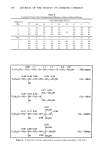
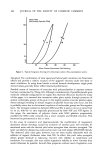
DANIELS' YEAST ASSAY PETRI PLATE + NUTRIENT + CANADIDA ALBICANS AGAR UNKNOWN 8 MOP 10-4% PAPER DISCS + TEST CHEMICAL 320-400 nrn / LI••••%1.5-2•MW-S UVA 10% / UNKNOWN 0.1% UNKNOWN DARK NON SPECIFIC INHIBITION 0 HOUR 48 HOURS Figure 1. Schematic summary of Daniels' method of demonstrating phototoxicity in vitro. Examples of phototoxic inhibition are shown using three 10-fold dilutions of a representative phototoxic fragrance chemical. The pale shading represents freshly inoculated agar the dark shading represents confluent cultures two days after initiation of the test. Both UVA-specific and non-specific inhibition of yea,st growth are shown.

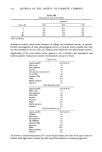
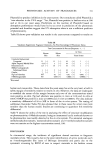
308 JOURNAL OF THE SOCIETY OF COSMETIC CHEMISTS unknown (at 10% in this example) may occasionally encroach on other spots, prompting our subsequent adaption of a compartmentalized well-system. The 8-MOP control produced typical 4-6-ram-diameter zones following UVA exposure but there was no inhibition in the dark as expected. There was also a substantial zone of inhibition produced by the unknown at 10% indicative of non-specific, non-phototoxic inhibition. This effect was extinguished in the higher dilution, 1%. In such cases, the compound is clearly phototoxic at 1% and directly fungistatic at 10% as well. We have modified the original methods to use Bakers Yeast instead of the pathogen Candida albicans and now use an environmentally uniform, four well plate which contains barriers against diffusion interference from the various test site locations. These modifications have also precluded interference through volatilization of test material with only a single exception, and this was detected in the 8-MOP control wells in the form of complete failure of the yeast to grow. Figure 2 shows typical results from the original system while Figure 3 illustrates results in the present system. Figure 2. Typical results of an assay of a phototoxic fragrance material studied using Daniels' method. 8-methoxypsoralen is present as a control at 10 -4 w/v concentration. After the phototoxic inhibition of yeast was demonstrated in the modified system at levels of sensitivity equal to that of the original system, tests of validation were performed after acquiring as many known animal/human fragrance phototoxins and non-phototoxins as possible. Table I shows a list of fragrance materials that have been associated with phototoxic properties in animal or human studies. All were detected in
Purchased for the exclusive use of nofirst nolast (unknown)
From: SCC Media Library & Resource Center (library.scconline.org)