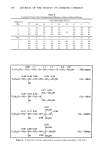
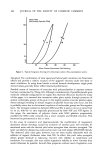
PHOTOTOXIC ACTIVITY OF FRAGRANCES 309 Figure 5. Typical results of an assay of a phototoxic fragrance material studied by modified methods using baker's yeast and a four-well plate. the in vitro screen system at standard 1% test concentrations. In vivo, Bergamot and Rue Oil were positive in hairless mice at about 3% and Fig Leaf Absolute was phototoxic down to 0.001% in 50% of the mice tested (data supplied by Research Institute of Fragrance Materials, Inc. (RIFM). Table II shows results for exposed RIFM fragrance chemicals tested as high as 10% that had no known phototoxic effect on Table I Validation Experiments: Positive Validation With Fragrance Chemicals • Results Expected 2 UVA 3 No UVA Phototoxic 3 8 mop Phantolid Bergamot Oil Expressed Rue Oil Angelica Root Orange Oil Bitter Expressed Lime Oil Pos. Pos. Neg. Yes Pos. Pos. Neg. Yes Pos. Pos. Neg. Yes Pos. Pos. Neg. Yes Pos. Pos. Neg. Yes Pos. Pos. Neg. Yes Pos. Pos. Neg. Yes •Correlation with expected: 100%. ZFrorn results in vivo or analogy. 3Maximum concentration tested: 1%. Lowest concentration tested: 0.1%.

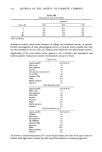
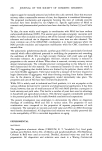
310 JOURNAL OF THE SOCIETY OF COSMETIC CHEMISTS Table II Validation Experiments: Negative Validation For Fragrance Chemicals I Results 2 Expected UVA No UVA Phototoxic Methanol Neg. 3 Neg. Neg. No 6-Methylcoumarin Neg.4 Pos. Neg. Yes Galaxolide Neg. Neg. Neg. No Isoeugenol Neg. Pos. Pos. No D Eugenol Neg. Pos. Pos. No D Methylsalicylate Neg. Pos. Pos. No D Octahydrocoumarin Neg. Pos. Pos. No D Transoctahydrocoumarin Neg. Pos. Pos. No D 6-Methyloctahydrocoumarin Neg. Pos. Pos. No D •Correlation with expected: 8995. 2Maximum concentration tested: 10%. 3From experiments in vivo or analogy. 4Shown to be a contact photoallergen--literature data and personal communication with D. Forbes. •Zone in dark equal in diameter of zone in light (inhibition non-specific). mammalian skin. Although several chemicals were directly inhibitory to yeast, the effects were not light-dependent and therefore were negative for phototoxicity. One chemical, 6-methylcoumarin was phototoxic to the yeast at 0.1% concentration. Although this was a false positive according to available biological data, 6- methylcoumarin has been incriminated as a photoallergen (7). Concurrent with the in vitro validation process, UV absorption data were generated for the pure chemicals. This attempted to answer the question of whether the physical data would preclude the need for tests in yeast. As illustrated in Figure 4, even a small tail of absorption in the UVA spectrum range (1% of total absorbance) was enough for 37O NM •PHANTOLID • -,•x'x'x,. UVB • •UVA . \•-VISIBLE--• INRFER 280 NM 315 NM 400 NM 770 NM OUTPUT RANGE USED IN PHOTOXlCITY SCREEN IN VITRO Figure 4. UV absorbance pattern of phantolid relative to the emission spectrum used in the yeast essay system. Figure is intended to illustrate only minor (1%) overlap.
Purchased for the exclusive use of nofirst nolast (unknown)
From: SCC Media Library & Resource Center (library.scconline.org)