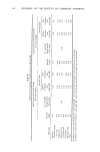
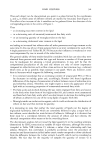
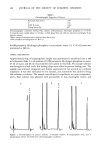
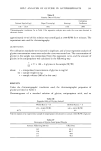
362 JOURNAL OF THE SOCIETY OF COSMETIC CHEMISTS antiperspirant roll-on both containing glycine are shown in Figure 1 (A, B, and C). The linear detection range of glycine was tested at various times using the same chromatographic conditions. Data presented in Table II show that glycine response is linear over the experimental working range. The precision and accuracy of this procedure were determined. The within-run and between-run assays of an antiperspirant stick are shown in Table III. The recovery data for various amounts of glycine added to an experimentally prepared antiperspirant stick placebo are provided in Table IV. Data shown in Tables III and IV indicate that the precision and accuracy of this procedure for the analysis of glycine are excellent. Several commercially available antiperspirants were analyzed for glycine. These results are summarized in Table V. Table V Assay of Glycine In Antiperspirant Samples • Brand % Glycine (W/W) A 3.53 B 2.57 C 3.62 D 2.56 E 2.07 •AII samples were common brand names obtained from local supermarkets. SUMMARY AND CONCLUSION The procedure described here is precise, accurate, and simple. No interferences or special difficulties have been encountered in the assay, and the procedure is used in our laboratory routinely. The procedure worked very well for all the frequently used stick and roll-on antiperspirants we tested. Although we have not carried out any accelerated degradation studies to ensure the specificity of the procedure, it was found suitable to assay aged samples kept at room temperature. The choice of the amino column and a hydroorganic mobile phase containing ammonium dihydrogen phosphate was found suitable for separation of glycine. The retention mechanism is not clearly understood, but it seems that there is some ion-exchange or an ion-pairing mechanism involved. Addition of ammonium dihydrogen phosphate has been proven necessary in sample preparation. This prevents precipitation of aluminum chloride as phosphate in the column head preventing high pressure build-up in the system. REFERENCES (1) S. Plechner, "Antiperspirants and Deodorants" in Cosmetics Science and Technology, 2nd ed., M. S. Balsam et al., Eds. (Wiley-Interscience, New York, 1972), Vol. 2, pp 373-416. (2) H. Rosen, A modified ninhydrin colorimetric analysis for amino acids, Arch. Biochem. Biophys., 67, 10 (1957). (3) T. R. Koziol,J. T.Jacob, and R. G. Achari, Ion-pair liquid chromatographic assay of decongestants and antihistamines,J. Pharm. Sci., 68, 1135 (1979).

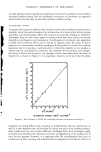
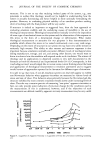
Letter to the Editor To the Editor: Hair geometry is the result of processes of keratinization and follicular extrusion that transform a viscous mixture of proteins into a strong and resilient fiber. Waving can be viewed as a restage of these processes entailing softening of keratin, molding it to a desired shape, and stabiliz- ing the newly imparted configuration. The cleavage of disulfide bonds is essen- tial to the softening process, and their reformation is required for imparting a durable wave. While both the sulfite and thioglycolate waving systems rely upon the sequence of such reactions, the differ- --= Sulfite Thioglycolate 0.8 0.4 - 0.2 I I • I i 6 8 lO pH Figure 1. Fraction of -S-S- Bond Cleavage (e•) as a Function of 363
Purchased for the exclusive use of nofirst nolast (unknown)
From: SCC Media Library & Resource Center (library.scconline.org)