COSMETIC INGREDIENT COMEDOGENICITY 225 (8) j.E. Fulton, S. Bradley, A. Aquendex, and T. Black, Noncomedogenic cosmetics, Cutis, 17, 344-351 (1976). (9) G. W. Hambrick and H. Blank, A microanatomical study of the response of the pilosebaceous apparatus of the rabbit's ear canal,J. Invest. Dermatol., 26, 185-198 (1956). (10) A.M. Kligman, Pathogenesis of acne vulgaris. II. Histopathology of comedones induced in the rabbit ear by human sebum, Arch. Dermatol., 98, 58-66 (1968). (11) P. Kanaar, Follicular-keratogenic properties of fatty acids in the external ear canal of the rabbit, Dermatologica, 142, 14-22 (1971). (12) O. H. Mills and A.M. Kligman, Acne detergicans, Arch. Dermato/., 111, 65-68 (1975). (13) P. C. Woo-Sam, The effect of vitamin A acid on experimentally induced comedones: An electron microscope study, Brit. J. DermatoL, 1OO, 267-276 (1979) (14) A.M. Kligman, V. R. Wheatley, and O. H. Mills, Comedogenicity of human sebum, Arch. Dermatol., 102 (1970). (15) A.M. Kligman and A. G. Katz, Pathogenesis of acne vulgaris. I. Comedogenic properties of human sebum in external ear canal of the rabbit, Arch. Dermatol., 98, 53-66 (1968). (16) O. H. Mills and A.M. Kligman, Assay of comedolytic agents in the rabbit ear, in Animal Models in Dermato/ogy, H. Maibach, Ed. (Churchill Livingstone, N.Y., 1975), pp 176-183. (17) O. H. Mills, M. Porte, and A.M. Kligman, Enhancement of comedogenic substances by ultraviolet radiation, Brit. J. Dermato/., 98, 145-150 (1978). (18) A.M. Kligman and T. Kwong, An improved rabbit ear model for assessing comedogenic substances, Brit. J. Dermatol., 1OO, 699-702 (1979). (19) P. C. Woo-Sam, Cohesion of horny cells during comedo formation--an electron microscope study, Brit. J. Dermatol., 97,609-615 (1977). (20) P. C. Woo-Sam, A quantitative study of membrane coating granules in follicles undergoing experimental comedo formation, Brit. J. Dermatol., 99, 387-394 (1978). (21) E. L. Jones and H. Krizek, A technic for testing acnegenic potency in rabbits, aiJplied to the potent acnegen, 2,3,7,8-tetrachloro-dibenzo-P-Dioxin,J. Invest. Dermatol., 39, 511-517 (1962). (22) O. H. Mills and A.M. Kligman, Is sulphur helpful or harmful in ache vulgaris?, Brit. J. DermatoL, 86, 420 (1972). (23) J. S. Strauss, P. H. Goldman, S. Nacht, and E. H. Gans, A re-examination of the potential comedogenicity of sulfur, Arch. Dermatol., 114, 1340-1342 (1978). (24) S. B. Frank, Is the rabbit ear model, in its present state, prophetic of acnegenicity?,J. Amer. Acad. Dermatol., 6, 3 (1982). (25) O. H. Mills and A. Kligman, A human model for assessing comedogenic substances, Arch. Dermatol., 1 18, 903-905 (1982).

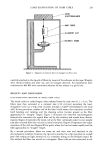
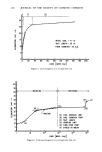
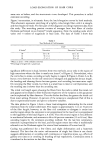
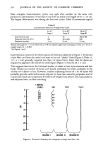
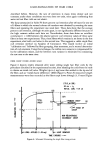
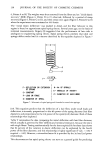
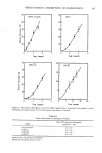
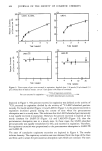
j. Soc. Cosmet. Chem., 34, 227-239 (August 1983) Load-elongation of single hair fiber coils C. R. ROBBINS, Colgate-Palmolive Research Center, 909 River Road, Piscataway, NJ 08854. Received December 9, 1982. Synopsis The objective of this project was to study the load-elongation and creep behavior of water set single hair fiber coils at constant RH to provide some insights into their physical behavior. Single fibers were used instead of tresses to avoid complications from interfiber interactions and to simplify data interpretation. The first portion of this paper is concerned with measuring forces involved in stretching and recovery of single hair fibers water set as helical spirals. For initial uncoiling, the load is approximately proportional to the extension. With further extension a region is found in which load is proportional to the logarithm of the extension. However, as the fiber approaches straightness, once against the load is proportional to the extension. A large proportion of the extension is recoverable even after multiple extension-recovery cycles however, some coil loss occurs, confirming a lack of true elasticity. The existence of creep confirms the absence of a true Hookean region for stretching water set single fiber coils. With no external load, most of the fiber creep (84%) or uncoiling can be explained by fiber diameter, with thicker fibers resisting coil deformation better than thinner ones. With small added loads no meaningful relationship between creep and fiber diameter was found. However, the initial coil deflection with added load is significantly related to fiber diameter. Spiral spring theory predicts a power dependence of coil deflection on fiber diameter, and is useful for predicting the initial deflection but not the creep of water set hair curls with load. INTRODUCTION Although several single fiber methods are available to evaluate the mechanical properties of human hair (1-6), no methods or data could be found which describe the physical behavior of single hair fibers in coil or curl form. Since single fiber testing eliminates complications from interfiber interactions involved in the behavior of hair tresses or hair on the head, we elected to explore the simpler coil-extension behavior of single hair coils. Initially, we evaluated methodology then to develop some under- standing of the load-elongation behavior of water set curls, we examined the extent of coil loss from single fiber water set coils, under the influence of stress and time, at a constant relative humidity of 40%. The first part of this discussion is concerned with the stress-strain behavior of single fiber water set coils, set as helical spirals, and their extension under load until approximately straight. Then single fiber water set coils are released, hung vertically, and their elongation (uncoiling) observed over time with and without added weight. 227
Purchased for the exclusive use of nofirst nolast (unknown)
From: SCC Media Library & Resource Center (library.scconline.org)