j. Soc. Cosmet. Chem., 34, 241-253 (August 1983) Facial oiliness and dryness: Correlation between instrumental measurements and self-assessment MICHAEL S. CHRISTENSEN and SERGIO NACHT, Dermatological Research Department, Vicks Research Center, Shelton, CT 06484 ELIAS W. PACKMAN, Philadelphia College of Pharmacy and Science, Philadelphia, PA 19104. Received February 4, 1983. Presented at the Annual SCC Meeting, New York City, December 2-3, 1982. Synopsis The facial skin of many individuals is excessively oily in some areas, excessively dry in others. Skin care products for general use thus need to be compatible with both oily and dry skin. Formulating such compatible products requires accurate, objective assessment of oiliness and dryness in vivo. Oiliness is assessed by measuring skin surface friction this characteristic varies on different parts of the face, and it may be altered by product application. The forehead and nasal fold areas were found to be oilier than the cheeks, and an inverse relationship was shown between perceived oiliness and skin surface friction. Drying effects are assessed by measuring the increased stiffness (tautness) of the stratum corneum which may result, for example, from ordinary washing with soap and water, or from application of products which have a drying effect on the skin. Changes in skin surface stiffness are more readily demonstrated on the cheeks than on the forehead, although baseline stiffness is found to be greater on this (latter) site. In this assessment, we use a gas-bearing electrodynamometer suitably adapted for measurements on the face. Objective measurements made with these instruments correlate well with self-assessment of facial oiliness and dryness. INTRODUCTION We have used both instruments and trained panelists, as appropriate, for objective measurement of skin characteristics. In this paper, we will show how in vivo instrumental measurements can be used to quantitate two familiar facial skin conditions: (1) the stiffness of a "dry" horny layer, and (2) the.oiliness associated with excess sebum on the skin. The latter is cosmetically unacceptable to many individuals. The two conditions--oiliness and stiffness--are measured with instruments which have been described in prior work (1-2): the Newcastle friction meter, which measures the coefficient of the friction generated when a Teflon wheel rotates in contact with the skin surface, and the Gas Bearing Electrodynamometer (GBE), which assesses stiffness by measuring the resistance of the skin surface to shear. 241

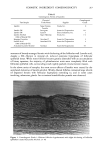
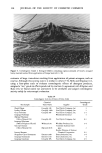
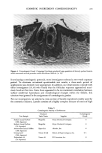
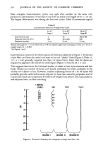
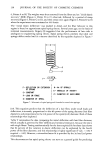
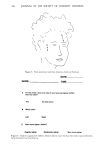
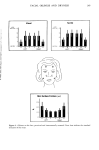
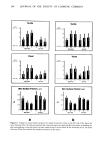
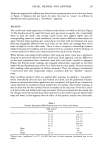
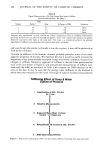
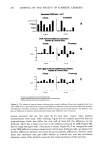
242 JOURNAL OF THE SOCIETY OF COSMETIC CHEMISTS MATERIALS AND METHODS For assessment of oiliness, eight people with normal-to-oily facial skin were selected, males and females, ranging in age from 18 to 45. The subjects were seen between 2 PM and 4 PM, having last washed their faces at 8 AM. This interval allowed close to a maximum amount of sebum to accumulate on the face, since the subjects said that they usually washed at least once every 6-8 hours. Self-appraisal of oiliness was performed at the indicated sites by means of the scale depicted in Figure 1. For this appraisal, Subjects were asked to rate their oiliness, visually and by touch at the indicated sites, using the following scale: VERY, VERY OILY. ............. 4 QUITE OILY ....................... 3 MODERATELY OILY .......... 2 SLIGHTLY OILY ................. 1 NOT OILY AT ALL ............. 0 Figure 1. Subjective appraisals of oiliness. subjects sat at a makeup table and viewed their faces in a mirror surrounded by 15-watt "soft-white" bulbs. In all instances, visual appraisals were done before tactile appraisals. Washing was done with soap and water using an ordinary non-superfatted alkaline soap bar. Subjects carefully washed and dried their hands after product application and before self-appraisal was begun. No special instructions were given subjects were simply asked to wash thoroughly and then to dry their faces, with soft absorbant paper towels. They used their finger-tips for tactile appraisal the sites were scored in a random order. There was no cleansing of the finger-tips during the appraisal. To assess emollient effects on washed skin, an experimental "non-greasy" emollient lotion was applied by the subjects right after the face was washed and dried. This lotion is an oil in water dispersion the principal emollient ingredients are fatty acid salts, fatty alcohols, sterol, and mineral oil.
Purchased for the exclusive use of nofirst nolast (unknown)
From: SCC Media Library & Resource Center (library.scconline.org)