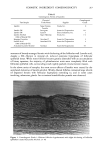
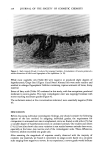
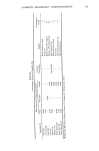
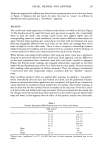
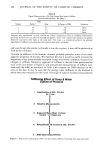
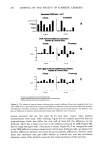
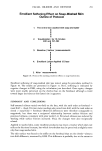
COSMETIC INGREDIENT COMEDOGENiCITY 223 produced no effects in a human test panel when applied for six weeks under occlusive patches at 0.25% concentration. Strauss et al. (23), however, using the same technique, concluded that Triton X-100 appeared to be comedogenic. Our determination, and that of Kligman and Mills (7), of the noncomedogenic activity of sodium lauryl sulfate conflicts with the high scores published by Fulton et aL (8) on this surfactant. This diversity in comedogenic findings among investigators using the same or similar test agents may be attributed to differences in techniques, purity of test samples, biological variations, interpretation criteria, or other unapparent factors. With a simple chemical mixture, although source and purity may differ, several dermatologists found that hydrophilic ointment (USP), for example, was noncomedogenic in both animal and human studies (7,17,22). Fulton et al. (8), on the other hand, report that significant comedones were produced in rabbit ears after a two-week application of a USP ointment sample and ascribe this result to the presence of sodium lauryl sulfate (1%) in the formula. Investigators attempting the utilization of rabbit test dat a to predict the potential for comedogenicity in humans have emphasized several factors bearing on such compari- sons. The ultrasensitivity of the rabbit follicle to respond readily to test materials has been extensively documented in published work (6-7,15,17,22-23). Differences between this animal model and the human pilosebaceous apparatus in bacterial residence, morphology, and comedo development have been outlined (9-11,15,24). With respect to the ability of the rabbit follicle to respond quickly to many test materials, the effects of dermal irritants have not been thoroughly studied. Kligman and Katz (15) assert that hyperkeratosis of the follicular epithelium cannot be ascribed to simple irritancy and were unable to induce follicular hyperkeratosis with several strong irritants. Kligman (10) conversely states that in the first week of application it is difficult to distinguish among epidermal acanthosis, hyperkeratosis, and inflammatory changes produced by an irritant and a comedogen. He also explained that with irritants, while hyperplasia of the epidermis may be great, the follicular epithelium is usually slightly affected, and the loose, horny squame in the follicle which may accompany an irritation reaction are usually sloughed too quickly to allow comedo formation. Kligman et aL (14) also report that irritants us/aally stimulate the formation of non-adherent horny cells, while comedogenic agents cause these to stick tightly together to form a comedone. In one's observation of slight to moderate increases in follicular hyperkeratosis, confusion may exist in the interpretation of an irritant versus a comedogenic response. CONCLUSION The purpose of this study was to expand on data available on the comedogenic potential of cosmetic ingredients and attempt to corroborate the findings of other investigators. In some cases our test results conflict with those previously published. The discrepancies in comedogenic findings among investigators on the same or similar chemicals may be due to the use of different techniques, purity of test agents, biological variation, and other factors. Compared to established animal methods used to predict or approximate effects on human skin, the Rabbit Ear Test is a fairly new laboratory procedure. Since the comedogenic bioassay lacks standardization, we

224 JOURNAL OF THE SOCIETY OF COSMETIC CHEMISTS propose that a compatible scoring system be established by researchers in this field. Photographic standards, illustrating each comedogenic grade or variation, should be required. To provide consistency of method, the exposure period as well as the quantity of test material and surface area applied should be identical between laboratories. Whenever possible, investigators should report source and purity of chemical test agents. While the influence of test vehicle and concentration has been shown to be decisive in eliciting a response (7,12,14), much of the data available on the comedogenic potential of cosmetics is associated with the activity of ingredients which were tested undiluted or as concentrated solutions in simple chemical vehicles. In reporting findings on raw materials, there is the possibility of misinterpretation of test results and an erroneous application of data to products containing these components. To provide additional information that would be of value to those in product development, the relationship between the comedogenic activity of these chemicals at use concentrations and as combinations in various product bases should be investigated. Recent work by Mills and Kligman (25) has shown that substances which are strongly comedogenic in the rabbit ear were capable of inducing comedones in a human model. The subjects selected for the study were young, adult black men with prominent follicular orifices at the test site. To further evaluate the relevance of the animal model to the human, the susceptibility of skin types in the general population would be useful. In summary, the rabbit may prove to be an interesting model for the study of the comedogenic effects of topically applied materials, provided test results of a standardized method are reproducible among laboratories. If the rabbit ear model is shown to be predictive of human experience, evaluation of ingredients via this model may be useful in the formulation of non-comedogenic consumer products. Ultimately, the final product composition must be evaluated. ACKNOWLEDGMENTS The authors wish to thank Messrs. J. DiNardo and A. Schmidt for their technical assistance, and Mrs. V. Schutz for her contribution in preparation of the manuscript. REFERENCES (1) E. M. Adams, D. D. Irish, H. C. Spencer, and V. K. Rowe, The response of rabbit skin to compounds reported to have caused acheform dermatitis, Industrial Medicine, Industrial Hygiene Section, 2, 1, 1-4 (1941). (2) G. W. Hambrick, The effect of substituted naphthalenes on the pilosebaceous apparatus of rabbit and man,J. Invest. Dermatol., 28, 89-102 (1957). (3) W. B. Shelley and A.M. Kligman, The experimental production of ache by penta- and hexachloro- naphthalenes, AMA Arch. Dermatol., 75,689-695 (1957). (4) J. Bleiberg, M. Wallen, R. Brodkin, and I. L. Applebaum, Industrially acquired porphyria, Arch. Dermatol., 89, 793-797 (1%4). (5) C. Berlin, Ache comedo in children due to paraffin oil applied on the head, AMA Arch. Dermatol. & $yphilol., 69, 683-687 (1954). (6) G. Plewig, J. E. Fulton, and A.M. Kligman, Pomade ache, Arch. Dermatol., 101,580-584 (1970). (7) A.M. Kligman and O. H. Mills, Ache Cosmetica, Arch. Dermatol., 106, 843 (1972).
Purchased for the exclusive use of nofirst nolast (unknown)
From: SCC Media Library & Resource Center (library.scconline.org)