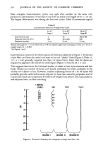
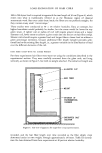
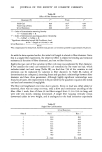
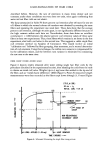
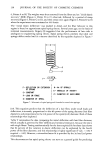
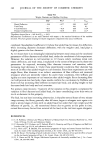
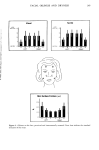
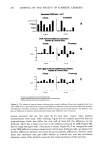
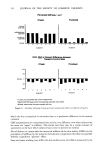
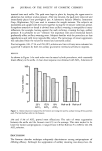
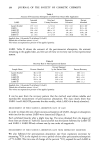
260 JOURNAL OF THE SOCIETY OF COSMETIC CHEMISTS inserted into each axilla. The pads were kept in place by keeping the upper arms in adduction but without undue pressure. After ten minutes, the pads were removed and immediately placed into preweighed jars. A laboratory balance (Mettier, Instrument Corp., Hightstown, N.J.) was used to measure the weight increase. The subjects sat motionless and upright with the knees together during the 10 minute collection period. Scrupulous attention to detail is advised since axillary sweating is susceptible to many influences, for example, leaning against the wall, reclining, crossing the legs, axillary pressure. It is advisable to use "veterans" for important tests since emotional factors profoundly affect axillary sweating rates. Subjects familiar with the procedure are less apprehensive and yield more reproducible values. The percentage of sweat suppression was calculated from the values for treated and untreated axillae. Five test agents, 10%, 17.5%, and 25% A1C13 solution and two roll-ons, were evaluated on a panel of 5 subjects by both the axillary gravimetric method and forearm imprints. RESULTS As shown in Figure 2 the rank order was the same by both procedures, with constantly lower efficacy in the axilla. A clear dose response was obtained with A1C13. Solutions of lOO 25- 250.% 1Z5% 10% Roll-on [] AICI 3 AICI 3 AI CI 3 Roll-on F Figure 2. Sweat reduction evaluated by the forearm screening test and by axillary testing of five panelists each. The hatched bars refer to the forearm. 25% and 17.5% of A1C13 proved most efficacious. The ratio of sweat suppression between the axilla and the forearm was 0.74 on the average. This ratio tended to be lower for weaker antiperspirants it ranged from 0.48 for Roll-on F to 0.89 for the 25% A1C13 solution. DISCUSSION The forearm chamber technique adequately discriminates among antiperspirants of differing efficacy. Although the suppression of axillary sweating was always less, the

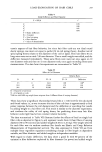
ANTIPERSPIRANT EVALUATION 261 rank orderings were the same. Thus, the forearm would seem to be a useful model for screening new chemicals and new formulation for comparative efficacy. Zahejsky and Rovensky (17) also were able to rank antiperspirants using the volar aspect of forearms as a testing area. The forearm test has numerous advantages. Sixteen materials can be tested at one time, in contrast to the axilla which is limited to one. The procedure is simple and convenient no restrictions are imposed on personal habits of underarm hygiene. The variance is less because the exposure conditions can be more rigorously controlled. Emotional influences are less potent. Small panels are sufficient, five subjects for pilot study, ten for more accurate data. Males or females may be used without preselection since in contrast to the axilla, the antiperspirant effects are fairly consistent in both sites. We view the chamber technique as a screening model for identifying effective agents and especially for optimizing the formulation by vehicle manipulation. It is a certainty that agents which give only marginal suppression, e.g., 25% in the forearm, will be completely useless in the axilla. The more potent the material, the less the proportion- ate difference in efficacy between the axilla and the forearm. Axillary testing is finally required to validate the results. We find that our axilla test does not suffer from the uncertainties noted by Bretschneider and his colleagues (18) in their effort to obtain dose-response curves. They could not distinguish 10% from 20% concentrations of aluminum chlorohydrate both gave about 40% sweat suppression. An intermediate concentration, 15% curiously yielded 60% inhibition. The main advantages of the axillary test are greatly reduced variability and comparative simplicity. ACKNOWLEDGEMENTS The technical assistance of Mrs. J. Stebbins and Mrs. H. HiSlzle is greatly appreciated. REFERENCES (1) A. B. G. Landsdown, The rat foot pad as a model for examining antiperspirants, J. Soc. Cosmet. Chem, 24, 677-684 (1973). (2) R. Marcy and M. A. Quermonne, Inhibition of palmar skin conductance in mice by antiperspirants' relative anhidrotic activities, J. Soc. Cosmet. Chem., 27, 333-344, (1976). (3) H. H. Reller, Factors affecting axillary sweating, J. Soc. Cosmet. Chem, 15, 99-110 (1964). (4) T. A. Bakiewicz, A critical evaluation of the methods available for measurement of antiperspirancy, J. Soc. Cosmet. Chem., 24, 245-258 (1973). (5) P. Majors and J. Wild, The evaluation of antiperspirant efficacy, J. Soc. Cosmet. Chem., 25, 139-152 (1974). (6) E.W. Daley, Antiperspirant testing: A comparison of two methods, Proc. Scie. Sect. Toilet. Goods Assoc., 30, 1-6 (1958). (7) M. W. Steed, Evaluation of antiperspirant preparations under normal conditions of use, J. Soc. Cosmet. Chem., 26, 17-28 (1975). (8) W. M. Wooding and P. Finkelstein, A critical comparison of two procedures for antiperspirant evaluation, J. Soc. Cosmet. Chem., 26, 255-275 (1975). (9) D.C. Cullum, A rapid hot-room procedure for testing the performance of antiperspirants, J. Soc. Cosmet. Chem., 29, 399-412 (1978).
Purchased for the exclusive use of nofirst nolast (unknown)
From: SCC Media Library & Resource Center (library.scconline.org)