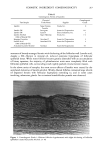
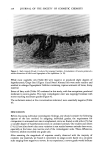
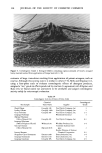
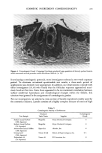
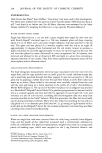
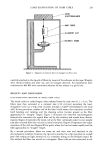
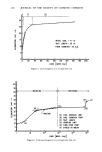
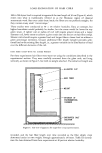
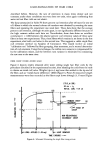
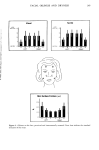
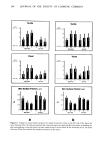
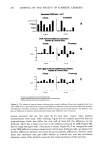
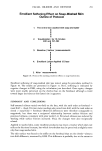
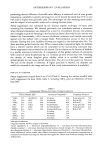
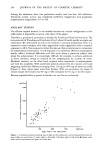
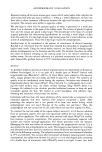
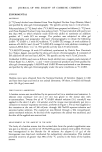
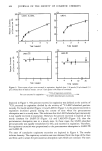
FACIAL OILINESS AND DRYNESS 243 Skin surface friction measurements were performed as described in (1). Replicate readings on three closely-spaced spots were averaged to give a value for each of the measured sites. Skin surface stiffness was measured on the face with a GBE arranged as shown in Figure 2. Unless otherwise stated, subjects were "equilibrated" for one-half to one hour Figure 2. Viscoelastic measurements on the face. in an environmental chamber at 22øC and 15% R.H. The probe attachment sites and the shear direction for measurement on the forehead and cheek are shown in Figure 3. Details of the probe attachment to the skin and other experimental constraints are given in an earlier publication (2). By definition, stiffness is proportional to the Dynamic Spring Rate (DSR), a quantity that is determined when the GBE stretches or shears the skin surface in a direction parallel to it. The DSR is analogous to Young's Modulus, and its units are grams per millimeter.

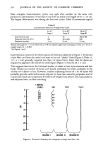
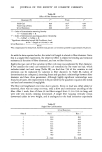
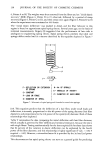
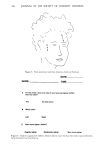
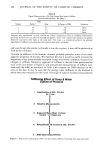
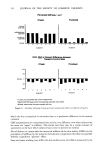
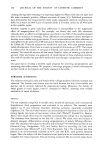
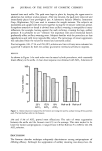
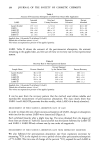
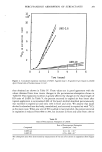
244 JOURNAL OF THE SOCIETY OF COSMETIC CHEMISTS Figure 3. Probe attachment and shear direction, cheek and forehead. DATE: NAME: TIMF' A. On the cheek, does one side of your face feel tighter [stiffer) than the other? Yes No [the same) B. Which side? Left Right C. How much tighter [stiffer)? Slightly tighter Moderately tighter Very much tighter Figure 4. Subjective appraisal of stiffness. Subjects did not touch the skin they tried to sense stiffness by facial movement and by grimacing.
Purchased for the exclusive use of nofirst nolast (unknown)
From: SCC Media Library & Resource Center (library.scconline.org)