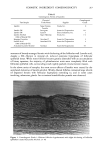
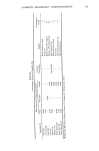
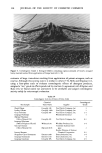
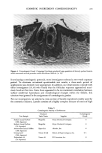
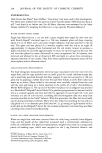
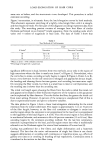
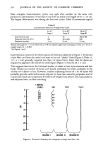
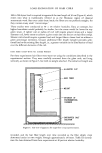
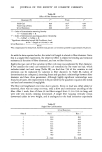
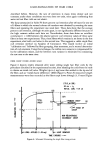
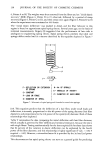
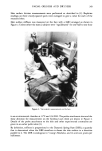
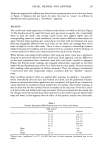
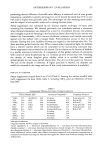
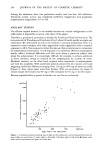
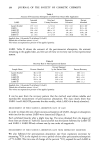
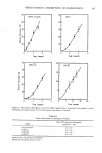
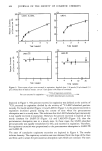
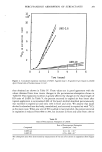
COSMETIC INGREDIENT COMEDOGENICITY 221 Figure 4. Comedogenic Grade 5. Isopropyl Linoleate produced large quantities of densely-packed keratin which surrounds several pustules within this dilated follicle. ( 70) In evaluating comedogenic potential, most investigators selected a two-week exposure period. To eliminate occasional questionable test results, a three-week period of applications was deemed more appropriate. In addition, our observations coincide with other investigators (15,19) who found that the follicular response approached maxi- mum levels at this time. Since there appeared to be no consistent correlation between surface epidermal hyperplasia and morphological changes within the follicle, this criterion was ignored in the assignment of comedogenic grades. For our investigation, we selected a cross section of lanolin ingredients widely used by the cosmetics industry. Lanolin consists of a highly complex mixture of esters of high Table V Comedogenic Activity of Surfactants Chemical Comedogenic Test Sample Trade Name Supplier Grade Sodium Lauryl Sulfate Maprofix Onyx Chemical Company 0 (10% Aqueous) Sodium Lauryl Sulfate Maprofix Onyx Chemical Company 0 (5% Aqueous) Ammonium Lauryl Sulfate Sipon-L22 Alcolac, Inc. 0 (10% Aqueous) Octoxynol-9 Triton X-100 Rohm & Haas Company, Inc. 0-1 (50% Aqueous) Polysorbate 20 Tween 20 ICI Americas, Inc. 0 (1% Aqueous)

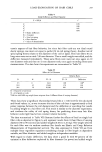
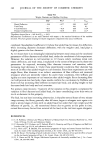
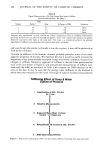
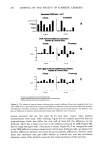
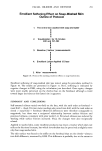
222 JOURNAL OF THE SOCIETY OF COSMETIC CHEMISTS molecular weight aliphatic, steroid, or triterpenoid alcohols and fatty acids. Various fractions and chemical modifications of these mixtures are used in cosmetics, each with its unique physical and chemical characteristics. The comedogenic potential of these raw materials in our sampling ranged from negative to severe. Lanolin acid was more active than the whole lanolin mixture and lanolin oil liquid fractions. Acetylation of lanolin alcohol resulted in a significant increase in comedogenic potency. Kligman and Mills (7) previously found nine of eleven lanolin samples tested to be mildly to moderately comedogenic in the rabbit ear. While they found lanolin steroIs and de-waxed liquid lanolin inactive, they also report that acetylated lanolin alcohol and lanolin acid were strongly comedogenic. Fulton et al. (8), reporting varying degrees of activity with lanolins and their derivatives, also determined that acetylation usually resulted in increased comedogenic potency but reported lower levels of activity for lanolin acid. A report by Fulton et al. (8) of significant comedones resulting from applications of Lanogene, differs from our assessment of minimal activity with this ingredient obtained from the same supplier. An evaluation of vegetable oils by Kligman and Mills (7) indicated that most had some degree of comedogenicity, usually rather low, and all were inactivated when diluted to a 25% concentration in mineral oil. In our study, test results are similar however, the absence of activity from olive oil differs significantly from the moderate response reported by these authors. Cottonseed oil, not included in our assay, was negative in two animals treated by Kligman and Mills (7), while Kligman et al. (14) report this material to be mildly comedogenic but borderline when diluted with an equal part of mineral oil. A relationship between comedogenic potential and carbon-chain length of fatty acids and corresponding triglycerides has been reported (11,14). Although vegetable oils consist of varying mixtures of triglycerides, an inspection of relative activity based on the predominating portion of these esters revealed no consistent trend with respect to chain length. Despite the documented potent activity of oleic acid (7-8,14), two oils containing 77% to 84% of its triglyceride ester demonstrated no activity. There appeared to be a trend toward increased potency in vegetable oils containing comparatively high combinations of unsaturated oleic and linoleic acid esters. The fatty acid esters tested in this study are extensively used by the cosmetic industry as emollients or emulsifiers, often at high concentrations. With respect to the activity of these chemicals, Fulton et al. (8) report that although oleic and stearic acids were comedogenic, esterified products, such as butyl stearate and isopropyl isostearate, were always more potent. Our data on two derivatives of oleic acid do not support this generalization since isodecyl oleate reflected minimal comedogenic grades, and the decyl oleate ester was moderately active. With isopropyl myristate, perhaps the most widely used cosmetic emollient ester, Fulton and co-workers (8) observed severe lesions similar to those seen following applications of coal tar. Our similar findings of the high activity with this chemical conflict with the mild grades reported by Kligman and Mills (7) and Kligman and Kwong (18). The data we report on surfactants concur with those of Kligman and Mills (7) who found these cosmetic ingredients uniformly negative. Both in their study and our laboratory observations, Triton X-100 (octoxynol-9) was assessed to be noncomedo- genic at 50% concentration. Mills and Kligman (22) also show that this material
Purchased for the exclusive use of nofirst nolast (unknown)
From: SCC Media Library & Resource Center (library.scconline.org)