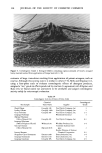
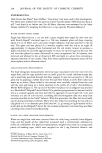
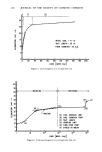
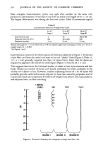
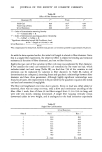
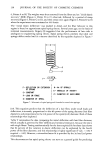
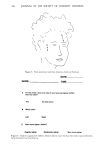
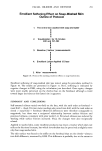
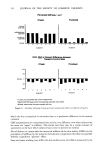
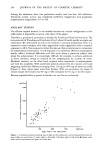
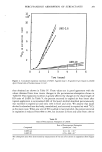
258 JOURNAL OF THE SOCIETY OF COSMETIC CHEMISTS Among the aluminum salts, four performed weakly with less than 50% inhibition. Aluminum acetate, in fact, was completely ineffective. Suppression with proprietary antiperspirants ranged from 57.5 to 75%. AXILLARY TESTING The silicone imprint method is not suitable because the vaulted configuration of the axilla makes it impossible to secure a flat sheet of the plastic. Therefore, a gravimetric procedure as detailed by Fredell and Read (14) was used. The test protocols of Wooding and Finkelstein (8) or Cullem (9) hardly qualify as simple and convenient. We determined to reduce the method to practical proportions. First, it is essential to select subjects who show appreciable sweat suppression after a standard exposure to A1C13. Non-responders dilute the data and force statisticians to compensate by mathematical contrivances. A null response to an otherwise effective antiperspirant mainly reflects technical difficulties and tells more about a particular subject than about the antiperspirant. It is exceedingly difficult, for example, to achieve anhidrosis in heavy sweaters, owing to removal of the antiperspirant by currents of sweat. Moderate sweaters, on the other hand, respond more consistently to antiperspirants and with less variability. With unselected subjects sweated for ten minutes, we found staggering individual differences ranging from 110 mg to 1870 mg of sweat per axilla (Figure 1). Also, males sweat more than females. With our procedure, the mean 10 minute output for females was 497 mg (_+ 300) compared to 911 mg (+422) for males. Because reproducibility is greater in females, we use this sex exclusively. mg/10min 1500 8 lOOO, 8 -- 500- ß ß %0 ß 0 ß ß o • o • • ß •, oO'8 c, ß 0•0 ß 0 0 0 ß oo o ø ß o ß 500 1000 1500 I mg/10 min Right Axilla or FJ'rst Measurement Figure 1. Correlation between sweating rates of right and left axillae and a second measurement from the same axillae two weeks later. [] males, right vs. left axilla. O females, right vs. left axilla. ß females, same axilla, initial measurement and again two weeks later.

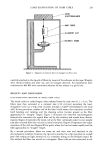
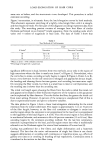
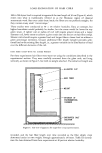
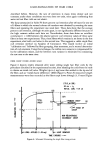
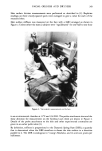
ANTIPERSPIRANT EVALUATION 259 Repeated testing of the same woman gave values which varied rather little, whether the interval between tests was days or weeks (r = 0.904, p 0.001). Moreover, we have not been able to show consistent differences between the right and left sides, rare persons excepted. The outputs were similar in opposite axillae. We also kept in mind that the greatest quality of sweat is generated in a small area about 5 cm in diameter at the apex of the axillary vault. The density of glands is highest here, and the output per gland is also larger. This knowledge is the basis of a simple surgical procedure for overcoming hyperhidrosis by excising a small ellipse of skin from the vault (15). It is this high output, high density area that is most refractory to the action of antiperspirants. Thus, this is the target region for antiperspirants. Another item to be considered is the pattern of recruitment of thermal sweating. Randall et aL (16) found that the dorsal foot sweated first spreading to progressively higher body levels. Using the starch-iodine method, we found that sweating began almost simultaneously on the forearms and the axilla. We decided, therefore, to utilize the onset of forearm sweating as the starting point for a ten minute collection of axillary sweat. Our ten minute collection is a practical compromise and seems to be quite dependable, perhaps because at 55øC sweating peaks at about this time. METHOD To preselect subjects, aluminum chloride responsiveness was determined on females as follows. Oval-shaped, 10 x 6 cm pads of a double layer of Webril © backed with impermeable tape (Blenderm ©, 3M Co., St. Paul, Minn.) were soaked in 20% aqueous AICI3, snugly pressed into one axilla, and held in place for 3 hours. The subjects sat quietly in an air conditioned room during the exposure. Occlusion was obtained by impermeable plastic film (Saran-Wrap ©, Dow-Chemical Co., Indianapolis, Ind.) cover- ing the entire axillary vault. An elastic tubular bandage (Hygi NetR ©, Jetnet Co., Carnegie, Pa.) tailored to the shoulder provided additional pressure to keep the pads constantly against the skin. We wished to avoid bandaging with adhesive tape. Sweating was measured 24 hours later (see below). Individuals with less than 35% sweat inhibition of the treated side as compared to the untreated opposite side were rejected. Five subjects comprised a panel. After pretesting, the subjects had a rest period of at least two weeks during which antiperspirants were not used. Shaving of the axillae was permitted. Then, the antiperspirant test was carried out on the axilla which had not been exposed to AIC13. To conduct the test one axilla of the supine subject received ! ml of the test solution from an automatic pipette. The area was vigorously rubbed for one minute using an empty roll-on applicator. The axilla was then covered with Saran Wrap © for another four minutes, to prevent evaporation. This sequence was immediately repeated with another one minute massage-application. The whole procedure took ten minutes. Massaging the skin was shown to enhance strongly the antiperspirant activity (11) it also mimics the way antiperspirants are used. This sequence was repeated on mornings and afternoons for three days (six exposures). Sweat inhibition was assessed gravimetri- cally on the following morning. The subjects were placed in an environmental chamber at 55øC and 30% R.H. Ten minutes after recruitment of forearm sweating (starch iodine visualization), the axillae were blotted dry, and 10 x 6 cm oval-shaped pads consisting of a double layer of nonwoven cloth (Webril©), tared in air-tight 2-ounce jars, were
Purchased for the exclusive use of nofirst nolast (unknown)
From: SCC Media Library & Resource Center (library.scconline.org)