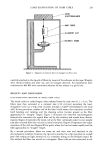
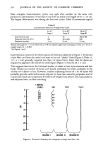
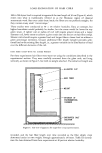
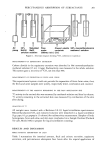
256 .JOURNAL OF THE SOCIETY OF COSMETIC CHEMISTS crossing the legs alter sweating to a surprising degree (3). Many think that the right and left sides constantly produce different amounts of sweat (4,5). Published gravimetric data demonstrate that measurements made under supposedly identical conditions may differ by as much as 100%! Lack of reproducibility is a burden carried by all who labor in this unstable region. Another variable is great individual differences in susceptibility to the suppressive effect of antiperspirants (6,7). For example, we found that with 20% aluminum chlorohydrate, an effective antiperspirant, one-third to one-half of the panelists showed little or no reduction in sweating. These difficulties have prompted various attempts to develop more reliable testing procedures. The recommendations are often elaborate, as exemplified by the protocols of Wooding and Finkelstein (8) and the shortened version by Cullem (9). Thirty-six subjects are needed for each test, who must possess spartan habits of endurance. First, there is a warm-up period of 40 minutes at 105øF. Then sweat is collected for 20 minutes. A new pad is inserted, and sweat collected for another 20 minutes. This totals 80 minutes of heat stress. Baseline values of sweating must also be secured. Time and money are apparently of small interest in these elaborate exercises. The web of variables has provoked statisticians into olympic competition of computa- tions. Our goal was to develop a sensible, rapid program for screening antiperspirants and measuring their effectiveness. We propose a two-stage program in which formulations are first tested on the forearm and finally assessed in the axilla. FOREARM SCREENING The subjects were paid, male and female white college students. Informed consent was obtained. The forearm was chosen over the back because the skin is less mobile and patches can be securely fastened by wrap-around taping. Moreover, the density of sweat glands is much higher, 150/cm • compared to 90/cm •, allowing more reliable estimation of sweat inhibition. METHOD The test materials comprised 16 metallic salts, 10 salts of aluminum, and 6 commercial formulations. Each preparation was evaluated in six subjects. The materials were applied via 15 mm Duhring Chambers allowing occlusive, rigorously controlled exposures (10). The mid-volar forearm can accommodate 8 chambers at one time. For testing liquids two layers of non-woven cotton cloth (Webril ©, Kendall Co., Boston, Mass.) were snugly fitted into the chamber and loaded with 200/xl via a micropipette. The chambers were fastened to the skin for 3 hours. We chose this time because it allowed adequate differentiation among antiperspirants of widely differing effective- ness. The chambers were glued to the skin with Durotak © 30-1289 (National Starch and Chemical Corp., Bridgewater, NJ.), and further fixed by encircling the limb with non-occlusive tape (Dermicel ©, J & j, New Brunswick, NJ.). The volunteer was then placed in an environmental chamber at 55øC and 30% R.H., until general sweating began. Then, the subject left the chamber and sat quietly in an air conditioned room to complete the 3 hour exposure. This pre-heating maneuver fills the eccrine sweat ducts,

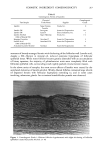
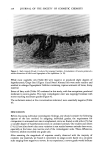
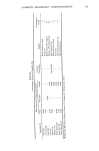
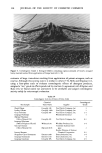
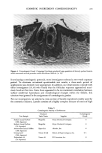
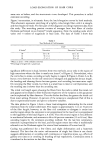
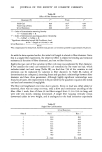
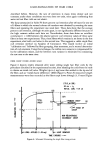
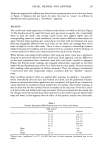
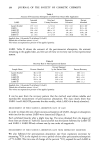
ANTIPERSPIRANT EVALUATION 257 promoting inward diffusion of metallic salts. Efficacy is enhanced, and of even greater importance, variability is greatly decreased (11,12). It should be noted that 55øC is very hot indeed, higher than generally used. The advantages are that sweating starts earlier, and the output is less variable under such a strong thermal stress. Sweat suppression was estimated by the silicone imprint technique 24 hours after removing the chambers. We showed previously that anhidrosis reached a maximum when thermal stimulation was delayed for a day (13). To perform the test, the subjects were brought to profuse sweating in the hot box as above, after which each test site was blotted dry. Immediately, a 40:1 mixture of silicone monomer and catalyst was evenly spread over the surface with a tongue blade. Polymerization occurs in four to five minutes. During this time, bubbles of sweat are trapped in the hydrophobic film. The sheet was then pulled from the skin. When viewed under transmitted light, the bubbles form a discrete pattern which can be contrasted to the surrounding untreated skin. Sweat suppression was estimated to the nearest 25% in relation to the density of bubbles in a nearby untreated control site. A comparison of this global method of estimation with counts of sweat droplets per sq. cm. revealed an error of less than 10%. Assessing the density of sweat droplets gains validity when it is recalled that metallic antiperspirants do not cause partial obstruction. The duct is either patent or blocked. The size of the droplet is irrelevant. If higher precision is wanted, the droplets can swiftly be counted in the image analyzer (if this costly instrumentation is available). RESULTS IN FOREARM Sweat suppression ranged from 0 to 97.5% (Table I). Among the various metallic salts LaCI 3 suppressed the least (30%), while 5, including AICI 3, gave an inhibition of more than 85%. Table I Antiperspirant Efficacies by Forearm Testing (% reduction) Various Metallic Salts a Aluminum Compounds b Proprietary Products c VOC13 97.5 AI2(OH)sC1 60.0 Al-nitrate 90.0 VCI• 95.0 SnC12 50.0 Al-chloride 87.5 VOC12 92.5 ErC13 40.0 Al-bromide 80.0 AIC13 87.5 GdC13 40.0 Al-perchlorate 75.0 InC13 87.5 ZnCl2 35.0 Al-chlorohydrate 67.5 HfOCl 3 83.3 LaC13 30.0 Al-phenolsulfonate 57.4 GaC13 77.0 Al-sulfate 45.0 SnCl 4 67.5 Al-lactate 30.0 ZrOC12 65.0 Al-oxalate 15.0 NdCl 3 62.5 Al-acetate 0.0 Pump spray (A) 75.0 Roll-on (B) 72.5 Roll-on (C) 65.0 Pump spray (D) 65.0 Pump spray (E) 62.5 Roll-on (F) 57.5 a20% aqueous solutions bAqueous solutions, 0.87M in respect to aluminum tActlye ingredients: A = Aluminum sesquichlorohydrate B = Zirconium-Aluminum-Glycine-hydroxy- chloride complex C = Zirconium-Aluminum-Glycine-hydroxy-chloride complex D = Aluminum Chlorohy- drex Aluminum Chloride E = Aluminum Chlorohydrex Aluminum Chloride F = Aluminum Chlorohydrate. Sweat inhibition of various metallic salts, different aluminum compounds, and proprietary antiperspirants as evaluated by the forearm screening test. Materials were applied for 3 hours under occlusion readings were done 24 hours later.
Purchased for the exclusive use of nofirst nolast (unknown)
From: SCC Media Library & Resource Center (library.scconline.org)