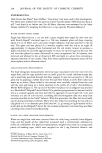
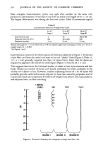
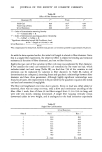
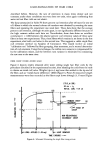
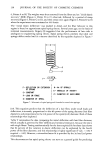
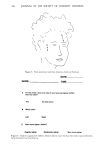
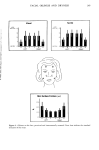
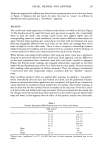
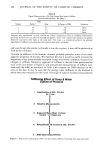
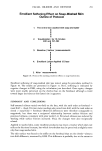
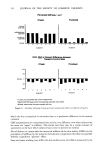
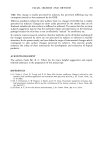
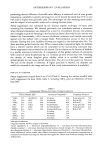
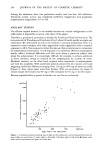
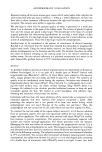
FACIAL OILINESS AND DRYNESS 249 was also much wider. Measurements were done on the right and left sides of the face on six different subjects these are shown as paired values in the Table. It is clear that very different values may be obtained from what appear to be comparable contralateral sites. To assess product-induced effects, it was necessary to show that no inherent bias is introduced by topical applications. This was confirmed (Table II) by applying to the subjects' cheeks a cream which has no apparent effect on DSR. To measure changes brought about by some ordinary topical maneuvers, we tried soap and water washing, using the procedure outlined in Figure 7. As seen in Figure 8, the DSR varied substantially on contralateral sites on some individuals even though each Perceived Stiffness, left vs. right Cheek Forehead MUCH STIFFER MODERATELY STIFFER SLIGHTLY STIFFER EQUAL • • 1 2 3 4 5 6 SUBJECT 1 2 3 4 5 6 SUBJECT DSR, Percent Difference between left & right Sites Cheek Forehead +1oo +5o EQUAL 0 -50 -100 1 2 3 4 5 6 1 2 3 4 5 6 S U BJ ECT S U BJ ECT Figure 8. Perceived versus instrumentally measured stiffness (GBE) of the skin surface. For DSR, % difference = left-right/right x 100.

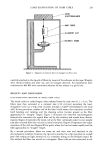
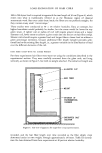
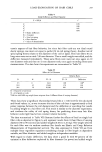
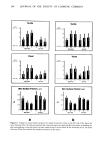
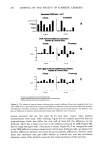
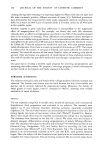
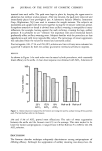
250 JOURNAL OF THE SOCIETY OF COSMETIC CHEMISTS Perceived Stiffness, t vs c* Cheek Forehead Much ST,FFE, • 1 2 3 4 5 6 1 2 3 4 5 6 SUBJECT SUBJECT A DSR, Percent Difference between Treated & Control Sites Cheek Forehead 1 ? 3 4 5 6 1 • 3 4 5 6 SUBJECT SUBJECT B DSR, Shift in Percent Difference between Treated & Control Sites Cheek Forehead 1 2 3 4 5 6 1 2 3 4 5 6 SUBJECT SUBJECT c *T and C are treatment and control respectively. *MUCH STIFFER means that the treatment side was much stiffer. *EQUAL means that they were equally stiff, etc. Figure 9. The impact of soap and water washing on skin surface stiffness. Note that in graphs B and C the same GBE data are presented, first as the percent difference between treated and control sites (B), and then normalized to minimize the baseline differences between treatment and control sites (C). The shift (C) is the percent difference at baseline subtracted from the percent difference after treatment. person perceived that the two sides of his face were "equal" when baseline measurements were made. After washing, Figure 9A, all subjects perceived that the soap-and-water cheek was stiffer, but only half of them felt this difference on the forehead. There was a distinct increase in the stiffness measured by DSR (Figure 9B), but the range was quite wide. The picture is clearer, Figure 9C, if we compare the shift in the DSR difference between treated and control sites. Arithmetically, we subtract the baseline differences between sites from the post-treatment differences. Positive values mean that treatment sites got stiffer relative to control site, and the calculation eliminates some of the artifacts caused by the initial asymmetry of the test sites.
Purchased for the exclusive use of nofirst nolast (unknown)
From: SCC Media Library & Resource Center (library.scconline.org)