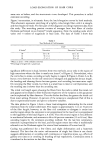
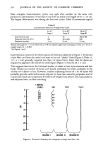
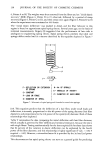
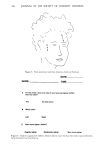
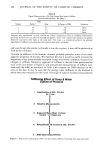
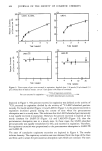
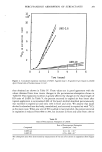
242 JOURNAL OF THE SOCIETY OF COSMETIC CHEMISTS MATERIALS AND METHODS For assessment of oiliness, eight people with normal-to-oily facial skin were selected, males and females, ranging in age from 18 to 45. The subjects were seen between 2 PM and 4 PM, having last washed their faces at 8 AM. This interval allowed close to a maximum amount of sebum to accumulate on the face, since the subjects said that they usually washed at least once every 6-8 hours. Self-appraisal of oiliness was performed at the indicated sites by means of the scale depicted in Figure 1. For this appraisal, Subjects were asked to rate their oiliness, visually and by touch at the indicated sites, using the following scale: VERY, VERY OILY. ............. 4 QUITE OILY ....................... 3 MODERATELY OILY .......... 2 SLIGHTLY OILY ................. 1 NOT OILY AT ALL ............. 0 Figure 1. Subjective appraisals of oiliness. subjects sat at a makeup table and viewed their faces in a mirror surrounded by 15-watt "soft-white" bulbs. In all instances, visual appraisals were done before tactile appraisals. Washing was done with soap and water using an ordinary non-superfatted alkaline soap bar. Subjects carefully washed and dried their hands after product application and before self-appraisal was begun. No special instructions were given subjects were simply asked to wash thoroughly and then to dry their faces, with soft absorbant paper towels. They used their finger-tips for tactile appraisal the sites were scored in a random order. There was no cleansing of the finger-tips during the appraisal. To assess emollient effects on washed skin, an experimental "non-greasy" emollient lotion was applied by the subjects right after the face was washed and dried. This lotion is an oil in water dispersion the principal emollient ingredients are fatty acid salts, fatty alcohols, sterol, and mineral oil.

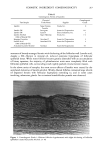
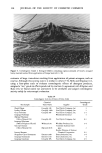
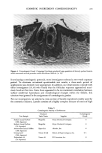
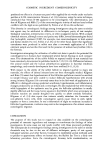
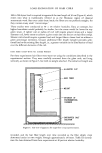
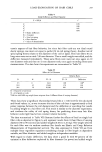
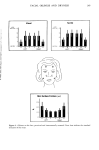
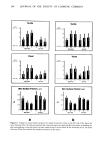
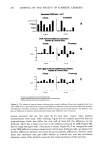
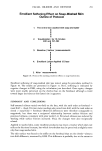
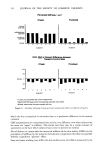
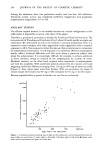
FACIAL OILINESS AND DRYNESS 243 Skin surface friction measurements were performed as described in (1). Replicate readings on three closely-spaced spots were averaged to give a value for each of the measured sites. Skin surface stiffness was measured on the face with a GBE arranged as shown in Figure 2. Unless otherwise stated, subjects were "equilibrated" for one-half to one hour Figure 2. Viscoelastic measurements on the face. in an environmental chamber at 22øC and 15% R.H. The probe attachment sites and the shear direction for measurement on the forehead and cheek are shown in Figure 3. Details of the probe attachment to the skin and other experimental constraints are given in an earlier publication (2). By definition, stiffness is proportional to the Dynamic Spring Rate (DSR), a quantity that is determined when the GBE stretches or shears the skin surface in a direction parallel to it. The DSR is analogous to Young's Modulus, and its units are grams per millimeter.
Purchased for the exclusive use of nofirst nolast (unknown)
From: SCC Media Library & Resource Center (library.scconline.org)