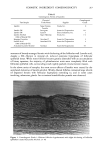
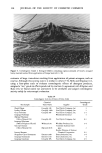
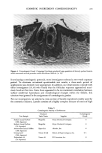
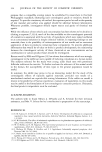
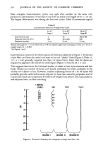
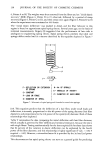
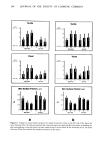
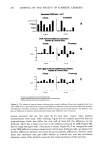
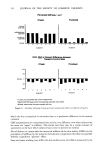
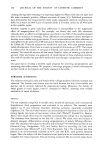
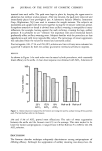
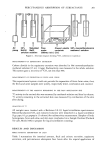
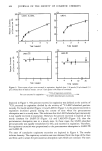
246 JOURNAL OF THE SOCIETY OF COSMETIC CHEMISTS Tactile Tactile VERY VERY OiLY 4 VERY VERY OILY 4 3 3 2 2 1 o 'o Visual V[RY VF-RY OILY 4 3 2 1 NO/ OILY 0 A B C A B C BEFORE AFTER Visual VERY VERY OILY 4 , 3, 2, 1, NOT OiLY 0 A B C A B C BEFORE AFTER Skin Surface Friction (.,,U,) Skin Surface Friction [.,,½ ) 03 03 O2 O2 01 01 0 A B C A B C 0 A B BEFORE AFTER BEFORE AFTER a b Figure 6. Changes in facial oiliness induced by topical maneuvers. Data on the left side of the figure (a) were obtained when the skin was washed with soap and water the right side (b) is the result of washing the skin and applying a non-oily lotion. In both instances site A is the cheek B, the forehead and C, the nasal fold area. Error bars indicate the standard deviation of the mean.

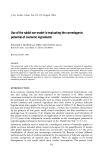
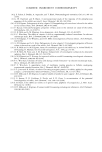
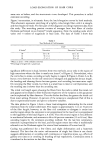
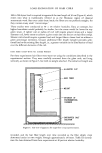
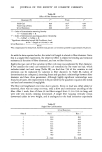
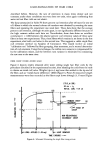
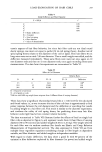
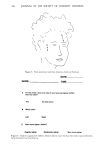
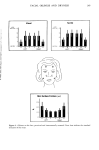
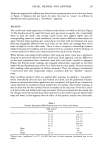
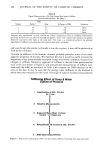
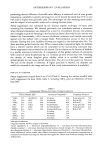
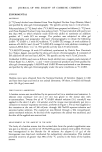
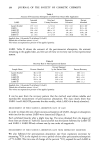
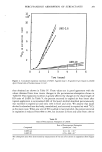
FACIAL OILINESS AND DRYNESS 247 Subjective appraisal of stiffness was derived from questionnaires such as the one shown in Figure 4. Subjects did not touch the skin, but tried to "sense" its stiffness by movement and by grimacing: a "kinesthetic" appraisal. RESULTS The tactile and visual impression of oiliness varied about two-fold on the face (Figure 5). The forehead and the nasal fold areas were perceived as equally oily, considerably more so than the cheek. The average tactile scores were slightly higher than the corresponding scores for visual assessment, but the relative differences were about the same. Friction meter readings also varied about two-fold, with the forehead and nasal fold only marginally different from each other on the cheek, the readings were about twice as high as on the oilier areas. There is thus a reciprocal relationship between subjectively perceived oiliness and skin surface friction, consistent with the findings of a recent study (1) in which such measurements were made on the forearm. When the face was washed with ordinary bath soap and water, there was a significant decrease in perceived oiliness for both tactile and visual appraisal, and the differences on the three anatomical sites--forehead, nasal fold, and cheek--tended to disappear (Figure 6a). Friction meter readings also changed substantially, especially on the oilier (nasal fold and forehead) areas of the face. Note that the skin surface friction increased after washing, while perception of oiliness decreased. Thus, the changes, instrumental vs perceived, were also reciprocally related, consistent with the "baseline" observa- tions. Since emollient products often are applied after washing, we applied a "non-greasy" lotion immediately after the face was washed and dried, and we performed measure- ments ten minutes after lotion application was completed. In Figure 6b we contrast the values obtained on emollient-treated washed skin to baseline values before washing. It may be seen that the skin surface friction increased on the oily areas of the face, much as it did on skin just washed with soap and water. Perceived oiliness also decreased, but the changes were less marked than those observed on skin which was just washed with soap and water. It thus appears that the effect of the product residue was discernible, Table I Dynamic Spring Rate (DSR) Measurements on the Cheek and Forehead DSR, g/mm* Cheek Forehead Mean S.D. Range 5.2, 5.5 5.8, 9.7 3.5, 3.8 10.6, 11.1 4.7, 3.3 11.7, 7.1 6.7, 7.4 13.2, 20.7 7.5, 4.7 20.9, 15.5 4.9, 6.7 9.7, 14.8 5.3 12.0 1.4 4.9 3.3-7.5 5.7-20.9 *Subjects were "equilibrated" at 22øC, 15% RH. Each pair of values represents contralateral sites on one subject.
Purchased for the exclusive use of nofirst nolast (unknown)
From: SCC Media Library & Resource Center (library.scconline.org)