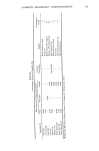
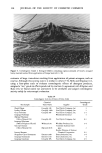
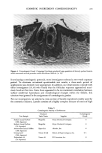
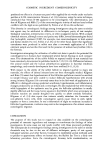
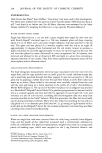
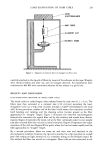
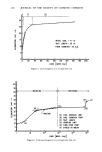
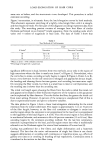
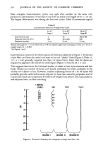
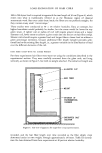
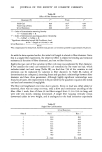
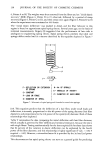
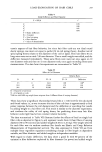
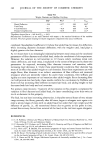
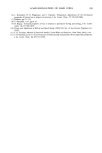
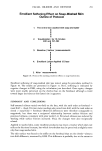
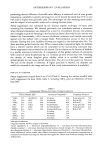
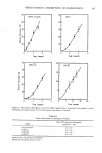
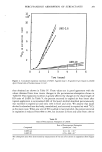
PERCUTANEOUS ABSORPTION OF SURFACTANTS 267 50 q0 • 30 • 20 z lO LAURYL ALCOHOL TiME (HOURS) 50 q0 3O 2O 10 LAEO-1 ej i i i 2 TiME (HOURS) 50 q0 3O 2O 10 LAEO-•.6 LAEO-10 I [ I 0 i 2 3 0 8 12 16 TIME (HOURS) T[ME (HOURS) Figure 2. Percutaneous absorption curves of LAEOs. Applied dose: 1.38/amole/25 tzl ethanol (1.0 tzCi). Dorsal skin of hairless mouse: 2.9 cm 2. Each point is the mean of 3 animals. Table III Rates of Percutaneous Absorption of LAEOs LAEO Rate of Percutaneous Absorption (/amole/cm 2 ß hrs) Lauryl Alcohol 12.2 x 10 -2 LAEO-I_._ 9.77 x 10 -2 LAEO-2.__6 9.78 x 10 -2 LAEO-10 0.75 x 10 -2 Applied dose: 1.38 tzmole/25 tzl ethanol. Dorsal skin of hairless mouse: 29 cm 2.

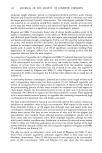
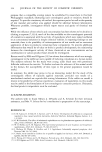
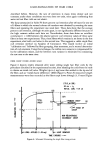
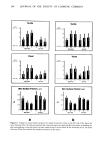
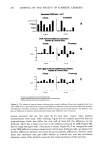
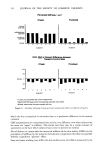
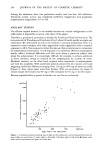
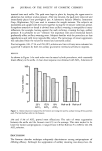
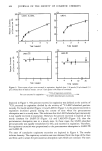
268 JOURNAL OF THE SOCIETY OF COSMETIC CHEMISTS 100 ,::, • 80 • o • F-- 60 I..,t.I • el.,. • ,,'I, qo ILl Z 2O (1) (2) LAURYL ALCOHOL 0 1 2 3 q TIME (HOURS) LAEO-1 I I I I 0 1 2 3 4 TIME (HOURS) 10 LAEO-2.6 LAEO-10 0 1 2 3 q 0 q 8 12 2q TIME (HOURS) TIME (HOURS) Figure 3. Time-course of per cent excreted in expiration. Applied dose: 1.38/amole/25/al ethanol (1.0 /aCi). Dorsal skin of hairless mouse: 2.9 cm 2. Each point is the mean of 3 animals. •4CO2 of expiratory excretion Per cent excreted in expiration = •4C_LAEO absorbed percutaneously depicted in Figure 3. The percent excreted in expiration was defined as the activity of •4CO2 excreted in expiration divided by the activity of •4C-LAEO absorbed percuta- neously. For lauryl alcohol (Figure 3.1) and LAEO-1 (Figure 3.2), the percent excreted in expiration increased greatly during the course of time when the percutaneous absorption was in a steady state. This indicates that the LAEO absorbed percutaneously is not rapidly excreted in expiration. However, the percent excreted in expired air was nearly constant for LAEO-2.6 (Figure 3.3) and LAEO-T0 (Figure 3.4), thus the percutaneous absorption was in a steady state. In these cases, the LAEO absorbed percutaneously was rapidly metabolized to CO2 and excreted in expiration. Therefore, the expiratory excretion was proportional to the percutaneous absorption in LAEO-2•. and LAEO-10. The rates of cumulative expiratory excretion are depicted in Figure 4. The results indicate linearity. The expiratory excretion rate was obtained from the slope of the lines and then used to attain the percutaneous absorption rates which are constant. The rates
Purchased for the exclusive use of nofirst nolast (unknown)
From: SCC Media Library & Resource Center (library.scconline.org)