234 JOURNAL OF THE SOCIETY OF COSMETIC CHEMISTS Approaches to skin moisturizer claim support: an evaluation David L. Miller, Ph.D., Mary Kay Cosmetics Inc., 1330 Regal Row, Dallas, TX 75240 Webster's New World Dictionary describes a moistur- izer as a substance adding or restoring moisture (water, slight wetness or dampness) to (the skin). Functionally, moisturizers are often regarded as substances which "actively" keep the skin soft, supple and elastic. Claims such as "smooths," "re- stores," and "improves" are common. The target tissue for a moisturizer is the stratum corneum. Recent results suggest only the outer few layers of the stratum corneum are subject to damaging en- vironmental stresses that require the corrective ac- tion of moisturizers. There are two general ap- proaches to understanding the function of moistur- izers: (1) addition of substances to increase moisture sorption by the stratum corneum and, (2) partial occlusion of the skin surface as a means of reducing the evaporative loss of water diffusing from the un- derlying viable tissues. Clinical evaluation of mois- turizers by trained observers remains a benchmark method in spite of its many drawbacks. Instru- mental methods, which either directly or indirectly measure moisturization effects, require very careful interpretation to avoid measuring inappropriate properties of the skin. Skin rectifiers Thomas H. Cook, Ph.D., David K. Robbins, Trelia J. Craft, Elizabeth Arden Research Center, 307 East McCarty Street, Indianapolis, Indiana 46285 A number of new products have been formulated and marketed with claimed modes of action other than those which are somehow associated with the water content of the stratum corneum. These new products are called rectifiers because they claim to correct the appearance of the skin by ways other than the addition of moisture to the stratum cor- neum. Claims such as: improves the cell renewal rate promotes increased cell oxygen intake effec- tively controls oil, increases the amount of protec- tive lipids and helps accelerate the natural repair of cells damaged by ultraviolet light are substan- tiated by physiological and biochemical measure- ments. The dansyl chloride method has been widely used to investigate the rates of stratum corneum renewal. Chloroform/methanol extracts of stratum corneum scrapings or bentonire clays used to collect surface lipids, followed by chromatography, have been used to demonstrate changes in epidermal and sebaceous lipids following cosmetic treatment. Au- toradiographic data as well as ingredient related data have been used as a basis for some rectifier claims. SCIENTIFIC SESSION IV Chemical properties of natural products as a means of quality control Richard J. Schlesinger, Ph.D., Bio-Technics Lab- oratories, Inc., 1133 Crenshaw Blvd., Los Angeles, CA 90019 Methods of quality control for natural materials used in cosmetics with an emphasis on tests that can be performed with a limited amount of equip- ment will be discussed as will methods of analysis for determination of active ingredients in biological extracts. Preliminary inquiry into a collagen activator found in the avocado John Hembrow-Beach, Avochem, Inc., 3277 Syn- amore, Fillmore, CA 93015 The avocado (Persea Americana) has recently come under increasing scrutiny because of the varied bi- ological activities associated with many of its newly discovered components. A unique antibacterial property, growth regulators, and a hemagluttinat- ing factor are but some of these. Certain lipidic sub- stances appear to have a market effect in stimulating collagen metabolism in both topical and ingestable forms. A mammalian feeding study was undertaken to examine the effects on the collagen in skin and tendons in various groups fed fractions from avo- cado, soy, corn, and other foodstuffs. Avocado frac- tions alone showed significant increases in soluble versus insoluble collagen, indicating pathology, and none was found. Studies are continuing to further characterize these collagen effects and the agents responsible. Aloe vera components possessing cosmetic and medical applications. Ivan E. Danhof, Ph. D., M.D., Institute for Natural Sources, 909 Dalworth, Suite 200, Grand Prairie, TX 75050 The aim of these investigations was to isolate frac- tions of Aloe vera gel which possessed (1) penerrant and (2) cell growth-stimulating properties. Pene- rrant activity was estimated evaluating in rabbits the transdermal transfer of hydrocortisone to blood plasma using radiolabeled constituents. Ratios of absorption (per hour) of the radiolabeled marker in cream base, cream base + hydrocortisone, and cream base + hydrocortisone + aloe-derived pen- errant were 1.00, 1.12, and 3.04, respectively penetration of similar degree was corroborated using radiolabeled hydrocortisone with and without pen- errant. Cell growth-stimulating activity was eval- uated in cultured human fibroblasts of dermal or- igin. Exposure of fibroblasts to all concentrations of

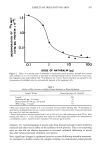
ABSTRACTS 235 aloe yellow latex tested caused total kill of the cul- tured cells, whereas exposure to aloe gel fractions promoted cell growth (determined by number and tSN-thymidine uptake) exceeding 800% in relation to the control, and showed a dose-response curve. The healing rate and closure of decubiti were sub- stantially hastened in nonambulatory affected pa- tients using the aloe-derived growth-promoting fractions. Botanical extracts--folkloric claims and modern •vl ses ichael A. Bishop, Active Organics, Inc., 7715 Densmore Avenue, Van Nuys, CA 91406 Folkloric claims of therapeutic activity of botanical extracts will be reviewed and their relevance to the formulation of contemporary cosmetics will be dis- cussed.
Purchased for the exclusive use of nofirst nolast (unknown)
From: SCC Media Library & Resource Center (library.scconline.org)