SKIN SURFACE ANALYSIS 325 The authors would like to thank G. Pannetton (Iconographie, Facult• de M6decine et de Pharmacie, Besangon) for his technical assistance. The authors would like to thank Vick International-Paris for their financial contribu- tion. REFERENCES (1) S. Makki, J. C. Barbenel, and P. Agache, A quantitative method for the assessment of the micro- topography of human skin. Acta Dermatovener. (Stockh), 59, 285-291 (1979). (2) T. H. Cook, Profilometry of skin. A useful tool for the substantiation of cosmetic efficacy. J. Soc. Cosmet. Chem., 31, 339-359 (1980). (3) S. Makki, P. Agache, J. C. Barbend, I. M. Nadvornik, et al., Quantitative assessment of skin aging through surface microtopography measurements. European Society for Dermatological Research (ESDR) Noorwijik, Holland, 24-27 May, 1981,J. Invest. Dermatol., 76, 428 (1981). (4) S. Makki, P. Agache, J. C. Barbend, I. iV[. Nadvornik, et al., Specific roughness parameters and optimum scanning direction in quantitative evaluation of the human skin microtopography. Third International Symposium of the Bioengineering and the Skin, Philadelphia (USA), 22-24 July, 1981. (5) U. Hoppe, Topologie der Hautoberflache. J. Soc. Cosmet. Chem., 30, 213-239 (1979). (6) P. Agache, S. Makki, D. Blanc, et al., Skin care in childhood. Current Medical Research and Opinion, 7 (Suppl 2), 15-22 (1982). (7) S. Makki, J. Mignot, and P. Agache, Statistical analysis of human skin microtopography profiles. 12th Congress of the International Federation of Societies of Cosmetic Chemists (Paris), 13-17th September, 1982. (8) T. H. Cook, T.J. Craft, R. L. Brunell, et al., Quantification of the skin's topography by skin profilometry. Int. J. Cosmet. Sc., 4, 195-205 (1982). (9) M. S. Longuet-Higgins, Statistical properties of an isotropic random surface. Phil. Trans. of the Royal Soc., 250 Serie A, 157-174 (1957). (10) J. B. Williamson, Interdisciplinary approach to friction and wear. Proceedings NASA. 23-30 No- vember, 1967, San Antonio (USA) P.M. Ku Ed. (11) R. C. Spragg, and D. J. Whitehouse, An average wavelength parameter for surface metrology. Revue M. Mgcanique, 20, 293-300, (1974). (12) D.J. Whitehouse, and J. F. Archard, The properties of random surfaces of significance in their contact. Proc. Roy. Soc., A-316, 97-121 (1970). (13) R. Bazin, S. Makki, M. Baud, and P. Agache, Selection of human skin microtopography quantitative parameters by principal components analysis. Med. & Biol. Eng. & Cornput., 21, 179-185 (1983).

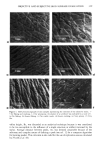
j. Soc. Cosmet. Chem., 35, 327-338 (September/October 1984) Evaluation of hydration state and surface defects in the stratum corneum: Comparison of computer analysis and visual appraisal of positive replicas of human skin RICHARD I. MURAHATA, DANIEL M. CROWE, and JOHN R. ROHEIM, Armour-Dial, Inc., Armour Research Center, 15101 N. Scottsdale Road, Scottsdale, AZ 85260. Received March 23, 1984. Synopsis This study was designed to develop a noninvasive model system for analyzing the condition of human skin in vivo and to provide a method of objective measurement which would correlate with the subjective evaluation of the skin surface. Positive replicas of the upper arm were prepared for scanning electron microscopy and surfanalysis. Skin condition was evaluated by scoring SEM photomicrographs for plump- ness, an indication of hydradon, and for stratum comeurn damage represented by surface scales and cracks. Skin surface profiles parallel with and perpendicular to the major furrows were produced using a surfan- alyzer. The profiles were computer analyzed for standard roughness parameters utilized by the metals industry, including arithmetic average roughness (Ra) and mean depth of roughness (Rz). Eleven to thirteen individual samples were examined. The subjective value for plumpness correlated (p 0.02) with both Ra and Rz, and the correlation was not dependent on the trace direction of the surface profile. The subjective evaluation of stratum corneum damage, however, did not correlate with any of the roughness parameters or with plumpness. This may be due in part to the sensitivity of the measurement, with cracking and flaking being restricted to small changes in the upper few microns of stratum corneum and plumpness being a reflection of larger changes throughout the stratum corneum and perhaps involving the epidermis. A special program was written which could identify cracks in a roughness profile with a high degree of certainty, and the number of cracks identified was significantly correlated (p 0.01) with a subjective assessment of the corresponding photomicrographs. This technique provides a powerful tool for assessing skin condition and the effects of cosmetic agents on the topography of the stratum corneum. INTRODUCTION The ability to evaluate skin surface characteristics in an objective, noninvasive manner can result in a better understanding of perceived properties of the skin (e.g., smooth- ness) and in the development of more efficacious cosmetic products. Several methods have been used to evaluate surface texture including stereomicroscopy (1), macropho- tography (2,3), ellipsometry (4), and skin friction (5,6). Surfanalysis or profilometry (7-12) is probably the most well established, historically having been used by the metals industry three decades before being adopted by researchers studying skin surface morphology. Surfanalysis utilizes a stylus instrument to generate profiles of positive 327
Purchased for the exclusive use of nofirst nolast (unknown)
From: SCC Media Library & Resource Center (library.scconline.org)