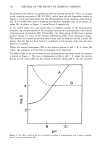
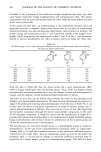
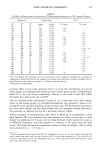
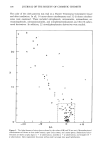
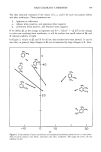
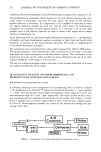
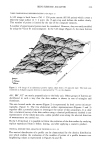
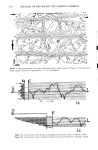
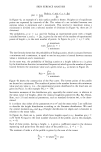
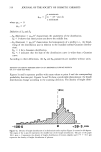
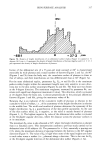
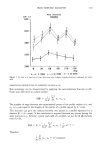
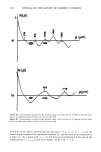
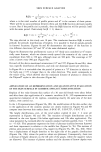
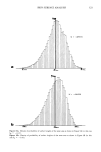
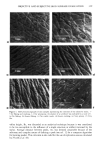
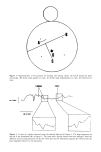
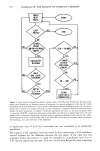
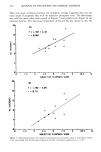
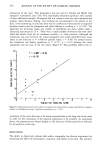
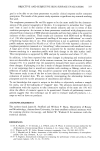
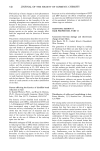
328 JOURNAL OF THE SOCIETY OF COSMETIC CHEMISTS skin replicas, and several profile parameters to quantitate deviations from a flat surface have been standardized by the American Society of Mechanical Engineers (13). In this investigation, skin surface replicas produced by an accurate and precise technique (14) were examined by scanning electron microscopy (SEM) and surfanalysis. The pho- tomicrographs were evaluated subjectively for "plumpness" as an indication of hydration and moisturization (15-17) and for surface defects such as cracks and desquamating sheets (flakes). A significant correlation was observed when SEM evaluations for plump- ness were compared with computer-generated roughness parameters derived from sur- fanalysis profiles. Cracks were identified in surfanalysis profiles and described mathe- matically through an iterative process comparing computer analysis of traces with visual subjective evaluation of photomicrographs. Computer-assisted surfanalysis provides a noninvasive objective evaluation that correlates with a subjective visual assessment of the skin surface condition. An added benefit to this method is the creation of permanent records which can be referenced at a later date. MATERIALS AND METHODS SUBJECTS Thirteen volunteers without apparent skin disease were used in this study. Replicas were made of a small area on the extensor aspect of the upper arm. REPLICA PREPARATION AND EVALUATION A negative replica of the site was generated using a silicon based dental impression material. A polyethylene cast (positive replica) was prepared from the negative skin impression. The development of this methodology was the subject of a previous com- munication (14). Although the fidelity of using positive casts has been questioned (10), preliminary work with the technique (14) indicated that repeated replicas from the same site were not significantly different at the current level of sensitivity. The cast was pegged, gold coated, and photographed at 25 ) and 125 ) magnification by scanning electron microscopy (AMR 1000A). The photomicrographs were scored sub- jectively for "plumpness" (moisturization), "flaking" (uplifted plates and desquamating sheets), and cracking (Figure 1). The surface profile of the cast was traced with a surfanalyzer (Federal Products System 2000) which computes, displays, and records the profile using a linear drive unit equipped with a 0.0001-inch radius diamond stylus. The cast was placed on a translational/rotational stage and a 7.5 mm-trace made parallel with and perpendicular to the principal furrows of the skin. Four replicas were traced six times in each direction, and greater than 75% of the values for Ra and Rz fell within the 95% confidence limits of the mean. A single trace in each direction was used thereafter because the error introduced by hitting a bead of perspiration, hair follicle, or other artifact was greater than the intrasample variability. The reproduc- ibility of a given scan was greater than 99%. The data were collected as a two- dimensional array of 1350 points and were analyzed with the aid of a MINC 11 minicomputer (Digital Equipment Corporation). Several methods of profile analysis devised by the metals industry were examined for their utility in examining skin surface replicas. Some of the methods explored are illustrated in Figure 2. Maximum peak-to-

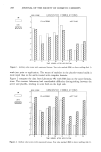
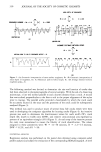
OBJECTIVE AND SUBJECTIVE SKIN SURFACE EVALUATION 329 b Figure I. SEM photomicrographs of skin samples representing the extremes of the subjective scales, 1- 5 for flaking and cracking, 1-8 for plumpness the absence of an attribute was indicated by a score of 1. (a) No flaking. (b) Severe flaking. (c) No visible cracks. (d) Severe cracking. (e) Very plump. (f) Very flat. valley height, Rt, was discarded as an analytical technique because it was considered to be too susceptible to the influence of a single structure or artifact traversed by the stylus. Average distance between peaks, At, was deemed unsuitable because of the arbitrary and complex nature of defining a peak (see ref. 12 for a computer algorithm for locating peaks). This criticism is also valid for the use of replication area as calculated by Nicolls et al. (8).
Purchased for the exclusive use of nofirst nolast (unknown)
From: SCC Media Library & Resource Center (library.scconline.org)