436 JOURNAL OF THE SOCIETY OF COSMETIC CHEMISTS (3). However, inasmuch as AIC13-caused blockage of the sweat duct is more deeply located in most sweat glands, it is much less readily removed. Subsequent histological studies using both transmission electron microscopy and fluor- escence microscopy confirmed the relative location of each of the three antiperspirants in inhibited forearm sweat glands. ACH was found within the sweat duct at the level of the stratum corneum and in a number of instances at the level of the granular layer of the viable epidermis (4). AZAP was found predominantly in the distal-most region of the duct as it passed through the horny layer (5). In confirmation of previous studies (2,3), A1CI3 has been located within the sweat duct at a depth well below the stratum corneum layer (6). The use of the human forearm or the back to study eccrine sweat gland function, particularly to assess the effects of prototype antiperspirants on that function, is time- honored. However, despite the practical value that these sites offer, caution needs to be exercised in extrapolating the findings to eccrine sweat gland function in the human axilla. The purpose of the studies reported here is to establish the relative intraductal sites of antiperspirant activity of the three aluminum-based salts in the eccrine sweat glands of the axilla as a first step in elucidating the means by which antiperspirants function in the human underarm. MATERIALS AND METHODS The technical approaches used in these studies were virtually identical to those de- scribed previously for the forearm studies. Minor variations in the experimental pro- tocol were introduced principally to adjust for the more profuse and rapidly progressing sweating usually encountered in the axilla compared to that found on the forearm. The subjects were adult females. One site (total area: 4 cm 2) in the approximate center of the axillary vault was selected and marked. On Day I of the study, the subject was thermally stressed in an environmental chamber (100øF, 30-35% RH) for 40 minutes while resting supine. At the end of this acclimation period, the test site was blotted dry with absorbent tissue and a thin layer of the starch, castor oil, and iodine mixture was applied to it to display the sweating pattern. Within a few minutes virtually all sub- jects in all instances exhibited a complete puncrate pattern of sweat gland activity at which point the first photographic record was made. Subsequent photographs, at 10 and at 20 minutes after the initial photograph, were also taken. The number of sweat glands found at all three time points appeared to be identical. However, at these latter points, the sweating pattern of many subjects had lost its discreteness and coalescence of the individual sweat droplets was frequently observed. Accordingly, evaluation of the sweating patterns for all subjects was made using the first photograph only. After recording the control (pretreatment) sweating pattern, the starch mixture was removed and the subject was dismissed. The subject returned the following morning (Day II) at which time the axillary test site was relocated using a template. Next, approximately 0.35-0.45 ml of one of the anti- perspirant test solutions was used to saturate the cotton pad component of an imperme- able mylar-backed bandage (Readi-Band ©, Parke-Davis & Co., Detroit, Michigan). The occlusive patch was then affixed to the skin test site and further secured with strips

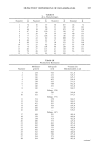
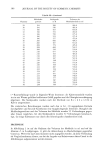
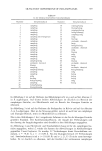
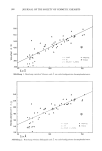
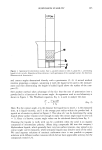
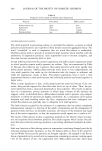
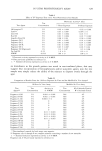
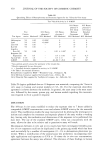
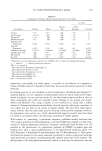
SITE OF ALUMINUM ANTIPERSPIRANT ACTION 437 of Micropore Surgical Tape © (3M Co., St. Paul, Minnesota) to prevent inadvertent loosening. The patch remained in place for 22-24 hours. The antiperspirant test solutions were 20% aqueous ACH*, 10% aqueous AZAP**, and 8% aqueous A1C13 *•. Several additional subjects, serving as controls, were treated with distilled water and processed identically. The patch was removed in the morning of Day Ill at not less than four hours prior to further study. Using this treatment regimen, the maximum inhibition by the antiper- spirant test solution was insured, while sham inhibition, due to the process of occlusive application of a solution, was afforded time to dissipate. In the afternoon of Day Ill, the subject again entered the environmental chamber, and, as described above, photographs of the starch/castor oil/iodine-generated sweat pattern were taken after an initial 40-min period of acclimation to thermal stress. (Photographs were also taken after the subject had been under thermal stress for 50 and 60 minutes as well). The starch mixture was then removed and the subject returned to ambient temperature. Using cellophane tape, the stratum corneum layer of the antiperspirant-treated axillary test site was quickly stripped away, exposing the granular layer. The subject was then immediately thermally stressed for the third time and a series of post-stripping photo- graphs was taken in the usual manner. The number of functioning sweat glands, as evidenced by the individual black dots resulting from the reaction between the sweat droplets (water) and the starch mixture, was determined for each of the three periods--pre-treatment, post-treatment and post- stripping. The percentage of those sweat glands which were inhibited by the antiperspirant treat- ment but which were restored to function when the intracorneal segment of their ducts had been removed could then be calculated. For example, if the number of sweat glands observed before and after treatment was 100 and 20, respectively, and the number of glands observed after treatment and after stripping was 20 and 60, respectively, then: 60-20 100-20 40 inhibited glands restored 80 inhibited glands X 100 = 50% restoration. RESULTS For the participants in this study, the average density of eccrine sweat glands in the axilla was approximately 90/cm 2, but there was a considerable range (50-200 glands/ cm 2) among them. The effect of the overnight occlusive application of the three alu- minum antiperspirants, ACH, AZAP, and A1CI•, on axillary eccrine sweat gland func- tion was as follows. * Prepared from a 50% aqueous ACH solution obtained from Wickhen Products, Inc., Huguenot, New York. ** Prepared from the dry powder obtained from Wickhen Products, Inc., Huguenot, New York. *** Obtained as the reagent grade hexahydrate salt from Fisher Scientific Co.
Purchased for the exclusive use of nofirst nolast (unknown)
From: SCC Media Library & Resource Center (library.scconline.org)