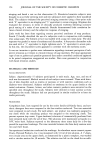
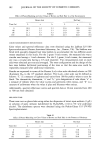
154 JOURNAL OF THE SOCIETY OF COSMETIC CHEMISTS stinging and based a test on this observation (2). Preselected sensitive subjects were brought to an actively sweating state and test substances were applied to their nasolabial folds. The subjects evaluated the perceived stinging sensation using a four-point scale with "0" equivalent to no stinging and "3" equivalent to severe stinging. Kligman also evaluated the irritancy in terms of clinically produced erythema following occlusive patch testing of a series of test materials. Results demonstrated little correlation be- tween clinical irritancy and the subjective response of stinging. Little work has been done regarding sensory perceived attributes of soap products. Frosch (7) briefly described the use of a subjective scale in conjunction with washing tests using soaps. The forearm or face was washed with a soap two times daily. The skin response was graded in terms of erythema and discomfort. A four-point discomfort scale was used with a "1" equivalent to slight tightness and a "4" equivalent to severe pain. In this test, the discomfort scores appeared to correlate with the erythema scores. It was our intention to gather more information regarding consumer perception of sub- jective irritation as it relates to clinical irritancy of soap materials. The most appropriate type of test to gather such panelist-generated data under controlled conditions appeared to be paired comparison exaggerated use studies. Data were generated in conjunction with facial irritation studies. MATERIALS AND METHODS FACIAL IRRITATION Subjects. Approximately 15 subjects participated in each study. Age, race, and sex of each was documented. Medical records of each subject were screened. Those with histo- ries of skin disorders such as eczema or psoriasis or with systemic conditions such as diabetes were eliminated. Subjects exhibited no erythema on the upper cheeks at the initial evaluation. Cremes, lotions, and other cosmetic products were restricted on the specified sites throughout the study. Subjects were directed to limit outdoor activity throughout the study. Subjects had not participated in similar studies for at least six weeks previously. PROCEDURES Complexion bars, bars targeted for use by the entire family (all-family bars), and syn- thetic detergent bars were compared in the four studies conducted. Two test materials were compared in each study. For each subject, one product was randomly assigned to one cheek while the remaining product was assigned to the remaining cheek. Ten percent aqueous (tap water, 0 ppm hardness) solutions of commercially purchased bars were prepared daily with the aid of heat. The solutions were maintained as liquids in a 50øC water bath. Subjects reported to the laboratory three times daily for a five-day period for supervised washings. The time intervals between the three daily sessions were two and three hours. An experienced technician conducted the washings. An absorbent rayon cosmetic square (Coets, Personal Products, Inc.) was moistened with 3.0 ml of test solution. A l•-diam - eter circular area on the upper cheek, as demarcated by a plastic template, was washed with a circular motion for 30 seconds. The solution was left on the cheek for an addi-

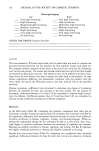
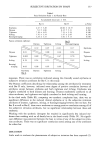
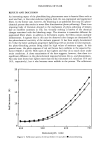
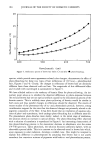
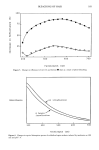
SUBJECTIVE IRRITATION BY SOAPS 155 tional 30 seconds before being removed with a paper towel which had been moistened with tap water. The area was then patted dry with dry paper towels. EVALUATIONS Each test area was scored for erythema prior to each washing using the following scale: 0 = no redness 1 = slight redness 2 = definite redness 3 = circumscribed red area, well-defined enough to be visible from a distance of 10 feet 4 = extremely red, well defined 5 = extremely red, well defined, edema and/or vesicles Prior to the third clinical evaluation each day, subjects evaluated the feel of their skin for dryness, tightness, itching, and burning/stinging, using the following seven-point category scale. This scale was adapted from that used to measure off flavors in foods (8). SKINFEEL QUESTIONNAIRE INSTRUCTIONS: For each question below, check (v/) the response on the scale which best describes the feel of your skin. __ Very high dryness __ High dryness __ Moderately high dryness __ Moderate dryness __ Slight dryness __ Very slight dryness __ No dryness Dryness Tightness __ Very high tightness __ High tightness __ Moderately high tightness __ Moderate tightness __ Slight tightness __ Very slight tightness __ No tightness __ Very high itching __ High itching __ Moderately high itching __ Moderate itching __ Slight itching __ Very slight itching __ No itching Itching Right __ Very high dryness __ High dryness __ Moderately high dryness __ Moderate dryness __ Slight dryness __ Very slight dryness __ No dryness Right __ Very high tightness __ High tightness __ Moderately high tightness __ Moderate tightness __ Slight tightness __ Very slight tightness __ No tightness Right __ Very high itching __ High itching __ Moderately high itching __ Moderate itching __ Slight itching __ Very slight itching __ No itching (Continued on next page)
Purchased for the exclusive use of nofirst nolast (unknown)
From: SCC Media Library & Resource Center (library.scconline.org)