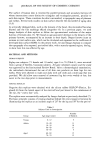
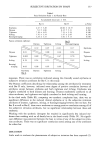
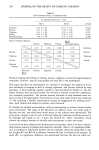
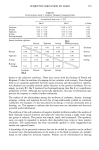
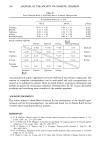
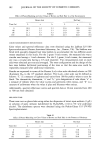
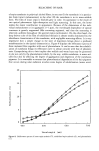
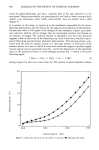
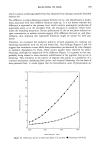
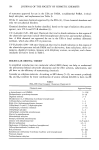
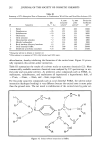
182 JOURNAL OF THE SOCIETY OF COSMETIC CHEMISTS Table I Effect of Photo-Bleaching on Color Values of Brown and Red Hair in a Dry Environment Brown hair Red hair Time (hr) L a b L a b 0 19.9 3.4 5.1 21.6 10.0 8.0 48 20.7 3.5 5.1 21.9 9.8 8.1 96 21.1 3.7 5.3 21.8 9.9 8.1 192 22.2 3.9 5.6 22.3 10.0 8.4 COLOR MEASUREMENTS (REFLECTANCE) Color values and spectral reflectance data were obtained using the LabScan LS-5100 Spectrocolorimeter (Hunter Associates Laboratory, Inc., Reston, VA). The LabScan was fitted with specially designed hair tress holders to accommodate the two different-sized tresses employed in this study. For the 2-gram 5-inch tresses, the measured site was a circular area having a 1-inch diameter. For the 0.3-gram 3-inch tresses, the measured site was a circular area having a 0.5-inch diameter. Two measurements (one on each side) were obtained per tress and averaged. The tress configuration and the design of the hair tress holders facilitated positioning of the tress so that the same area could be repeatedly measured after additional treatments. Results are expressed in terms of the Hunter L,a,b color scale calculated relative to CIE illuminant D65 to the 10 ø standard observer. The L,a,b, color scale can be defined as follows: "L" is a measure of lightness and varies from 100 for perfect white to zero for black. The chromaticity dimensions, "a" and "b," give designations of color where "a" is a measure of redness when the value is plus and greenness when minus, and "b" is a measure of yellowness when the value is plus and blueness when minus. Additionally, spectral reflectance curves and spectral data at 20-nm intervals from 400 to 700 nm were obtained. MELANIN FILMS These were cast on glass slides using either the dispersion of intact sepia melanin (1 g/L) or solution of sepia melanin [solubilized by H202/NH 3 (11)] in 5% w/w polyvinyl alcohol. The absorbance spectra were obtained using the Perkin-Elmer 553 UV/VIS Spectrophotometer. Table II Effect of Photo-Bleaching on Color Values of Brown and Red Hair in the Presence of Moisture Brown hair Red hair Time (hr) L a b L a b 0 21.2 3.5 5.4 22.0 9.8 8.1 48 21.4 4.0 5.7 22.3 10.4 8.8 96 23.4 4.1 6.7 23.3 9.8 8.7 192 28.6 4.2 8.2 25.0 10.0 9.9

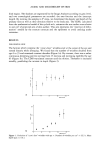
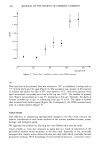
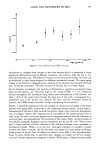
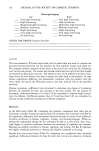
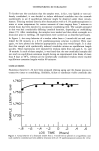
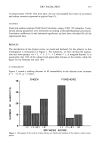
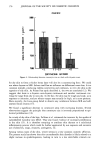
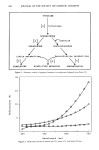
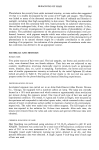
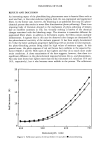
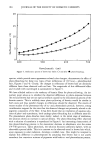
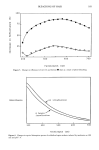
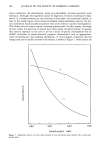
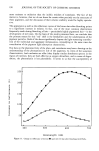
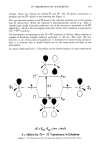
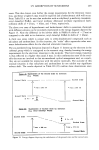
BLEACHING OF HAIR 183 RESULTS AND DISCUSSION An interesting aspect of the photobleaching phenomenon seen in keratin fibers such as wool and hair, is that solar radiation lightens both the non-pigmented and pigmented fibers. In the former case, however, the bleaching is an ephemeral first step of a photo- chemical process that results in severe fiber discoloration (photo-yellowing). There is an imposing body of literature devoted to the mechanism of photo-yellowing of keratin [see an excellent summary in (5)], but virtually nothing is known of the chemical changes associated with the bleaching stage. The situation is somewhat different for pigmented fibers where, in addition to the keratin matrix, the fibers contain multiple melanosomes. It appears that in this case the observed color changes are dominated by the photochemical reactivity of the melanin pigment. It has been amply documented (6,7) that the latter undergoes progressive lightening with an increase in solar exposure, the photo-bleaching process being aided by high values of moisture regain. In this general sense, the photo-response of red and brown hair conforms to the expected be- havior (Tables I and II). Both types of hair lighten and they do so much more under moist conditions. A closer examination of the data suggests, however, that there is a significant difference in the photochemical response between the eu- and pheomelanin. Not only does brown hair lighten more than red hair (increases in L values are 35% and 14%, respectively), but it also becomes more reddish in the process. The reflectance 25 2O 15 10 I I I i i 400 500 600 Wavelength (nm) i ! 700 Figure 3. Reflectance spectra of red hair before (C)) and after (O) photo-bleaching.
Purchased for the exclusive use of nofirst nolast (unknown)
From: SCC Media Library & Resource Center (library.scconline.org)