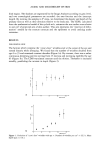
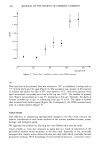
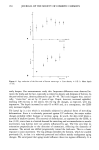
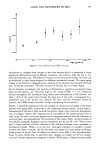
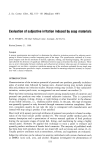
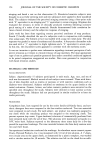
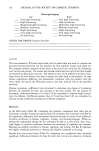
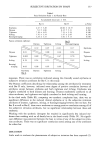
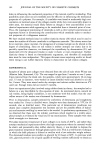
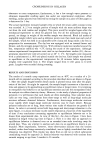
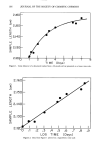
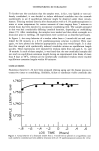
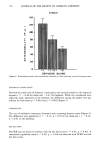
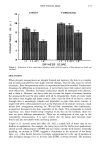
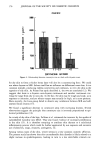
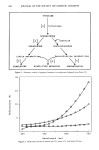
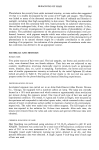
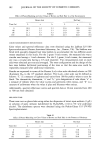
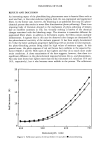
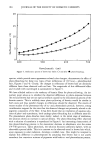
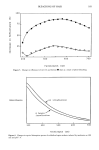
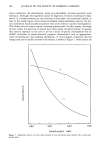
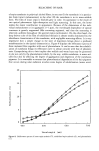
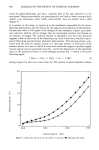
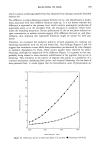
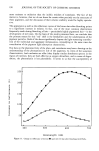
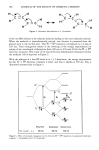
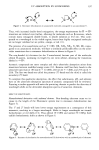
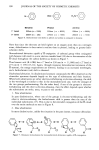
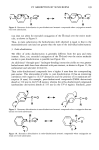
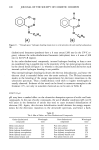
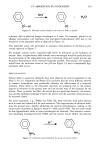
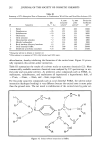
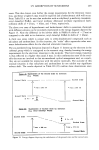
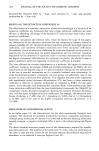
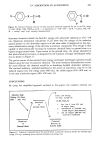
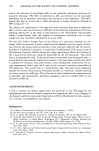
184 JOURNAL OF THE SOCIETY OF COSMETIC CHEMISTS 20 15 L J ! I I ! I 400 500 600 700 Wavelength (D•) Figure4. Reflectancespectraofbrownhairbe•re(¸)anda•er(O)photo-bleaching. spectra, which provide more appearance-related color changes, demonstrate the effect of photo-bleaching for these two types of hair (reflectance of 192 hour--photobleached hair, Figures 3 and 4). Clearly, the changes in reflectance of brown hair are distinctly different from those observed with red hair. The magnitude of this differential effect and its shift with wavelength is summarized in Figure 5. We have alluded earlier to the tendency of keratin fibers for photo-yellowing. An im- portant point arises as to whether the observed differences in photo-response between the red and brown hair are not optical artifacts caused by the discoloration process of the keratin matrix. This is unlikely since photo-yellowing of keratin would be similar in both cases and thus parallel changes in reflectance should be observed. The results of recent studies of the photoreactivity of eu- and pheomelanin provide, however, strong corroborative support for the view that the observed changes are primarily related to the pigment component of the fiber. It has been found that on irradiation of aqueous solu- tions of pheo- and eumelanins, both undergo photo-bleaching but at different rates (8). The pheomelanin photo-bleaches more slowly indeed, in the initial stage of irradiation, the solution shows an increase in optical density. The photo-bleaching effect observed with a solution of eumelanin is reproduced in Figure 6. An interesting characteristic of this photo-bleaching process is the monotonic decrease in absorbance over the entire UV-VIS spectrum. Upon photolysis, the solution becomes uniformly lighter, with no observable spectral shifts. This is in contrast to the observed trend in brown hair which, upon exposure to solar radiation, develops a reddish tone. One might be tempted to explain this difference in photoresponse by assuming that brown hair is not purely eumelanic but contains a mixture of pigments with both eu- and pheomelanins present.

BLEACHING OF HAIR 185 lOO 75 50 2' l . 400 500 600 700 Uavelength (D_m) Figure5. Changeinrefiectanceofred(¸)andbrown(O)hairasaresultofphoto-bleaching. Absorbance on 6 hours w/• '61rrh• 'rl•iøn • i i I ! 300 400 500 600 700 Wavelength (nm) Figure 6. Changes in optical absorption spectra of solubilized sepia melanin induced by irradiation at 300 nm and pH 7.4.
Purchased for the exclusive use of nofirst nolast (unknown)
From: SCC Media Library & Resource Center (library.scconline.org)