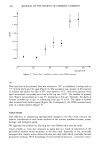
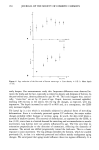
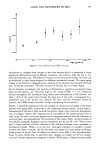
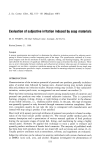
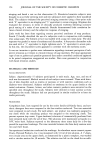
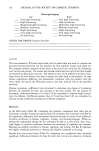
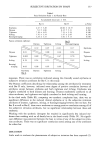
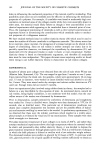
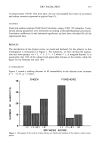
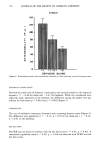
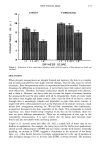
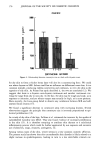
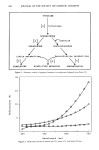
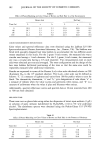
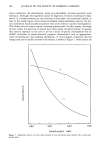
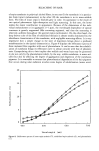
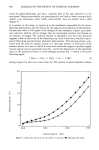
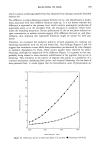
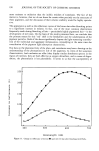
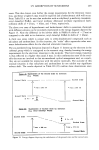
190 JOURNAL OF THE SOCIETY OF COSMETIC CHEMISTS more resistant to oxidation than the indolic residues of eumelanin. The fact of the matter is, however, that we do not know for certain what precisely are the structures of these pigments, and the discussion of their relative stability would be highly specula- tive. The appearance as well as the reflectance curves of the brown hair after bleaching points to a significant increase in redness. In fact, one of the most common observations frequently made during bleaching of hair--particularly highly pigmented hair--is the development of red tones. On the basis of the results presented here, we conclude that the primary reason for this "red" shift is the breakdown and the solubilization of the pigment particles. Both of the above significantly depress the light-scattering contribu- tion of the individual and aggregate melanosomes, intensifying at the same time the contribution of the pigment light absorption characteristic. Our data on the photoreactivity of the pheo- and eumelanins may have a bearing on the understanding of the photoprotective role of the pigments. In terms of the sunscreen characteristics, both melanins are alike (they display similar absorbance spectra in the region of interest), they are both effective as oxygen detoxifiers, and in terms of degra- dation, the pheomelanin is less photolabile. It seems to us that the suscept!bility of 250 200 150 100 50 I I I i I i i 400 500 600 700 Wavelength (nm) F•urell. Changeinreflectanceofbrown(O) andred(O)haira•erbleachingwith H202.

BLEACHING OF HAIR 191 red-haired individuals to sun exposure is, in fact, due to the lack of pigment and/or the inability of their skin to produce it in response to sun irradiation. Dispensing with the speculation of the involvement or non-involvement of pheomelanin in terms of solar damage, let us turn to the conclusions of our work in the field of hair. First, pheomelanin in hair is more resistant than eumelanin to oxidative or photo-degra- dation. This is independently corroborated by a series of in vitro experiments with the isolated pigments. Secondly, modification of the physical properties of melanin pigments, such as their solubility, can result in a significant change in their spectral characteristics. REFERENCES (1) T. B. Fitzpatrick, P. Brunet, and A. Kukita, "The Nature of Hair Pigment," in The Biology of Hair Growth, W. Montagna, Ed. (Academic Press, New York, 1958), pp. 255-303. (2) G. Prota, Recent advances in the chemistry of melanogenesis in mammals, J. Invest. Dermatol., 75, 122-127 (1980). (3) M. R. Chedekel, P. W. Post, R. M. Deibel, and M. Kalus, Photo-destruction of pheomelanin, Photochem. Photobiol., 26, 651-653 (1977). (4) M. Osber, D. Patil, and L. J. Wolfram, An overview of physicochemical properties of melanins, VI European Workshop on Melanin Pigmentation, Murcia, Spain, 1985. (5) J. A. Maclaren and B. Milligan, Wool Science, the Chemical Reactivity of Wool Fiber (Science Press, Marrickville, NSW, Australia, 1981), pp. 219-234. (6) L. J. Wolfram, "The Reactivity of Human Hair. A Review," in Hair Research, Orfanos and Mon- tagna, Eds. (Springer Verlag, 1981), pp. 479-500. (7) E. Tolgyesi, Weathering of hair, Cosmetics and Toiletties, 98, 29-33 (1983). (8) L. J. Wolfram, D. Patil, and L. Albrecht, Communication to the XIII International Pigment Cell ConjSrence, Tucson, Arizona, 1986. (9) T. Sarna and R. C. Sealy, Photo-induced oxygen consumption in melanin systems. Action spectra and quantum yields for eumelanin and synthetic melanin, Photochem. Photobid., 39, 69-74 (1984). (10) T. Sarna, I. A. Menon, and R. C. Sealy, Photo-induced oxygen consumption in melanin systems. II. Action spectra and quantum yields for pheomelanins, Photochem. Photobiol., 39, 805-809 (1984). (! 1) L. J. Wolfram and K. Hall, Isolation and identification of the protein component of hair melanin. J. Soc. Cosmet. Chem., 26, 247-254 (1975).
Purchased for the exclusive use of nofirst nolast (unknown)
From: SCC Media Library & Resource Center (library.scconline.org)