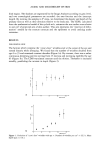
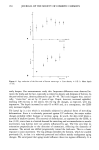
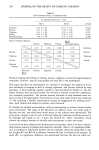
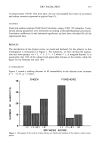
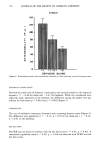
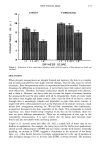
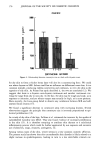
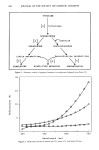
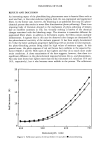
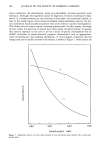
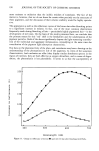
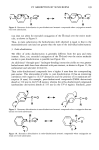
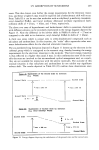
188 JOURNAL OF THE SOCIETY OF COSMETIC CHEMISTS erates the photo-bleaching), and thus, a spectral shift of the type observed is to be anticipated. Being water-soluble, the pheomelanin is not likely to show a spectral shift indeed, even eumelanin, when totally water-soluble, does not exhibit such a shift (Figure 6). It is natural, at this stage, to inquire as to the mechanism responsible for the photo- bleaching phenomenon and the reasons for the apparent photostability of pheomelanin. Of particular value in this regard is the finding (4) that irradiation of pheo- and eumel- anin solutions produce optical changes that are wavelength-invariant and depend on the presence of oxygen. The uniform decrease in absorbance over the entire spectrum suggests a lack of selectivity of the bleaching step. Such a selectivity would be antici- pated if bleaching was the primary photolyric phenomenon. This reaction pattern, com- bined with the need for oxygen, points to a two-stage process: a) Excitation of the melanin moiety to a state in which it reacts with molecular oxygen to produce highly reactive species such as superoxide anion 02 =, and b) the dismutation of the superoxide anion in the presence of water to yield hydrogen peroxide (Eq. 1) which is the active bleaching agent: 2 H20 + 2 O2=--• H202 + 02 q- 2 OH- (1) Strong support for this view comes from the TLC pattern of photo-bleached melanin 25 20 D 40 D 10 i i i i 400 500 600 Wavelength (nm) Figure 9. Reflectance spectra of red hair before (O) and after (O) bleaching with H202. ! 700

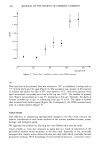
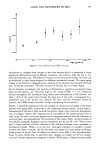
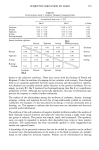
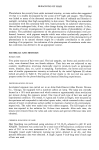
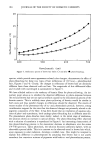
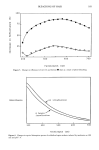
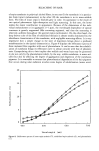
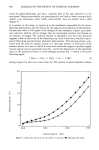
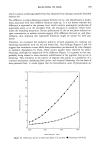
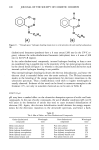
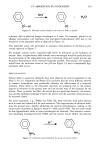
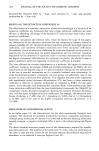
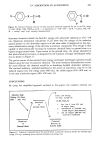
BLEACHING OF HAIR 189 which is almost undistinguishable from that obtained from hydrogen peroxide-bleached melanin (6). The difference in photo-bleaching response between the eu- and pheomelanin is doubt- lessly associated with their different chemical make-up. It is not known whether this difference is expressed at the primary level, which involves presumptive production of superoxide anion, or at the secondary level, the resistance to oxidation, which deter- mines the bleaching propensity. Recent publications (9, 10) on the photo-induced ox- ygen consumption in melanin systems suggest little difference between eu- and pheo- melanins, thus implying that superoxide formation might be similar for both pig- ments. Therefore, we evaluated the oxidative stability of both pigments by carrying out bleaching experiments with the red and brown hair. Our findings (Figures 9 and 10) suggest that eumelanin is more labile than pheomelanin (as measured by color changes) to oxidative degradation by H20 2. These results parallel those observed for photo- bleaching, although the magnitude of the difference (Figure 11) is greater in this case, probably being related to more extensive solubilization of the pigment that occurs in bleaching. This similarity in the pattern of response also points to a possibility of a common mechanism underlying both photo- and chemical bleaching. On the basis of data presented here, it would appear that the benzothiazine units of pheomelanin are 35 30 25 20 15 lO 5 i i i I i i • 400 500 600 700 Wavelength (nm) Figure 10. Reflectance spectra of brown hair be•re (¸) and a•er (O) bleaching with H202.
Purchased for the exclusive use of nofirst nolast (unknown)
From: SCC Media Library & Resource Center (library.scconline.org)