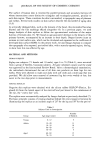
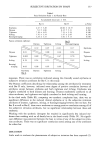
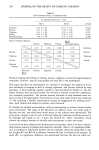
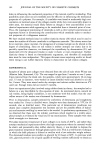
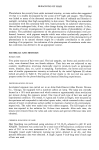
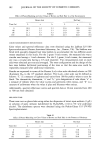
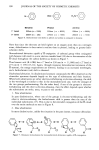
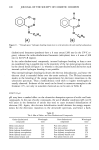
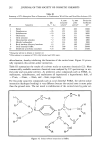
194 JOURNAL OF THE SOCIETY OF COSMETIC CHEMISTS of sunscreen approved for use in the USA are PABA, octyldimethyl PABA, 2-ethyl- hexyl salicylate, and oxybenzone (see Table I). Of the 21 sunscreen chemicals approved by the FDA (4), 19 are chemical absorbers and only two are physical blockers. Chemical absorbers may be further classified, based on the type of radiation they protect against, into UV-A and UV-B absorbers (3): UV-A absorbers (320-400 nm): Chemicals that tend to absorb radiation in this region of the ultraviolet spectrum include three benzophenone derivatives and menthyl anthrani- late. A fifth chemical not approved for use in the USA is butyl methoxy dibenzoyl methane, which also offers UV-A protection. UV-B absorbers (290-320 nm): Chemicals that tend to absorb radiation in this region of the ultraviolet spectrum include PABA and its derivatives, three salicylates, three cin- namates, digalloyl trioleate, lawsone with dihydroxy acetone, an acrylate, and a benz- imidazole derivative listed in Table I. MOLECULAR ORBITAL THEORY A simplified introduction into molecular orbital (MO) theory can help to understand the phenomena behind ultraviolet absorption and the effect solvents, substituents, and pH have on the efficiency of sunscreening chemicals. Consider an ethylene molecule. According to MO theory (5-8), two atomic p-orbitals (4)1 and 4)2) combine by linear combination of atomic orbitals (LCAO) to form two II Table I FDA-OTC Panel Category I Sunscreen Chemicals (4) Chemical name Approved dosage p-Aminobenzoic acid (PABA) Diethanolamine p-methoxycinnamate Digalloyl trioleate Dioxybenzone (2,2'-Dihydroxy-4-methoxy benzophenone) 2-Ethoxyethyl-p-methoxycinnamate Ethyl-4-bis (hydroxypropyl)amino benzoate 2-Ethylhexyl-2-cyano-3,3-diphenylacrylate 2-Ethylhexyl p-methoxy cinnamate 2-Ethylhexyl salicylate 2-Ethylhexyl-4-dimethyl aminobenzoate Glyceryl p-aminobenzoate Homomenthyl salicylate Isoamyl p-dimethyl aminobenzoate Lawsone with dihydroxyacetone Menthyl anthranilate Oxybenzone (2-Hydroxy-4-methoxy benzophenone) 2-Phenylbenzimidazole- 5-sulfonic acid Red petrolatum Sulisobenzone (2-Hydroxy-4-methoxy-5-sulfonic acid benzophenone) Titanium dioxide Triethanolamine salicylate 5-15% 8-10 2-5 3 1-3 1-5 7-10 2-7.5 3-5 1.4-8 2-3 4-15 1-5 0.25 with 3 3.5-5 2-6 1-4 30-100 5- 10 2-25 5-12

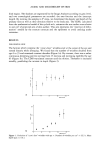
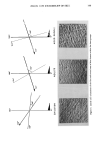
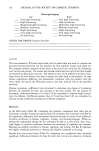
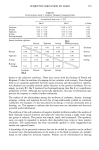
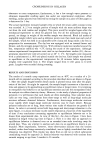
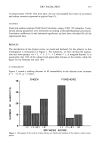
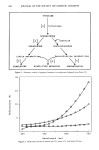
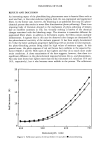
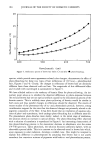
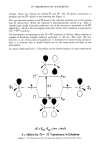
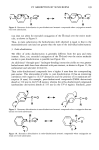
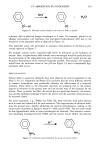
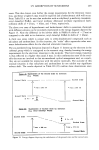
UV ABSORPTION BY SUNSCREENS 195 orbitals. These two orbitals are labeled [i and If*. The [i orbital contributes to bonding and the II* orbital to anti-bonding (see Figure 1). The two electrons present in the If-bond of the ethylene molecule are in the ground state [I orbital (Egr). When the molecule is photochemically excited (e.g., when it absorbs high energy ultraviolet radiation), one of the electrons is promoted to the II* orbital (Ecx), which is the next highest molecular orbital. This transition is expressed as a [i -- If* transition. The wavelength corresponding to this II-- If* transition is 180 nm. Hence ethylene is capable of absorbing sunlight radiation equivalent to 180 nm. This value 180 nm, however, is not of any practical significance to formulators of sunscreening products, since it is radiation that is usually filtered out by the ozone protective layer in our stratosphere. In a more complicated case, 1,3-butadiene can be viewed simply as a linear combination i t I I % % c AE ,Eex % f Egr AE = Eex -Eg r = h•' = hc/?x ?x = 180nrn for ]'[--, ]'[ Transitions in Ethylene Figure 1. The formation of the two molecular orbitals in ethylene (CH2 = CHQ.
Purchased for the exclusive use of nofirst nolast (unknown)
From: SCC Media Library & Resource Center (library.scconline.org)