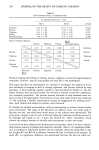
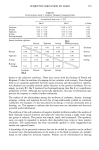
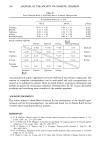
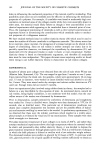
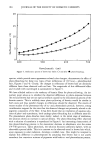
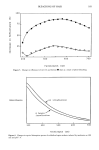
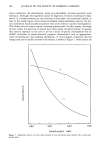
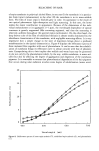
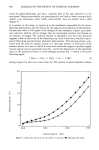
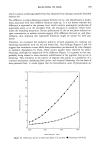
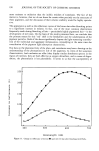
206 JOURNAL OF THE SOCIETY OF COSMETIC CHEMISTS predict the direction of wavelength shifts in the ultraviolet absorption spectrum for sunscreen chemicals. The effect of substituents, pH, and solvents on the ultraviolet absorbance can be estimated, providing some assistance to the formulator. This infor- mation may also be of some use to those attempting to design alternative methods of SPF testing (26-31). The addition of substituents in the para and ortho positions may have a substantial effect on the }t max and extinction coeffficient of the sunscreen formulations. Electron- releasing substituents in the ortho or para position to the chromophore will generally exhibit a bathochromic shift. pH changes in formulations containing acidic or basic compounds may contribute significantly to }t max shifts. The role that solvent changes have on the efficacy of a sunscreen chemical was dis- cussed. Here the situation is more complicated and depends upon the degree of solva- tion between the ground state/excited state of the sunscreen molecule and the solvent. In general, if solvation is extensive, it would lead to stabilization of the ground state of the sunscreen chemical, thereby raising the energy requirements (hence the lowering of the }t max) for the electronic transition responsible for the UV absorption. This would lead to a hypsochromic shift. If the excited state is more polar than the ground state, it would allow for the sunscreen chemical to resonate to the more polar excited state which is stabilized by solvation with polar solvents. Such stabilizations would lower the en- ergy requirements (hence raise the }t max) in the electronic transition responsible for UV absorption. This would lead to a bathochromic shift. Deviation from coplanarity reduces the electron delocalization (resonance) possible in a molecule, thereby resulting in a lower extinction coefficient. This is the case in ortho-disubstituted compounds such as salicylates and anthranilates. Increased conjugation also has a marked effect on the extinction coefficient. ACKNOWLEDGEMENTS I wish to express my deepest appreciation and gratitude to Lisa Paloympis for the experimental work and her helpful comments and suggestions, and to my colleagues of the Research and Instrumentation Departments at Felton Worldwide for their construc- tive criticism, encouragement, and support. REFERENCES (1) P. Robins, The need and the challenge, The Skin Cancer Foundation, 1 (1985). (2) The Skin Cancer Foundation, Box 561, New York, N.Y. 10156. (3) N. A. Shaath, The chemistry of sunscreens, Cosmetics and Toiletries, 101, 55-70 (March 1986). (4) "Sunscreen Drug Products for Over the Counter Human Drugs: Proposed Safety, Effective and La- beling Conditions," in Federal Register, Washington, D.C., Department of Health, Education and Welfare, Food and Drug Administration, 43(166): 38206-38269 (August 25, 1978). (5) H. H. Jaffe and M. Orchin, Theory and Application of Ultraviolet Spectroscopy (John Wiley and Sons, New York, 1964). (6) J. R. Dyer, Applications of Absorption Spectroscopy of Organic Compounds (Prentice-Hall, Inc., Englewood Cliffs, New Jersey, 1965). (7) E. Stern and T. Timmons, Electronic Absorption Spectroscopy in Organic Chemistry (St. Martin's Press, New York, 1971).

UV ABSORPTION BY SUNSCREENS 207 (8) R. Silverstein, G. Bassler, and T. Morrill, Spectrophotometric Identification of Organic Products, 3rd ed. (John Wiley and Sons, Inc., New York, 1974), pp. 231-258. (9) Note that A E = hv = hc/•., where v = frequency, •. = wavelength, c = speed of light and h = Planck's constant. Thus energy and wavelength have a reciprocal relationship, i.e., as energy in- creases, the wavelength decreases and vice versa. (10) J. March, Advanced Organic Chemistry Reactions, Mechanisms and Structure (McGraw-Hill Book Com- pany, Inc., New York, 1977), pp. 29-71. (11) A. I. Scott, Interpretation of the Ultraviolet Spectra of Natural Products (Pergamon Press, New York, 1964), p. 271. (12) Reference 5, pp. 242-286. (13) Shifts to longer wavelength are termed bathochromic or red shifts to shorter wavelength, hyp- sochromic or blue shifts. An increase in the extinction coefficient (intensity of absorption) is termed hyperchromic effect, and a decrease is hypochromic effect. (14) C. Rao, Ultraviolet and Visible Spectroscopy, 3rd ed. (Butterworth and Co. Ltd., London, 1975), pp. 162-182. (15) H. M. Hershenson, Ultraviolet and Visible Absorption Spectra (Academic Press, New York, 1956), pp. 1930-1954. (16) J. G. Grasselli and W. M. Ritchey, Atlas of Spectral Data and Physical Constants for Organic Compounds, 2nd ed. (CRC Press, Inc., Cleveland, 1975), Vol. II, III, and IV. (17) Reference 11, pp. 104-116. (18) R. T. Morrison and R. N. Boyd, Organic Chemistry, 3rd ed. (Allyn and Bacon, Inc., Boston, 1973), pp. 787-814. (19) S. Riegelman and R. Penna, Effect of vehicle components on the absorption characteristics of sun- screen components. J. Soc. Cosmet. Chem., 11, 280-291 (1960). (20) G. Groves, Evaluation of solar protective preparations, Cosmet. Perf., 90, 36-50 (1975). (21) B. Cumpelik, Spectral shift of lambda max of PABA in hydroalcoholic system, Van Dyke Technical Bulletin (Belville, New Jersey, 1977). (22) L. Paloympis, R. Nash, and N. Shaath, J. Soc. Cosmet. Chem., submitted for publication, 1986. (23) Reference 5, pp. 111-146. (24) A. Streitwiezer, Jr., Molecular Orbital Theory for Organic Chemists (John Wiley and Sons, Inc., New York, 1961). (25) Reference 14, pp. 118-127. (26) G. Groves, P. Agin, and R. Sayre, In vitro and in vivo methods to define sunscreen protection. Aust. J. Derre. 20, 112 (1979). (27) S. Kreps, Sunburn protection and suntan preparation, Amer. Perf. Cosmet., 78, 73-76 (1963). (28) E. Pines, A new technique to assess the sunscreen effectiveness, J. Soc. Cosmet. Chem. 29, 559-564 (1978). (29) B. Cumpelik, Sunscreens at skin application levels: Direct spectrophotometric evaluation, J. Soc. Cosmet. Chem., 31, 361-366 (1980). (30) R. Sayre, P. Agin, D. Derouches, and E. Marlowe, Sunscreen testing methods: In vitro predictions of effectiveness, J. Soc. Cosmet. Chem., 31, 133-143 (1980). (31) J. Vogelman, E. Nieves, J. Brend, R. Nash, and N. Orentreich, A spectrophotometric method determining relative SPF values of sunscreen preparation, J. Applied Cosmetol., 1, 1-11 (1985).
Purchased for the exclusive use of nofirst nolast (unknown)
From: SCC Media Library & Resource Center (library.scconline.org)