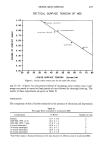
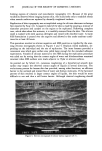
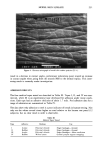
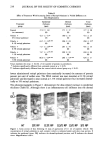
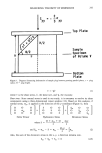
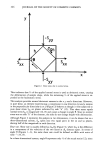
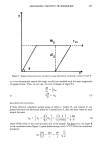
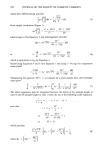
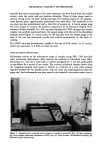
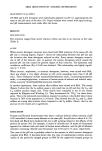
MODEL SKIN SURFACE 227 much as to make the kinetics so fast that it precludes the coating process. For the above system, 3.95 grams of a 3% aqueous formaldehyde solution meet these requirements. Following aidehyde addition, the warm formulation is quickly coated onto clear, un- treated Mylar. One 100 gram formulation, coated at 20 mils, will produce about 200 square inches of MSS. CHEMICALS Both porcine and calf skin gelatin of 175 and 225 bloom were used successfully. 175 bloom porcine skin gelatin (Sigma Chemical) gave optimum results. Ceraphyl GA was developed by Westvaco and recently licensed to the Van Dyk Divi- sion of Mallinckrodt. Original GA was supplied by Westvaco later quantities were procured from Van Dyk. All lots displayed consistent performance. Contact-angle measurements were made with chromatography grade water (Caledon Laboratories) and other reagent grade liquids. The Silflo silicone elastomer precursor and catalyst materials needed for topographical replication were obtained from J & S Davis Ltd., London, England. INSTRUMENTATION Adhesion values were obtained at 70 _+ 3øF and 50 -+- 3% relative humidity using an Instron Model 1122. All tapes were rolled on the MSS with a 4.5-1b roller (12" per minute) subsequent to application to test surfaces. The tape adhered/MSS composite was allowed to stand for ten minutes before making peel force measurements. Peel adhesions were taken at an angle of 180 ø at rates of 50.8 centimeters per minute. In this configuration, the tape is peeled backwards from the MSS at an angle of 180 ø from the tape-MSS bond. A Rame-Hart goniometer Model 100-00 was employed to determine contact angles. Water content was analyzed using a Metrohm Combination Karl Fisher 633-Dosimat 655. Electron microscopy was performed using an AMR 1000A scanning electron micro- scope operated at an accelerating voltage of 10 KV. The samples were sputter-coated with gold. PROTEIN/LIPID RATIO The wetting of surfaces is controlled by a combination of polar and dispersive forces acting at the solid/liquid interface. By determining the contact angles of two liquids whose surface tensions (•L) have been characterized in terms of their polar (•[) and dispersive (•a z) components, the corresponding components (• and •as) of the solid's surface tension (•s) can be evaluated using the analysis of Wu (7). For further back- ground see the Appendix and references 4-8. + =

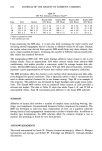
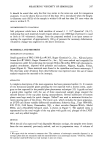
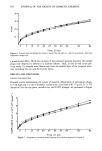
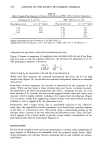
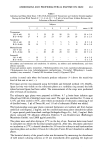
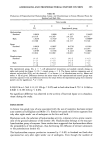
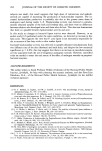
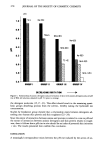
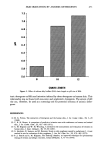
228 JOURNAL OF THE SOCIETY OF COSMETIC CHEMISTS For this purpose, the contact angles of water and diiodomethane were measured against MSS surfaces varying in gelatin-to-GA ratio. It has been well established that human skin presents a hydrophobic surface. A gelatin-to-GA ratio of 3 to 1 results in a biphasic MSS surface which, when analyzed by the contact angle method, gave a 'y•/• ratio of 1.58. This is in agreement with the value of 1.53 reported by E1 Shimi and Goddard (5), and this formulation was selected as representing the surface energetics of human skin. To further characterize the 3/1 formulation, a critical surface tension analysis of the MSS was performed according to the method of Zisman (8). By plotting the cosine of the contact angle against the surface tension for a series of liquids (see Table I), the surface tension for a liquid which just completely wets (Cos 0 = 1) the MSS is estimated by extrapolation. Figure 2 is a Zisman plot for the 3/1 MSS which indicates that Cos {} = 1 when •t = 33.4 dynes/cm, and therefore the critical surface tension, %, is equal to 33.4 dynes/cm. This is somewhat higher than values reported in the literature for in vivo human skin. Ginn (3), for example, found a value of 26.8, while Rosenberg (4) published a •c value of 27.5 dynes/cm. One possible reason for this departure from in vivo results is that the MSS is not capable of secreting and excreting endogenous sub- stances such as sweat and sebaceous fluids. These fluids may decrease the apparent surface energy of in vivo skin, leading to lower measured values of %. WATER CONTENT The state of hydration of the stratum corneum depends on the local relative humidity. Because the outermost and bottom layers reside in quite different environments, a gra- dient in water concentration exists within the stratum corneum. An estimate of 17 and 41% for the top and bottom layers, respectively, under temperate conditions has been reported by Scheuplein and Blank (10). Hydration under moist conditions will mark- edly increase these values, challenging the performance of adhesives desigt•ed for wet environments. The water content of the MSS was varied, therefore, to provide a test substrate for these conditions. Karl Fisher analysis of 40-mg pieces of MSS, coated and dried under ambient conditions, gave water contents of between 9.5 and 10.3%. This water content could be varied in a predictable manner by allowing mounted MSS to equilibrate in constant temperature-humidity chambers. Storage at 97øF and 100% relative humidity for 24 hours, for example, resulted in water contents of between 26.3 Table I Surface Tensions and Contact Angles for Liquids on the MSS Liquid (dynes/cm) •/• •/[ Cos 0 Water (9) 72.8 21.8 51.0 0.45 Glycerol (9) 63.4 37.2 26.2 0.56 Diiodomethane (9) 50.8 46.6 4.2 0.79 Ethyleneglycol (9) 48.3 29.3 19.0 0.77 Benzyl alcohol (4) 39.2 34.9 4.3 0.96 Mineral oil (4) 31.9 30.8 0.0 0.97 Surface tensions are from references cited contact angles are from this work.
Purchased for the exclusive use of nofirst nolast (unknown)
From: SCC Media Library & Resource Center (library.scconline.org)