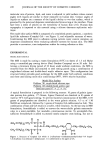
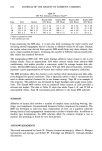
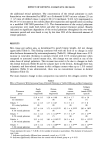
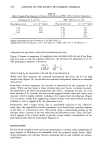
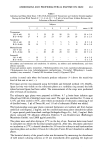
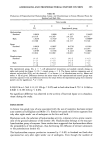
268 JOURNAL OF THE SOCIETY OF COSMETIC CHEMISTS MATERIALS AND METHODS CHEMICALS Bovine serum albumin (BSA) was obtained from Sigma Chemical Co., St. Louis, Mis- souri sodium lauryl sulfate (SLS, Sipon WD) from Alcolac Inc., Baltimore, Maryland triethanolammoniumlauryl sulfate (TEALS) from Onyx Chemical Co., Jersey City, New Jersey linear alkylbenzene sulfonate (LAS) from Continental Oil Co., Houston, Texas sodium lauryl-3-ethoxy sulfate (Na-3EO, sodium laureth sulfate, Standapol 3EO) and ammonium lauryl-12-ethoxy sulfate (Standapol 230E) from Henkel, Inc., Hoboken, New Jersey ammonium lauryl-3-ethoxy sulfate (NH4-3EO, ammonium laureth sulfate, AEOS), ammonium lauryl-6-ethoxy sulfate (NH4-6EO, Neodol 25-6A), sodium lauryl-6-ethoxy sulfate (Na-6EO, Neodol 25-6S), ammonium lauryl- 9-ethoxy sulfate (NH4-9EO, Neodol 25-9A), and sodium lauryl-9-ethoxy sulfate (Na-9EO, Neodol 25-9A) from Shell Chemical Co., Houston, Texas Igepon TC-42 from GAF Corp., New York, New York and homologous series of sodium alkyl sul- fates from Research Plus Labs, Denville, New Jersey. These materials were used without further purification. MEASUREMENT OF SKIN IRRITATION (5) The eleven surfactants, at 10% concentration and neutral pH, were applied in Duhring chambers to the forearms of ten subjects for five days (solutions changed daily). Obser- vations were mainly limited to erythema. The samples were coded and blind to the evaluators. The test surfactants were ranked and sorted into groups (Table I): Group I--surfactants providing severe reactions within 24 hours Group II--surfactants causing intense redness by the fourth day Group III--surfactants showing mild-to- moderate redness by the fifth day and Group IV--surfactants showing no irritation by the fifth day. Table I Duhring Chamber Test Rankings for Skin Irritation by Surfactant Solutions Group I : Severe reaction within 24 hours and testing terminated. Sodium lauryl sulfate Linear alkylbenzene sulfonate Group II: Intense redness by fourth day in nearly all subjects and testing terminated. Sodium laureth sulfate (3EO) Triethanol ammonium lauryl sulfate Group III: Tests run to completion (five days) with subjects showing mild-to-moderate redness. Ammonium laureth sulfate (3EO) Ammonium laureth sulfate (6EO) Igepon TC-42 Group IV: No irritation after five days exposure. Sodium laureth sulfate (6EO) Sodium laureth sulfate (9EO) Ammonium laureth sulfate (9EO) Ammonium laureth sulfate (12EO)

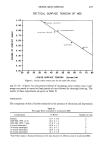
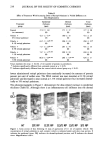
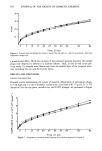
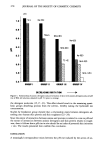
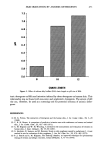
SKIN IRRITATION BY ANIONIC DETERGENTS 269 MEASUREMENT OF pH EFFECT 2% BSA and 6.4% detergent were individually adjusted to pH 5.6, approximately the same as the pH value of the skin (14). Equal volumes were mixed with rapid stirring, and pH measurements were made after two hours. RESULTS SKIN IRRITATION The irritation ranged from severe reaction within one day to no reaction in five days (Table I). pH RISE When anionic detergent solutions were mixed with BSA solutions of the same pH, the pH rose to varying degrees. Figure 1 shows the relationship between this pH rise and the irritation that these detergents induced on skin. Every anionic detergent caused a rise in pH of the mixture, and, in general, the anionic detergents which caused the greatest pH rise also caused the greatest degree of skin irritation. The Spearman rank correlation coefficient (Rs) of 0.86 was obtained. This relationship was highly signifi- cant (p 0.01). When cationic, amphoteric, or nonionic detergents, however, were mixed with BSA, there was always a very slight decrease in pH, never exceeding more than 0.20 pH units. These detergents include myristyldimethylamine oxide, cocoamidopropylamine oxide, a cocoamphoglycinate, a mixture of laurate esters of sorbitol and sorbitol anhy- drides, and poly (dimethyldiallylammonium chloride). In another experiment, three sodium alkyl sulfates were mixed with BSA. The results (Figure 2) show that the Cs sulfate causes a very small rise in pH and that the Clo and C•2 sulfates produce larger rises. These results were compared to the in vivo results reported by Kligman and Wooding (3). They determined the "ID5o" for these deter- gents. This is the estimated concentration required to produce a discernible skin irritant reaction in 50% of the population in 24 hours. They showed that the Clo and C12 alkyl sulfates are strong skin irritants when compared to the Cs sulfate. Hence, their in vivo and our in vitro results are in agreement. DISCUSSION Putnam and Neurath demonstrated that when a sodium dodecyl sulfate solution of pH 4.85 was added to horse serum albumin at the same pH, the pH rose to about 6.4 (15). Scatchard and Black have explained the rise in pH as being related to the affinity of the protein for anions (16). For example, 6 moles of chloride and 24 moles of thiocyanate appeared to combine with each mole of human serum albumin, and the pH of albumin solutions containing chloride and thiocyanate rose 0.30 and 0.73 units, respectively. The cause of the pH rise is probably related to the manner in which anionic detergents complex with BSA. It has been shown that this type of complexation involves neutral- ization of the positively charged groups on BSA by the negatively charged groups on
Purchased for the exclusive use of nofirst nolast (unknown)
From: SCC Media Library & Resource Center (library.scconline.org)