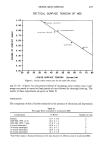
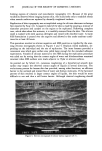
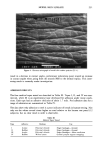
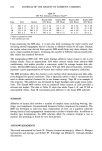
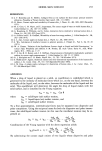
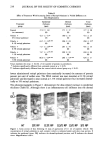
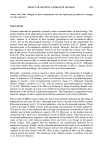
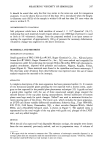
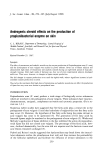
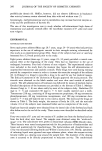
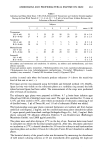
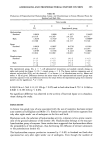
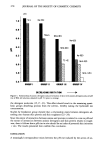
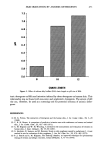
270 JOURNAL OF THE SOCIETY OF COSMETIC CHEMISTS LAS 7.0 6,8 6,6 6.4 6.2 6.0 SLS Na-3EO TEALS NH4-$EO NH4-6EO TC-42 Na--6EO Na-gEO NH4-gEO 5.8 NH4-12EO ! T GROUP I GROUP II GROUP III GROUP IV DECREASING IRRITATION Figure l. Relationship 9f anionic-detergent-induced irritation of skin with anionic-detergent-induced pH rise of BSA (all solutions adjusted to pH 5.6 prior to mixing). the detergent molecules (15,17-21). This effect should result in the remaining quasi- basic groups absorbing protons from the solvent, thereby raising the hydroxide ion concentration. Studies by Imokawa's group showed that a relationship exists between detergents ad- sorbing onto human skin protein and skin roughness (22-24). Since the extent of interaction between anions and proteins is related to a rise in pH and the extent of interaction between anionic detergents and skin protein results in rough- ness, then it follows that a pH rise in vitro should be an index of potential skin irritation ,• vivo. The results presented here confirm this conclusion. CONCLUSION A meaningful correspondence exists between the pH rise induced by the action of an-

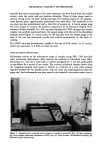
SKIN IRRITATION BY ANIONIC DETERGENTS 271 7.2- 7.0 6.8 6.6 6.4 6.2 6.0 5.6. 8 IO 12 CHAIN LENBTH Figure 2. Effect of sodium alkyl sulfate (SAS) chain length on pH rise of BSA. ionic detergents on BSA and irritation induced by these detergents on human skin. This relationship was not found with non-ionic and amphoteric detergents. The extent of pH rise can, therefore, be used as a screening tool for potential irritancy of anionic deter- gents. REFERENCES (1) M. K. Polano, The interaction of detergents and the human skin, J. Soc. Cosmet. Chem., 19, 3-20 (1968). (2) V. K. H. Brown, A comparison of predictive irritation tests with surfactants on human and animal skin, J. Soc. Cosmet. Chem., 22, 411-420 (1971). (3) A.M. Kligman and W. M. Wooding, A method for the measurement and evaluation of irritants on human skin, J. Invest. Dermatol., 49, 78-94 (1967). (4) G. Imokawa, K. Sumura, and M. Katsumi, Study on skin roughness caused by surfactants: I. A new method in vivo for evaluation of skin roughness,J. Am. Oil. Chem. Soc., 52, 479-483 (1975). (5) P. J. Frosch and A.M. Kligman, The Duhring chamber, an improved technique for epicutaneous testing of irritant and allergic reactions, Contact Dermatitis, 5, 73-81 (1979).
Purchased for the exclusive use of nofirst nolast (unknown)
From: SCC Media Library & Resource Center (library.scconline.org)