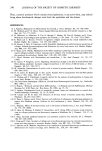
ANDROGENS AND PROPIOBACTERIAL ENZYME ON SKIN 265 (12) C. L. Kirily, M. Alan, J. Korvola, and M. Horsmanheimo, The effect of testosterone and anabolic steroids on the skin surface lipids and the population of Propionibacteria acnes in young postpubertal men, Aaa Derre. Venereol. (Stockh), 68, 21-26 (1988). (13) P. Williamson and A. A. Kligman, A new method for the quantitative investigation of cutaneous bacteria, J. Invest. Dermatol., 45, 498-503 (1965). (14) $. E. Smith and N. P. Wilett, A rapid plate method for screening hyaluronidase and chondroitin sulfatase producing organism, Applied Microbiology, 16, 1434-1436 (1968). (15) $. E. Unkles and C. G. Gemmel, Effect of clindamycin, eryhtromycin, lincomycin, and tetracycline on growth and extracellular lipase, Antimicrobial Agent and Chemotherapy, 21, 39-43 (1982). (16) M. Foegh, Evaluation of steroids as contraceptive in men, Acta Endocrinol. (Suppl), 104, 1-48 (1983). (17) A.M. Kligman and O. H. Mills, Jr., Acne cosmetica, Arch. Derm. 106, 843-850 (1972). (18) M. Schubert, Intracellular macromolecules. Proceedings of a symposium sponsored by the New York Association (Little, Brown and Co., Boston, 1964).

J. Soc. Cosmet. Chem., 39, 267-272 (July/August 1988) Anionic detergent-induced skin irritation and anionic detergent-induced pH rise of bovine serum albumin EDWARD A. TAVSS, EDWARD EIGEN, and ALBERT M. KLIGMAN, Colgate-Palmolive Research Center, 909 River Road, Piscataway, NJ 08854 (E.A.T., E.E.), and Department of Dermatology, University of Pennsylvania, Philadelphia, PA 19104 (A.M.K.). Received December 10, 1987. Synopsis Addition of anionic detergents to bovine serum albumin (BSA) results in an increase in hydroxide ion formation and a consequent rise in pH. The extent of the pH rise correlates with the degree of irritation caused by anionic detergents on human skin and can, therefore, be used as a screening tool. BACKGROUND Anionic surface active agents are known to contribute to skin damage (1-4). The surest method of testing these for skin compatibility is by a large panel of human subjects. Such a test, however, is costly and time-consuming. Therefore, obtaining a rapid, reli- able in vitro method was the objective of the present study. The degree of irritation caused by many surfactants on the skin of human forearms was studied using the Duhring chamber (5,6). The results of chamber tests have clinical relevance, in that the rank order of irritancy has been shown to correspond well to realistic washing tests. These results were used as a benchmark for the in vitro test. Several in vitro methods have been used to study skin irritation by surfactants, e.g. swelling of stratum corneum (7,8), permeation of stratum corneum (9), and denatura- tion of protein (10-13). The method decided upon, based on a reasonable mechanism, simplicity, and convenience, was the effect of surfactants on the denaturation of pro- teins. A modification was made to the method developed by Imokawa et al. (13) which involves measuring the change in specific rotation of BSA. While investigating this approach, the effect of surfactants on the pH of BSA solutions was examined. A comparison of these results with the effects of the corresponding surfactants on human in vitro skin irritation is the subject of this report. 267
Purchased for the exclusive use of nofirst nolast (unknown)
From: SCC Media Library & Resource Center (library.scconline.org)