J. $oc. Cosmet. Chem., 39, 259-265 (July/August 1988) Androgenic steroid effects on the production of propionibacterial enzyme on skin C. L. KIRfixLY, Department of Dermatology, Central Hospital of Middle-Finland, Jyviiskylii, and Research Unit for Sport and Physical Fitness, Jyviiskylii, Finland. Received November 25, 1987. Synopsis The effect of testosterone and anabolic steroids on the enzyme production of Propionibacterium acnes (P. acnes) and the development of acne vulgaris was studied in power athletes. Seven out of fifteen subjects self administered high doses of testosterone and anabolic steroids during an eight-week period of muscular- strength training. After eight weeks of hormone use, four out of seven experimental subjects developed mild acne. There were, however, no changes in lipase enzyme production. Nor did changes in enzyme production occur until the eighth week, when a significant increase in hyal- uronidase enzyme production occurred. This led to the conclusion that high doses of testosterone and anabolic steroids do not affect the production of lipase but may cause acne lesions in postpubertal men. INTRODUCTION Propionibacteria acnes (P. acnes) produce a wide range of biologically active substances which are involved in the pathogenesis of acne vulgaris. These substances have enzymic, chemoattractant, antigenic, complement activation and cytotoxic properties. (For a re- view see 1,2.) Numerous earlier studies have suggested that free fatty acids play a central role in the pathogenesis of acne vulgaris (1) and that hydrolysis of triglycerides into free fatty acids may occur (3). However, the hypothesis of free fatty acids being the prime irritant in acne vulgaris has come to be questioned (4). The generation of free fatty acids by bacterial lipases might be unrelated to the pathogenesis of acne vulgaris (5). Weeks and McCarty's application of lipase inhibitor to the face inhibited the action of propionibac- terial lipase but did not control acne vulgaris. The percentage of free fatty acids, how- ever, declined dramatically, but the acne did not improve and the bacteria counts and acne lesions remained unchanged (5). Puhvel and Reiner's results suggested that hyaluronidase may break down the intracel- lular substances within the pilosebaceous duct wall and thus increase the permeability of the follicular epithelium and facilitate the diffusion of irritant substances to the 259

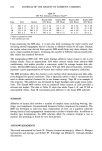
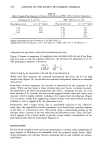
260 JOURNAL OF THE SOCIETY OF COSMETIC CHEMISTS perifollicular dermis (6). H0ffler, however, did not observe differences in hyaluroni- dase activity between strains obtained from skin with and without acne (7). Interestingly, methyltestosterone and its metabolites may increase bacterial enzyme ac- tivity and the proliferation of bacteria (8). The aim of this investigation was to study whether self-administered high doses of testosterone and anabolic steroids affect the exocellular enzymes of P. aches and cause acne vulgaris. EXPERIMENTAL MATERIALS AND METHOD Seven male power athletes (Mean age 28.7 years, range 24-34 years) who had previous experience in the use of androgenic steroids in their strength training volunteered for this study as an experimental group (EG). None of the subjects had acne or used any hormones for a 12-week period prior to the study. Eight power athletes (mean age 31 years, range 24-34 years) provided a control com- parison (CG) at the beginning of the study. They had no experience in the use of androgenic hormones. Four had a history of acne vulgaris. The experimental subjects were included in the study from the moment they began the self administration of unprescribed testosterone and anabolic steroids. These drugs were used during training periods for competitive events in order to increase the muscular strength of the athletes (9). In Finland it is illegal to prescribe a drug to be used for any but medical reasons. The Ethical Committee of the University of Kuopio approved the study protocol. The steroids were obtained on the black market and were thus used outside of medical control. The self administration of hormones was followed by means of medical diaries. Detailed descriptions of the hormones are provided at the bottom of Table I. Methan- dienone (5mg) (n = 6) was taken orally by most of the subjects daily. Nadrolone (50 mg) (n = 7) and stanozolol (50 mg) (n = 3) were usually injected once a week. Testosterone (250 mg, consisting of 30 mg testosterone propionate, 60 mg testosterone phenylpropionate, 60 mg testosterone isocaprionate, and 100 mg testosterone deca- noate) (n = 7) was self-injected one to two times a month. The doses and the drugs are shown in Table I. The body weight, the amount of body fat (10), and the testicular volume (11) of the subjects were examined before and on completion of the study. Duplicate bacterial samples were obtained from the lateral side of the forehead and back skin before and at the end of the study. These strains were identified as described earlier (12). Forty-two strains of P. aches and two strains of P. avidurn (one from the forehead and one from the back skin) were found. The samples were obtained using the "scrub-tech- nique" (13). The subcultures were grown in brain heart infusion (BHI) (Oxoid) tubes. These bacteria were tested semiquantitatively for the production of hyaluronidase and lipase and qualitatively for chondroitinase. The hyaluronidase and chondroitinase ac- tivity was measured following Smith and Willett's instructions (14). Briefly, specimens of culturing liquid were pipetted onto agar substrate plates, where the enzyme activity became visible as a clearing zone around the sample hole. The diameter of the clearing zone is assumed to be directly proportional to reductase activity. The condroitinase
Purchased for the exclusive use of nofirst nolast (unknown)
From: SCC Media Library & Resource Center (library.scconline.org)