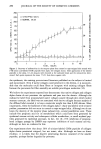
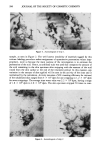
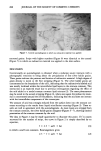
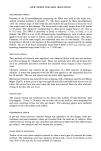
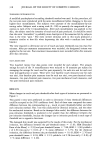
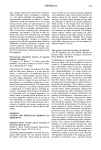
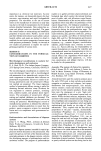
286 JOURNAL OF THE SOCIETY OF COSMETIC CHEMISTS Figure 3. Autoradiogram of strip 1. sample, as seen in Figure 2. The well known instability of materials tagged by this tritium labeling procedure makes assignment of quantitative penetration values inap- propriate, more so because the main purpose of the investigation is to estimate the penetration of the acid. Hence, an arbitrary scale was used that compares the amount of the acid remaining in the skin specimen after stripping with the amount of the acid rinsed from the skin surface at the end of the treatment period. In this manner, any variation in the amount of dose applied will be seen in the activity of the rinse and is normalized by the calculation. Activity (assumes a 50% counting efficiency for tritium) of the solubilized skin ranged from 5 X 10⁵ dpm for one stripping to 1.2 X 10⁵ dpm for seven strippings. The average rinse water value was 2.2 X 10 6 dpm, having a range of 1.8 X 10 6 dpm to 2.8 x 10 6 dpm. The skin specimen stripped 50 times to com- Figure 4. Autoradiogram of strip 2.

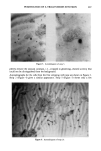
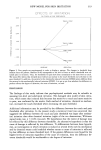
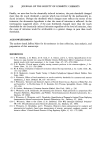
PENETRATION OF A TRIGLYCERIDE INTO SKIN 287 Figure 5. Autoradiogram of strip 5. pletely remove the stratum corneum, i.e., stripped to glistening, showed activity that could not be distinguished from the background. Autoradiographs for the cells from the first stripping with tape are shown in Figure 3. Strip 2 (Figure 4) gives a similar appearance. Strip 5 (Figure 5) shows only a few ß Figure 6. Autoradiogram of strip 25.
Purchased for the exclusive use of nofirst nolast (unknown)
From: SCC Media Library & Resource Center (library.scconline.org)