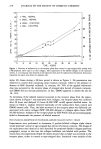
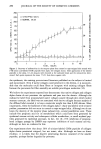
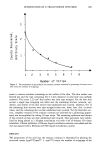
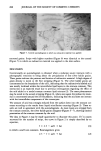
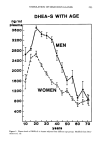
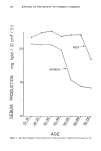
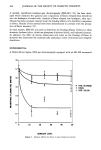
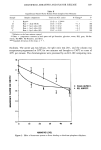
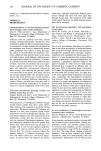
294 JOURNAL OF THE SOCIETY OF COSMETIC CHEMISTS ¸ !.O AGE Figure 2. Age-related changes in sebum production in men and women. Adapted from Strauss et al. (6).

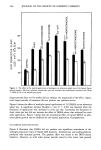
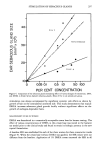
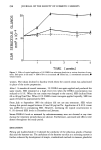
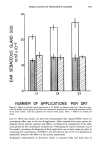
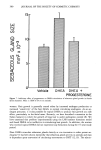
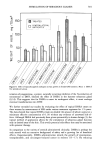
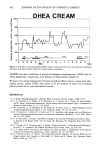
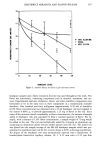
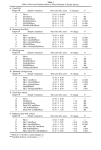
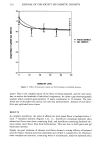
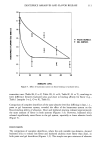
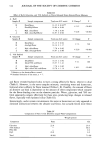
STIMULATION OF SEBACEOUS GLANDS 295 LHS HAMSTER HIRSUTISM TEST Adult female LHS hamsters (1 l-12 weeks of age) were anesthetized with sodium pen- tobarbital. Areas measuring 1 cm 2 on the right and left flanks were delineated by tattooing with black ink. Hair on both skin areas was plucked using depilatory wax at the start of the experiment to synchronize the hair cycle. Ten p•g of each test steroid, dissolved in 50 •1 of acetone, was applied on the right side. The left side remained untreated. Controls received 50 •tl of acetone alone on the right side. Hair outside the boundary of the delineated site was carefully shaved so that the topical preparation could be delivered accurately to the target area. After eight weeks of topical treatment, the hair growing longer than 2 cm was collected, dried over anhydrous CaC12, and weighed (8). Hair growth was expressed as milligram of hair per unit area of skin. MEASUREMENT OF SEBUM EXCRETION RATE (SER) IN WOMEN The technique used by Strauss and Pochi (10) to measure SER was adopted for this study. After removal of the glued portion, the cigarette paper was extracted for 30 minutes with ether, air dried, and stored in aluminum foil prior to use. Subjects in the study comprised three women volunteers aged 30, 62, and 65. All subjects were in good health but had initially low SER levels. Prior to each measurement, the forehead was cleaned for 15 minutes by placing two layers of cigarette paper upon the forehead. The head of each subject was wrapped with Ace © bandage to keep the paper in place. This procedure was repeated again for another 15 minutes. Two areas of the forehead measuring 5 cm 2 were delineated using •/2-inch and 1-inch surgical tape. Cigarette paper was first placed over these spaces, followed by placement of a gauze backing over the paper, and finally wrapped in place with an Ace bandage. Sebum was allowed to become absorbed into the cigarette paper for three hours. After the three-hour collection period, the cigarette paper was extracted three times with 5 ml of hexane, and the extract was filtered through sintered glass. The dried sebum was weighed after evaporation of the solvent. Placebo or DHEA cream was applied once in the morning and once before bedtime. RESULTS SGH EAR SEBACEOUS GLAND STUDIES Various androgens, dissolved in the gel vehicle at a concentration of 1%, were applied topically to compare their effects on the hamster ear sebaceous gland model. Pregnen- olone, 5-androstene-3[3-17[3-diol and 17ot-hydroxy pregnenolone did not show any stimulating effects on female sebaceous glands all other steroids showed varying levels of potency (Figure 3). The greatest stimulation was observed in hamsters treated with DHT. DHEA was the only androgen that produced a sebotrophic action without con- comitant effects on the untreated contralateral ear. A dose-response relationship for DHEA, T, and DHT is shown in Figure 4. It is important to note that systemic effects were not observed even at a concentration of 5%. The effect of a longer duration of topical treatment using 1% DHEA was also evalu- ated. The data in Figure 5 show that the effect of DHEA was minimal after one week, but with maximal activity evident at two weeks of treatment. Topical applications for
Purchased for the exclusive use of nofirst nolast (unknown)
From: SCC Media Library & Resource Center (library.scconline.org)