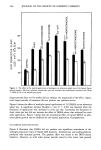
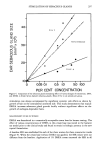
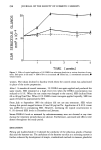
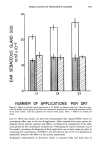
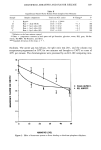
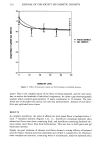
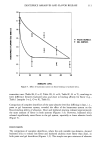
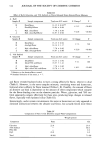
ABSTRACTS 323 The use of rodent models in evaluating the effi- cacy of topical products for the treatment of acne, hirsutism, and male pattern baldness Jonathan R. Matias, Orentreich Foundation for the Advancement of Science, Inc., Cold Spring-on- Hudson, NY 10516 The effectiveness of topical agents for the treatment of androgen-dependent skin disorders can now be assessed conveniently using specific rodent models. For the study of the sebaceous gland, the hamster ventral ear skin proved to be more sensitive and re- liable than the hamster flank organ in evaluating topical antiandrogens. Hair growth in the long- haired hamster was shown to be analogous to human facial hair growth and serves as a useful tool for the assessment of anti-hirsutism products. Top- ical antiandrogenic and antihypertensive agents can also be tested for their efficiency against male pat- tern baldness using the androchronogenetic alopecia (AGA) mouse. In this model, androgens induce hair loss through marked prolongation of the telogen (resting) cycle, thus mimicking the human condi- tion. The use of these models permits the proper evaluation of topical products in an accurate, conve- nient, and cost-effective manner. Analysis of hair surface topography with Fourier transform profilometry Marek Zielinski and Linda Albrecht, Clairol Re- search Laboratories, 2 Blachley Rd., Stamford, CT 06922 Topographical analysis of hair fiber surfaces can be rendered more useful by mathematical treatment of the profilometry scans. Fourier transform spectral analysis technique, applied to the profile, yields in- formation not easily extracted from the standard surface roughness parameters. The technique is fur- ther enhanced by subtracting from the transformed data the "l/f" type noise. Although profilometry cannot provide a wealth of three-dimensional detail that is available from microscopic images, the tech- nique is nonetheless more quantitative. The Fourier transform technique enables comparison of rough- ness for different orders of dimension along the fiber, from 0.5 to 100 micrometers. The applica- tion of this technique to assessment of hair damage caused by bleaching and to study of the results of polymer treatment will be presented. Estimation of shampoo and rinse effects on frictional drag and softness of human hair using a newly developed hydrodynamic technique Yoshihiko Fukuchi, Masahiro Okoshi, and Isao Murotani, Shiseido Product Research Laboratories, 1050 Nippa-cho, Kohoku-ku, Yokohama-shi, Kanagawa-ken, Japan 223 A new instrumental method which allows us to compare product effects on frictional drag and soft- ness of human hair has been developed. A fluid (air or water) was passed through a circular tube filled with a bundle of hair. The pressure drop of a fluid was related to the frictional coefficient of hair. This is, the pressure drop decreases with decreasing fric- tional coefficient. The values of pressure drop mea- sured in air and water reflect the frictional drag of the dry and wet hair, respectively. By this method we evaluated several groups of hair strands treated with different shampoos and rinses. The result was in accord with expectations based on the formulas of samples and corresponded to the evaluation by ex- pert panels. The pressure drop perpendicular to the hair strand, which was inserted into the T-tube, was also measured under constant humidity, and this pressure drop was found to reflect hair softness. It was shown that a certain component of the products, ex. glycerin, makes hair softer. Perceptual evaluation of shaving closeness C. S. Ackerman, M. M. Breuer, S. Pozzi, and R. L. Sneath, The Research and Development Lab- oratory of the Personal Care Division, The Gillette Co., Gillette Park, Boston, MA 02106 The perception of the attribute "closeness of shave" depends on a number of physical stimuli (e.g., hair removal efficacy, smoothness of skin, etc.). Gener- ally it is evaluated by the subjective perception of the shaver himself. Often his judgement is colored, however, by other attributes of the shaving product (e.g., fragrance, cool or hot sensation, rheology of the cream or foam, etc.). We have developed a new technique for measuring shaving closeness by using independent judges as evaluators. Panelists shave two sides of their faces using two different products. A panel of judges assesses the closeness of the face by stroking the two sides of the face at different times after the shaving occurred. Instead of scoring the roughness of the face on a graded measuring scale, the panelists are only asked to de- cide whether the face is rough or smooth. The data have been fitted to a statistical model which can yield two types of information: a) the "half time" of the lastingness of the shave, i.e., the time after half the panel has lost its smoothness of face, and b) the fraction of the panel that retains a smooth face after a given time. Using this technique, we evaluated a number of shaving products and found that statisti- cally significant differences existed between products that did not show differences in hair re- moval efficacies, suggesting that stimuli other than whisker length plays an important part in deter- mining the perception of shaving closeness. The method outlined, we believe, can find other appli-

324 JOURNAL OF THE SOCIETY OF COSMETIC CHEMISTS cations (e.g., measuring skin smoothness, moistur- ization, etc.). SESSION D METHODOLOGY Characterization of solvent-enhanced perme- ation through a skin model membrane John N. Twist and Joel L. Zatz, Department of Pharmaceutics, Rutgers College of Pharmacy, P.O. Box 789, Piscataway, NJ 08854 Diffusion data for parabens and other solutes through polydimethylsiloxane membranes were employed to probe the effect of penetrating solvents on permeation. Several alcohols that are sorbed by the membrane were found to dramatically increase solute permeation rates relative to water and poly- ols, which are excluded from the membrane. Par- tition coefficients were directly related to the extent of alcohol sorption, while diffusion coefficients were not significantly altered by imbibition of solvent. In contrast to previous observations made with inert solvents, flux from the alcohols was not propor- tional to percent saturation in the vehicle. Mod- erate- and high-solute concentrations reduced al- cohol activity, thus reducing the partition coeffi- cient (and flux) of the solute. As a result, flux did not increase proportionally with permeant concen- tration (the usual pattern) but instead reached a peak and then declined. Diffusion experiments at infinite dilution provided data that were used to quantirate permeation enhancement by several al- cohols in a manner independent of the solute used. Lidocaine penetration through human and hairless mouse skin in vitro Gregory Kushla and Joel L. Zatz, Department of Pharmaceutics, Rutgers College of Pharmacy, P.O. Box 789, Piscataway, NJ 08854 The permeation of radiolabeled lidocaine through excised human cadaver skin layers under infinite dose conditions was compared to results for hairless mouse skin. The donor contained 5 % lidocaine sus- pension in a 40% w/w propylene glycol vehicle gelled with 1% w/w hydroxypropyl cellulose. Ver- tical (Franz) diffusion cells were employed for both membranes human skin data was also obtained with an automated flow-through apparatus. Inter- and intrasubject variability was much greater with human skin. Experiments with full thickness and stripped skin as well as heat-separated epidermis, dermis, and trypsin-isolated stratum comeurn showed that the stratum corneum offered the greatest resistance to lidocaine penetration how- ever, the viable tissues also contributed signifi- cantly. A similar result was obtained for hairless mouse skin, although steady-state lidocaine pene- tration through the latter was more rapid than through human skin. The resistance of the viable tissues limits the extent to which lidocaine perme- ation can be increased. The percutaneous absorption and metabolism of azo colors Steven W. Collier, Jan E. Storm, Adel Sakr, J. Leon Lichtin, and Robert L. Bronaugh, Food and Drug Administration, Washington, D.C. (S.W.C., J.E.S., R.L.B.), and University of Cin- cinnati College of Pharmacy, Cincinnati, OH (A.S., J.L.L.) The in vitro percutaneous absorption and metabo- lism of azo colors was studied in rodent and human skin using flow-through diffusion cells and also in homogenates prepared from equivalent samples. Conditions were established for maintaining the vi- ability of 22 [zm dermatomed skin sections during 24-hour percutaneous absorption/metabolism ex- periments. 1-phenylazo-2-naphthol (Sudan I) was applied topically to viable and non-viable human abdominal skin (5 [zg/cm 2) in diffusion cells. In both cases, 46% of the applied Sudan I penetrated in 24 hours. No degradation products were noted in the non-viable skin receptor fluid. In viable skin, 2.4% of the applied Sudan I appeared as the metab- olite, acetanilide. No hydroxylated metabolites were detected. Thus, the predominate metabolism of Sudan I in human skin appears to be reduction of the azo bond followed by N-acetylation of the ar- ylamine. 2,4-diamino-5-phenylazo-tolulene (Chrys- iodine R) was much less readily absorbed and me- tabolized. In rodent skin homogenates and diffusion cell experiments, less than 0.1% of the bio- available parent color was metabolized. Enzymatic reduction of azo bonds is possible in viable skin. The extent of reduction and arylamine N-acetyla- tion during percutaneous absorption may be depen- dent on the rate of penetration and the reduction potential of the parent molecule. In vitro simulation of physiological and envi- ronmental skin conditions Peter R.' Hilliard, Jr., Ph.D., Clairol Research Lab- oratories, 2 Blachley Rd., Stamford, CT 06922 In vivo dynamic mechanical studies of skin are diffi- cult because of poor reproducibility, limited envi- ronmental control, and unknown sample history. To overcome these problems, we have developed a variable-temperature stage (VTS) for studying ex- cised skin. The stage allows analysis of physical properties, such as those obtained with dynamic mechanical, creep, and transepidermal water loss measurements. Experiments with the VTS can eval-
Purchased for the exclusive use of nofirst nolast (unknown)
From: SCC Media Library & Resource Center (library.scconline.org)