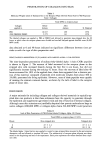
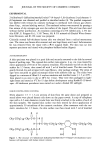
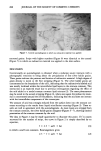
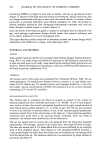
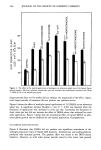
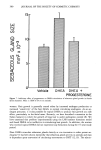
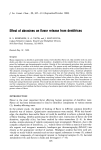
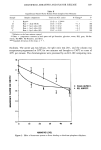
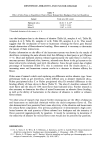
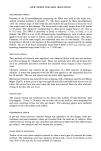
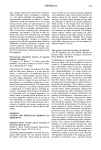
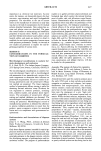
284 JOURNAL OF THE SOCIETY OF COSMETIC CHEMISTS EXPERIMENTAL 2 -(alkoyloxy) 1 -[(alkoyloxy)methylJ-ethyl-7-(4-heptyl- 5,6)-dicarboxy-2-cyclohexene- 1- yl) heptanoate was obtained and purified as described earlier (4). The purified compound was labeled with tritium by catalytic exchange in methanol with tritium gas (Amer- sham Corp., tritium labeling service). The methanol solvent was removed by passing a fine stream of dry nitrogen gas over the surface of the liquid. The acid was then used without further purification. An emulsion consisting of 2.5 % labeled acid, 2.5 % lan- olin (USP, E. Fougera Co.), 5.5 % Tween, 60, 8.5 % mineral oil (Kaydol Witco Sonne- born Division), and 81.0% water was prepared. Clinically normal full-thickness human skin was obtained from a radical mastectomy case. The tissue was frozen after removal and was kept frozen until used. Subcutaneous fat was removed from the tissue with a #22 surgical blade. The skin was cut into separate specimens and rinsed with phosphate-buffered saline (Sigma). AUTORADIOGRAPHY A skin speciman was placed in a petri dish and securely mounted to the dish by several layers of packing tape. The exposed skin surface (area approx. 4 sq. cm.) was treated by direct application of 50 ml of the cosmetic emulsion. The emulsion was left on the skin surface for 1.5 hours, then rinsed off with 5 ml of distilled water. The skin was then gently blotted dry and stripped with tape (Manco, clear package sealing). The strips of tape were mounted on glass microscope slides with adhesive side up. The slides were dipped in a mixture of Ilford L.4 nuclear emulsion and distilled water 1:1.5 at 45øC., then placed in an oven to dry at 28øC for ! hour. They were then packaged in light- tight boxes and stored at 4øC for 15 days before development using Kodak D-19 devel- oper. All darkroom procedures were carried out under a Kodak OC safelight. LIQUID SCINTILLATION COUNTING Seven adjacent 1.5 x 1.5-cm sections of skin from the same donor and prepared as stated above were placed dermis side down on dry paper towels. A strip of cellophane tape with a 6.5-mm diameter circular hole was firmly attached to the surface of each of the skin samples. The exposed skin surface was then treated by direct application of approximately 50 microliters of the cosmetic emulsion. After treatment with the cos- metic emulsion for 1.5 hours, the skin surface was then rinsed with 5 ml of distilled 0 H CH3-(CH 2) 15-CH2-C-O-C-H 0 " H-•-O-C-CH 2- ( CH 2 ) 4-CH CH2-( CH 2 ) 6-C H3 0 = =0 CH3-(CH2) 15-CH2-C-O-C-H 0 H H-O O-H Figure 1. The structure of 2-(alkoyloxy)l-[(alkoyloxy)methyl]-ethyl-7-(4-heptyl-5,6)-dicarboxy-2-cyclo- hexene-1-yl) heptanoate with human stratum corneum.

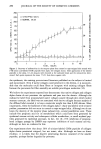
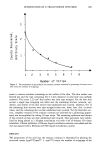
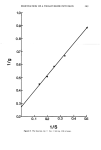
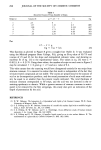
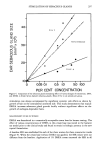
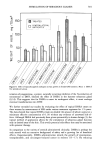
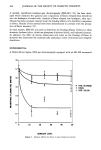
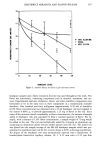
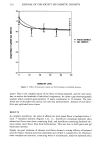
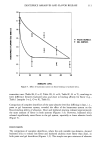
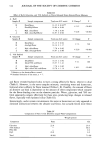
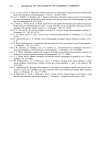
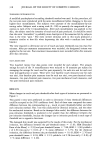
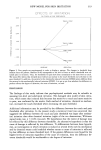
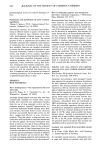
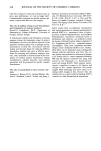
PENETRATION OF A TRIGLYCERIDE INTO SKIN 285 • i 2 3 4 5 6 7 8 Number of Strips Figure 2. The penetration of glyceridacid into stratum corneum measured by percentage of counts recov- ered versus the number of strippings. water to remove emulsion remaining on the surface of the skin. The skin surface was blotted dry and the tape containing the 6.5-mm diameter circular hole was carefully removed. The entire 2.25-cm 2 skin surface was then tape stripped. For the first skin section a single tape stripping was taken and the remaining stratum corneum, epi- dermis, and dermis of the skin section was solubilized and counted. Likewise, five of the remaining skin sections were tape stripped either two, three, four, five, or seven times, and the remaining skin section solubilized and counted. For the final skin sec- tion, complete removal of the stratum corneum (as indicated by a glistening appear- ance) was accomplished by taking 50 tape strips. The remaining epidermis and dermis of this seventh section was then solubilized and counted. Skin specimens were solubi- lized by being placed in a 20-glass scintillation vial with 4 ml of Soluene 350 tissue solubilizer. Fifteen milliliters of Dilume liquid scintillation solution was added and the vial was assayed with a Beckman LS7500 liquid scintillation counter. RESULTS The penetration of the acid into the stratum corneum is illustrated by plotting the recovered counts (cpmskin/[cpm skin q- cpm rinse] versus the number of strippings of the
Purchased for the exclusive use of nofirst nolast (unknown)
From: SCC Media Library & Resource Center (library.scconline.org)