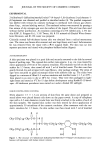
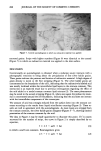
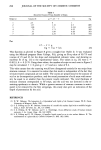
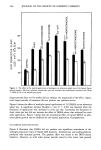
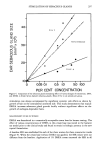
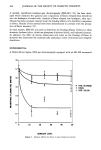
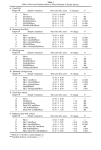
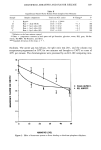
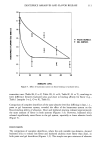
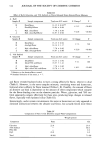
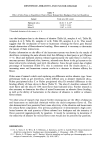
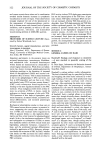
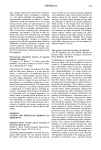
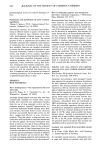
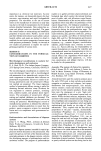
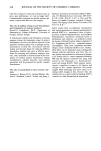
DENTIFRICE ABRASIVES AND FLAVOR RELEASE 309 Table II Equilibrium Passive Flavor Release From Complex Test Mixtures Sample Sample components Total area (GC units) % Change* P I Base** 13.43 + 1.29'** -- -- II Base + dical (48.8) 13.61 + 0.59 + 1.3 NS III Base + hyd. silica (18) 13.45 + 0.52 +0.1 NS IV Base q- hyd. silica (24) 12.86 -+ 0.89 - 4.2 NS V Base + hyd. silica (30) 12.67 + 0.93 -5.7 NS * Relative to the base mixture control. ** Base = components common in both paste and gel formulas: glycerine, water, SLS, gum, Na-Sac- charin, Na-MFP, Na-Benzoate, and flavor. *** Standard deviation of the mean n -- 7. thickness. The carrier gas was helium, the split ratio was 20' 1, and the column was temperature-programmed at 50øC for two minutes and brought to 150øC at a rate of 10øC per minute. The chromatograms were processed by an LCI-100 computing inte- 18 17 16 15 • _1 14 I o ,o =o a'o 4'o so 12 ß PASTE HUUECI. ß GEL HUrlECT. AURASlYE LEVEL Figure 3. Effect of humectant system on flavor binding to dicalcium phosphate dihydrate.

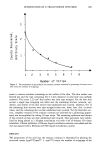
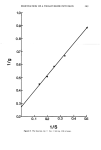
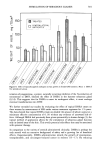
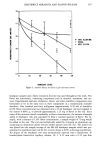
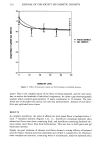
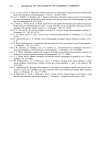
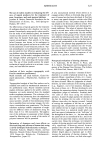
310 JOURNAL OF THE SOCIETY OF COSMETIC CHEMISTS 18 17 •, 15 o. 14 12 ß PASTE HUNECT. •' GEL HUUECT. ABRASIVE LEVEL Figure 4. Effect of humectant system on flavor binding to hydrated alumina. grator. Due to the complex nature of the flavor oil being analyzed, and the time neces- sary to resolve the hundreds of individual components, we chose a gas-chromatographic analysis which resolved approximately 15 major components in 12 minutes. The com- bined area of all peaks was used as our total area measurements. Analysis of each denti- frice was replicated seven times. RESULTS In complete dentifrices, the order oF aFFinity For mint-based flavor is hydrated silica dical hydrated alumina (Figures 1,2), i.e., dentifrices containing hydrated silica release less flavor than those containing dical, and dentifrices containing hydrated alu- mina release more flavor than dical Formulations. This was true in both paste and gel humectant systems. Simple two-part mixtures oF abrasive and flavor showed a strong aFFinity oF hydrated silica For flavor, whereas dical was essentially inert (Table I, samples B vs C). However, more complex test mixtures, containing water or a humectant, made the hydrated silica
Purchased for the exclusive use of nofirst nolast (unknown)
From: SCC Media Library & Resource Center (library.scconline.org)