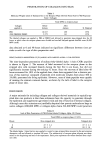
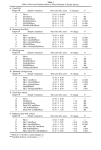
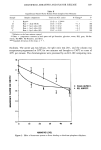
NEW MODEL FOR SKIN IRRITATION 317 MEASUREMENT STIMULI Fourteen of the 20 monofilaments comprising the SWA were used in this study (viz., ordinal stimulus numbers 4 through 17). The forces applied by these monofilaments cover the normal range of skin sensation and exclude the application of excessive force that might result in skin damage. The forces used in this study ranged from 0.07 grams to 50 grams. The diameters corresponding to these forces ranged from 0. 127 mm to 0.7112 mm. The SWA is described in detail in reference 5, but, in brief, it is as follows: The SWA is a set of 20 calibrated nylon monofilaments, each of which can be applied to the skin in order to deliver a tactile stimulus of calibrated force. The mono- filaments, all of the same length, are embedded each into its own handle. The stimu- lating force is related to the diameter of the monofilament in a monotonically increasing fashion. The set of 20 forces deliverable range from 0.0045 to 447.0 g, and the corre- sponding diameters range from 0.0635 to 1. 1430 mm. IRRITATING STIMULI Two methods of irritation were employed, one chemical (dilute acid) and one mechan- ical (skin stripping by cellophane tape). These two methods were selected because they elicit an immediate perceived irritation but minimal visual change in skin character- istics. Chemical irritation was induced by the application of a 20% solution of hydrogen chloride. A towel was dampened with the HC1 and applied to the designated skin site for 90 seconds. The site was rinsed with tap water after application. Mechanical irritation was induced by skin stripping with cellophane tape (Scotch Brand Magic Tape©). A fresh piece of tape was applied and lifted vertically from the test site 20 times. No excess force was used when the tape was removed from the skin and glis- tening of the skin did not occur. TESTING SITES The sensory testing was conducted on the distal volar surfaces of both forearms. Two sites (approx. 15 mm X 20 mm), one on either side of the midline, were designated for each arm, resulting in four test sites per subject. The irritating agents were randomly assigned to the sites within each subject. EXPERIMENTAL DESIGN A pre-test versus post-test crossover design was employed. In this design, both pre- treatment and post-treatment values are recorded from the same set of subjects. Data collected from a testing site was considered one observation (there were four observations per subject, two chemical and two mechanical irritants). VISUAL SIGNS OF IRRITATION Twelve of the sites (three subjects) showed no clear visual signs of irritation for either method. The remaining sites (two subjects) showed only a trace of erythema on less than 50% of the test site for each method of irritation.

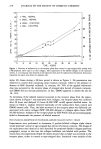
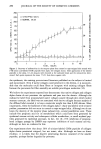
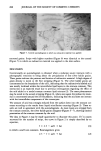
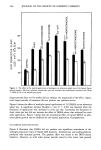
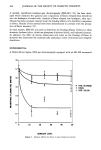
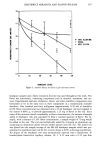
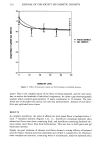
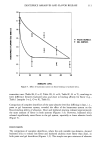
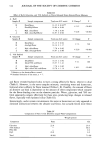
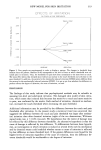
318 JOURNAL OF THE SOCIETY OF COSMETIC CHEMISTS THRESHOLD DETERMINATION A modified psychophysical ascending threshold method was used. In this procedure, all the test sites were stimulated with the same monofilament before changing to the next higher force monofilament. The subjects were unaware of the monofilament-by-site testing order. Subjects used a rating scale (0-100) to quantify the magnitude of per- ception to each of the 14 monofilaments. After each monofilament was applied to the skin, the subject rated the intensity of touch and of pain produced. (It should be noted that the term "discomfort" is probably more descriptive of the sensation felt by subjects than is the term "pain." The most intense stimulus used in this study produced a sensation similar to that felt when depressing the skin with a medium hair brush bristle.) The time required to determine one set of touch and pain thresholds was less than five minutes. After pre-treatment measurements were recorded, the designated irritant was applied to the test site. Post-treatment measurements were recorded within five minutes after skin irritation. DATA REDUCTION Two hundred twenty four data points were recorded for each subject. The sensory ratings for each of the 14 monofilaments were reduced to 16 measures per subject by averaging the ratings for touch and for pain separately, for each site and for each test time (pre-application or post). These were: four baseline touch measures (one for each test site), four baseline pain measures (one for each test site), two post-chemical touch measures, two post-chemical pain measures, two post-mechanical touch measures, and two post-mechanical pain measures. RESULTS Mean changes in touch and pain thresholds after both types of irritation are presented in Figure 1. Two paired t tests were performed in order to determine if these threshold differences could be accepted at the 95% confidence level. Each of these tests compared the mean difference between the corresponding (e.g., touch or pain) thresholds before and after each irritation method. One t test was conducted for chemical irritation, and the other for mechanical irritation. Based on the damaged skin model, the difference between the post-irritation thresholds is predicted to be smaller than the difference between the pre-irritation thresholds, because the changes due to irritation predicted in each type of threshold are in opposite directions. The damaged skin model was supported by the results of this study. For the mechanical irritation, the difference between the pre-threshold (mean = 11.63 SEM [Standard Error of the Mean] = 2.93) and post-threshold (mean = 7.88 SEM = 1.96) yielded a t of 2.94 (two-tail p 0.02 df = 9 mean difference = 3.75). For the chemical irritation, the difference between the pre-threshold (mean = 10.43 SEM = 2.76) and post-threshold (mean = 8.18 SEM = 2.11)yielded a t of 2.58 (two-tail p 0.03 df = 9 mean difference = 2.24).
Purchased for the exclusive use of nofirst nolast (unknown)
From: SCC Media Library & Resource Center (library.scconline.org)