PENETRATION OF COLLAGEN INTO SKIN 277 separation of collagen alpha chains). The cell layer was extracted and the labeled alpha chains purified by carboxymethylcellulose column chromatography as described by Bornstein and Piez (8) and modified by Schiltz et al. (9). Briefly, the cells were ex- tracted with 50 mM Tris-HC1 containing 1M NaC1, pH 7.4. The crude extract was mixed with carrier lathyritic rat skin collagen, co-purified by several precipitation/solu- bilization steps, and the alpha 1 chains purified by CMC column chromatography. [3H]-Amino acid-labeled cyanogen bromide peptides were prepared from 3T6 fibro- blasts. The procedure for preparation of the alpha l(I) chains was as described in the previous paragraph, except that the label was a mixture of [3H]-amino acids (New England Nuclear Corporation, NET-250). Cleavage of the labeled alpha chains by CNBr was performed according to Butler et al. (10), and the completeness of the cleavage was monitored by SDS-PAGE. ANIMAL SKIN The animal skins used in these experiments were from 7- to 9-week-old female hairless mice (Ace Animals, Inc. Boyertown, PA). Published reports suggest that this skin correlates well to human skin for penetration studies (11, 12), at least for periods as long as 72 hours (13). The animals were killed by cervical dislocation, and skin from the back and abdomen was removed as one piece. Subdermal fat was carefully scraped away with a scalpel. For the tape-stripped studies, the excised pieces were stripped 25 succes- sive times with Scotch • Lape until the stratum corneum had been completely removed. Corneum removal was monitored by examination of H&E-stained slides. PERCUTANEOUS ABSORPTION Uniform diameter circular skin specimens were cut and mounted on glass Franz cells (Crown Glass Company, Somerville, NJ) the surface area of the skin in the cells was 0.75 cm 2. Temperature was kept constant at 37øC with the aid of a circulating water jacket, which enveloped the entire system. The receptor phase, which contained 3 ml phosphate-buffered saline, was sampled at appropriate times by withdrawing 0.1 ml, mixing with 0.4 ml water, and the radioactivity determined by counting in a Beckman LS9800 scintillation counter. To keep the volume of the receptor phase constant, 0.1 ml fresh PBS was added back to the receptor phase after each withdrawal. Application of the labeled materials was performed using a micropipet, and the samples were spread evenly with a Teflon policeman. The top of the cell was then sealed using Parafilm ©. The amounts ofmarerials applied (in 0.1-mt atiquots) ranged from 0.6 to t mg/cm 2 skin surface, with specific activities between 15,000 and 20,000 DPM/mg. All the experiments employed duplicate or triplicate cells for a given treatment. RESULTS PERCUTANEOUS ABSORPTION OF NATIVE [3HI-PROPIONYL COLLAGEN The recovery in the receptor phase of radioactive label from native propionated collagen

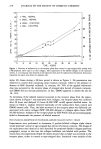
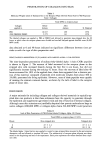
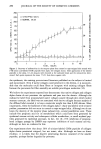
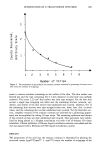
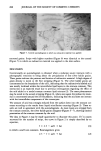
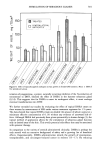
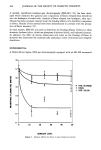
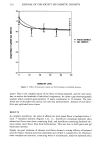
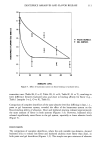
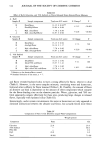
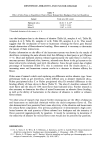
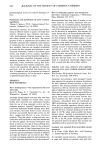
278 JOURNAL OF THE SOCIETY OF COSMETIC CHEMISTS 7 •E IOO 9o 80 70 60 50 ,40 30 20 lo o -lO o o PBS. NORMRL [] DMSO, NORMRL ß DMSO. STRIPPED zx APBS' STRIPPED ••• '68o _ 80 - 60 - 40 2O 0 I I I I I I I I I 5 10 15 20 25 30 35 40 45 50 TIHE. HOURS Figure 1. Recovery of radioactivity in the receptor phase from control or tape-stripped skin treated with [3H]-propionyl native type I rat skin collagen. After application of the labeled collagen in the indicated solvent, 0.1-ml aliquots were removed at the indicated times and the radioactivity determined. Each point represents the mean value from two separate cells. alpha l(I) chains during a 48-hour period is shown in Figure 1. No penetration was observed in control skin containing intact stratum corneum, either in the presence or absence of 80% dimethyl sulfoxide. In contrast, 60-70% of the applied radioactive dose was recovered in the receptor phase of stripped skin devoid of stratum corneum, and DMSO did not increase penetration. In fact, DMSO appeared to inhibit the rate by 10-15%. To determine if the labeled material recovered in the receptor phase from the experi- ment shown in Figure 1 was associated with collagen, the receptor phase was collected after 48 hours and dialyzed 24 hours (8,000 MW cutoff) against distilled water. As shown in Table I, dialysis removed essentially all the radioactivity from control and DMSO-treated cells. Thus, the label recovered in the receptor phase was definitely not associated with native collagen (MW 288,000 daltons) or collagen alpha chains (MW 96,000 daltons). Analysis of the receptor phase by SDS-PAGE slab gel autoradiography failed to demonstrate the presence of labeled material. PERCUTANEOUS ABSORPTION OF [3H]-PROLINE-LABELED COLLAGEN ALPHA 1 CHAINS Experiments were performed to determine if proline-labeled collagen alpha chains would penetrate control or tape-stripped skin devoid of stratum corneum. The design of the experiment was identical to that described for propionyl-labeled collagen (previous paragraph), except in this case the collagen backbone was labeled with proline. The results from this experiment (Table II) clearly showed that no label was recovered in the receptor phase, either in control or tape-stripped skin. Statistical t-test analysis of the
Purchased for the exclusive use of nofirst nolast (unknown)
From: SCC Media Library & Resource Center (library.scconline.org)